Venice Travel Guide: Everything You Need to Know
Your complete guide to visiting the Floating City
Table of Contents
- Venice Overview
- Getting There & Around
- Top Attractions & Landmarks
- Neighborhoods & Districts to Explore
- Food & Dining
- Nightlife & Entertainment
- Shopping
- Seasonal Events & Festivals
- Accommodation Recommendations
- Practical Information
- Day Trips & Nearby Destinations
- Insider Tips & Hidden Gems
- Money-Saving Tips
- Common Tourist Mistakes to Avoid
- Sample Itineraries
- Frequently Asked Questions
1. Venice Overview
Venice is a city unlike any other on Earth. Built on 118 islands connected by over 400 bridges, this floating masterpiece rises from the Venetian Lagoon like a dream made real. Gondolas glide through narrow canals, Byzantine domes shimmer in golden light, and every corner reveals another postcard-perfect scene that will take your breath away.
Why visit Venice? This is where Eastern opulence meets Western grandeur in a city that once ruled the Mediterranean as a maritime superpower. You’ll walk the same streets where Marco Polo began his journey to China, stand in St. Mark’s Square where Napoleon called it “the finest drawing room in Europe,” and cross the Rialto Bridge where merchants traded spices and silks for centuries. Venice offers art masterpieces by Titian and Tintoretto, world-class opera at La Fenice, and food that celebrates both the sea and the land.
Venice faces challenges with overtourism and rising water levels, but the city is fighting back with entrance fees for day-trippers and conservation efforts. Visit responsibly, stay overnight to experience the magic after the crowds leave, and you’ll understand why this UNESCO World Heritage Site captivates millions every year despite the challenges.
Best Time to Visit Venice
Spring (April-May): Spring brings temperatures of 15-20°C (59-68°F), blooming gardens, and manageable crowds before summer arrives. April can see occasional rain, but May offers beautiful weather perfect for wandering. Prices are moderate, and you’ll catch the Venice Biennale if visiting in odd-numbered years. Book accommodations at least 2-3 months ahead for May visits.
Summer (June-August): Peak season means temperatures of 25-30°C (77-86°F), intense crowds, and the highest prices of the year. St. Mark’s Square becomes a sea of tourists, and popular restaurants need reservations days in advance. July and August bring suffocating heat and humidity, plus occasional flooding during storm tides. Book everything 4-6 months ahead, expect to pay premium rates, and arrive at attractions when they open to beat the crowds.
Fall (September-October): Fall is Venice’s secret perfect season with temperatures of 15-23°C (59-73°F), golden afternoon light ideal for photography, and noticeably fewer tourists after mid-September. October brings the Venice Film Festival crowd early in the month, but overall offers excellent weather and availability. Acqua alta (high water) flooding becomes more frequent in late October and November.
Winter (November-March): Off-peak winter brings temperatures of 3-10°C (37-50°F), frequent acqua alta flooding, fog that creates an atmospheric but chilly experience, and the lowest prices all year. Carnival in February transforms the city into a masked ball with incredible costumes and celebrations. Many tourists avoid winter, which means you’ll have a more authentic local experience, shorter lines at museums, and easier restaurant reservations. Pack waterproof boots for flooding and warm layers for damp cold.
How Long to Stay in Venice
- 1-2 days: You can hit the major highlights in a rushed visit with St. Mark’s Square, Doge’s Palace, Rialto Bridge, and a gondola ride, but you’ll miss the magic that happens when day-trippers leave. This works for cruise passengers or travelers on tight schedules, but Venice deserves more time.
- 3-4 days: Perfect for first-time visitors to see main sights without rushing, explore multiple neighborhoods like Dorsoduro and Cannaregio, enjoy leisurely meals, get lost in the maze of streets, and experience evening Venice when the crowds thin. This is the sweet spot for most travelers.
- 5-7 days: Ideal for deep exploration including day trips to Murano, Burano, and Torcello islands, visiting lesser-known museums and churches with masterpiece paintings, discovering hidden campi (squares), taking a cooking class, and adopting a slower pace that lets you live like a Venetian. You’ll also have time for a day trip to Verona or Padua.
- 1 week+: For Venice enthusiasts who want to explore every sestiere (district), take multiple island trips, attend opera or classical concerts, visit during special events, explore the Lido beach area, and truly understand this complex city’s rhythms and secrets.
Quick Facts About Venice
- Population: 260,000 metro area (50,000 in historic center)
- Language: Italian (English widely spoken in tourist areas)
- Currency: Euro (€)
- Time Zone: Central European Time (CET/UTC+1, CEST/UTC+2 in summer)
- Country Code: +39
- Area Code: 041
2. Getting There & Around
Airports Serving Venice
Venice Marco Polo Airport (VCE)
Via Galileo Galilei, 30/1, 30173 Tessera, Venice, Italy
Located 8 km (5 miles) north of Venice on the mainland, this is the main international airport serving Venice. Most major European and some intercontinental flights use Marco Polo. The airport offers excellent connections to the city center via water bus, bus, and taxi.
Treviso Airport (TSF)
Via Noalese, 63/E, 31100 Treviso, Italy
Located 30 km (18 miles) northwest of Venice, Treviso primarily serves budget airlines like Ryanair and Wizz Air. It’s a smaller, simpler airport but requires a longer transfer time to Venice. Use this airport if you find significantly cheaper flights, but factor in the extra transfer time and cost.
[AFFILIATE LINK: Find cheap flights to Venice – Skyscanner/Expedia]
Getting from Airport to City Center
From Marco Polo Airport:
Alilaguna Water Bus: €15 per person, 60-90 minutes depending on route. Three color-coded lines (Orange, Blue, Red) serve different parts of Venice including St. Mark’s Square, Rialto, and Lido. Boats depart every 30-60 minutes from 6am-midnight. Buy tickets at the Alilaguna desk in arrivals or at the dock. This is the most scenic option but slowest.
ACTV Bus #5: €9 per person (€15 including 75-minute vaporetto travel card), 25 minutes to Piazzale Roma. Buses run every 15-30 minutes from 4:30am-1:00am. From Piazzale Roma, take a vaporetto (water bus) to your specific destination in Venice. Buy tickets at the ACTV desk in arrivals or from machines.
Water Taxi: €110-130 for up to 4 passengers with luggage, 30-40 minutes direct to your hotel. Convenient but expensive. Book at the water taxi desk in arrivals or pre-book online for guaranteed service. The boat drops you at the nearest canal to your accommodation.
Land Taxi: €40-50 to Piazzale Roma, 20 minutes. Official taxis have meters and wait outside arrivals. From Piazzale Roma, you’ll need to take a vaporetto or walk to your hotel. Only practical if staying near Piazzale Roma or the train station area.
From Treviso Airport:
ATVO Bus: €12 per person, 70 minutes to Piazzale Roma. Buses timed with Ryanair flight arrivals. Buy tickets at the ATVO desk in arrivals, from machines, or online in advance. This is the standard option for Treviso arrivals.
[AFFILIATE LINK: Book airport transfers to Venice – GetYourGuide/Viator]
Getting Around Venice
Venice has no cars, no bicycles, no scooters. You walk or you take a boat, and that’s the magic of this city. The historic center is compact enough that you can walk from one end to the other in about an hour, but the maze of narrow streets, bridges, and canals means you’ll walk much more than straight-line distances suggest. Vaporettos (water buses) run along the Grand Canal and to outer islands, functioning like buses on water with set routes and stops.
Vaporetto (Water Bus) System
ACTV operates 25 vaporetto routes throughout Venice and the lagoon islands. The most useful are Line 1 (slow down the Grand Canal stopping at every station), Line 2 (faster Grand Canal with fewer stops), and Lines 12, 14, and 18 to Murano, Burano, and Lido. Vaporettos run from 5am-midnight with reduced night service. Boats come every 10-20 minutes on main routes during the day, every 20-30 minutes in evenings.
Tickets & Passes:
- Single ride: €9.50 (75 minutes validity from validation)
- 24-hour pass: €25
- 48-hour pass: €35
- 72-hour pass: €45
- 7-day pass: €65
- Youth pass (ages 6-29): Available at reduced rates with Rolling Venice Card
Buy passes at vending machines at major vaporetto stops, ACTV ticket offices at Piazzale Roma and train station, or at Venice Unica City Pass outlets. Each ticket must be validated at the electronic readers before boarding. Inspectors check frequently and fine violators €60 plus the ticket cost. Passes are unlimited travel within the time period.
Water Taxis
Official water taxis are sleek wooden motorboats with enclosed cabins. They use meters with starting fare of €15 plus €2 per minute of travel time. Expect €60-80 for short trips within Venice, €110+ for longer distances. Extra charges apply for luggage (€5 per large bag), night service (10pm-7am adds 25%), and holidays (adds €10). Book through your hotel, hail from designated taxi stands, or call +39 041 522 2303. Water taxis are expensive but convenient for airport transfers or when carrying heavy luggage.
Gondolas
Gondolas are not public transport but a tourist experience. Official rates are €90 for 30 minutes during the day (9am-7pm) or €110 for 30 minutes at night (7pm-9am). Rates are per gondola (up to 6 passengers), not per person. You can find gondola stations near major landmarks, or arrange longer tours with serenade singers for €40-50 extra. Always confirm the rate before boarding and ask if any additional fees apply.
Traghetto
Traghetti are large gondolas that ferry locals across the Grand Canal at seven crossing points where no bridges exist. They cost €2 per person and operate during daytime hours (roughly 9am-6pm, varying by crossing point). Locals stand during the short crossing; tourists may sit but will get odd looks. This gives you a gondola experience for €2 instead of €90.
Walking
Walking is your primary mode of transportation in Venice. The historic center measures just 5 square kilometers (2 square miles), making everything theoretically walkable. However, you’ll cross bridges constantly (some with steep steps), navigate narrow alleys that suddenly dead-end at canals, and frequently get lost in the medieval street layout. Google Maps works but struggles with Venice’s complexity. Allow extra time for walking anywhere.
Walkability Score: 95/100 for the historic center. Everything is pedestrian-only, streets are generally safe and well-maintained, and getting lost is part of the fun. Challenges include numerous bridge steps (difficult with mobility issues or wheeled luggage), confusing navigation, and crowded main routes between St. Mark’s and Rialto.
Tourist Passes & Cards
Venice City Pass: €40-48 (varies by season and booking date). Includes Doge’s Palace with skip-the-line access, Correr Museum, and two other museums, plus one church from the Chorus pass. Also includes free WiFi and discounts at some restaurants. Worth it if you plan to visit at least three museums. Buy online at veneziaunica.it for best rates.
Chorus Pass: €14 for access to 16 historic churches including Santa Maria dei Frari, Santa Maria dei Miracoli, and Santo Stefano. Each church costs €3 individually, so the pass pays for itself after 5 churches. Valid one year from first use. Buy at any participating church or online.
Rolling Venice Card: €6 for those aged 6-29 years. Provides discounts at museums, restaurants, shops, and hotels, plus reduced-rate vaporetto passes. Saves money if you’re under 30 and using public transport extensively. Buy at ACTV ticket offices with ID showing your age.
[DISPLAY AD PLACEHOLDER #1]
3. Top Attractions & Landmarks
[AFFILIATE LINK: Book skip-the-line tickets for Venice attractions – GetYourGuide/Viator]
St. Mark’s Basilica (Basilica di San Marco)
San Marco, 328, 30124 Venezia VE, Italy
St. Mark’s Basilica stands as one of the finest examples of Byzantine architecture in the Western world. Built in 1063 to house the bones of St. Mark the Evangelist (stolen from Alexandria by Venetian merchants), the basilica glitters with 8,000 square meters of golden mosaics depicting biblical scenes. The five domes, marble columns looted from Constantinople, and the four bronze horses on the facade showcase Venice’s wealth and power during its maritime empire heyday.
Inside, your eyes need time to adjust to the golden glow reflecting from every surface. The Pala d’Oro altarpiece behind the main altar contains 1,300 pearls, 400 garnets, 300 sapphires, 300 emeralds, 90 amethysts, 75 rubies, and 15 rubies. The Treasury displays sacred relics and Byzantine treasures brought back from the Crusades. Climb to the museum level to see the original bronze horses and walk out onto the terrace for views over St. Mark’s Square.
Why visit: This is Venice’s most important church and a masterpiece that rivals anything in Istanbul or Ravenna for Byzantine splendor. The golden mosaics alone require 30 minutes to appreciate, and the history of how Venetian merchants stole St. Mark’s bones to make Venice a pilgrimage destination is fascinating. No other church in Western Europe looks like this.
Entrance: €15 adults, €2 youth (under 18), free under 6
Best time: Weekday mornings (10-11am) after opening rush
Hours: Monday 8:15am-2pm, Tuesday-Sunday 8:15am-7:15pm (last entry 6:15pm)

Peggy Guggenheim Collection
Dorsoduro, 701-704, 30123 Venezia VE, Italy
The Peggy Guggenheim Collection occupies the unfinished Palazzo Venier dei Leoni on the Grand Canal, where American art collector Peggy Guggenheim lived from 1949 until her death in 1979. This museum houses one of Europe’s finest collections of 20th-century art including major works by Picasso, Kandinsky, Mondrian, Dalí, Ernst, Pollock, and Rothko. The sculpture garden overlooking the Grand Canal displays works by Moore, Giacometti, and Holzer.
The intimate palace setting, with just 14 rooms arranged around a central courtyard, feels more like visiting someone’s home than a traditional museum. Guggenheim’s bedroom has been preserved with her artwork, Calder’s mobile bed headboard, and personal objects. The collection emphasizes Cubism, Surrealism, and Abstract Expressionism, providing a refreshing contrast to Venice’s Renaissance and Baroque heritage.
Why visit: This is Venice’s premier modern art museum and essential for anyone interested in 20th-century art. The collection quality rivals major museums in Paris, London, or New York but remains more accessible and less crowded. The palazzo itself and the Grand Canal views from the garden make this a delightful experience even if modern art isn’t your primary interest.
Entrance: €18 adults, €15 seniors (65+), €12 students, free under 10
Best time: Weekday afternoons (2-4pm)
Hours: Wednesday-Monday 10am-6pm, closed Tuesday
[DISPLAY AD PLACEHOLDER #2]

Santa Maria Gloriosa dei Frari
San Polo, 3072, 30125 Venezia VE, Italy
The Frari Church is Venice’s largest and most important Franciscan church, built in Italian Gothic style between 1340 and 1443. The massive brick exterior conceals one of Venice’s greatest art treasures including Titian’s stunning “Assumption of the Virgin” altarpiece that draws your eye the moment you enter. The church also contains Bellini’s “Madonna and Saints” triptych, Donatello’s wooden statue of St. John the Baptist, and Titian’s tomb.
The soaring Gothic interior with its massive columns and ribbed vaults creates a sense of spiritual grandeur. The 14th-century choir stalls are among the finest in Venice. The monks’ choir in the center of the nave is unusual for Italian churches but typical of Franciscan architecture. Several Doges are buried here, including Antonio Canova’s remarkable pyramid-shaped monument to Titian.
Why visit: Art historians consider Titian’s “Assumption” one of the greatest paintings of the Italian Renaissance, worth the visit alone. The Frari combines outstanding art with magnificent Gothic architecture in an atmospheric setting. Unlike museums, seeing these masterpieces in their original church context as the artists intended provides powerful spiritual and aesthetic impact.
Entrance: €3 or included in Chorus Pass (€14 for 16 churches)
Best time: Late afternoon (4-5pm) when light streams through windows
Hours: Monday-Saturday 9am-6pm, Sunday 1pm-6pm
Bridge of Sighs (Ponte dei Sospiri)
Piazza San Marco, 1, 30100 Venezia VE, Italy
The Bridge of Sighs is an enclosed limestone bridge connecting the Doge’s Palace interrogation rooms to the New Prison across the canal. Built in 1600, the baroque-style bridge gets its romantic name from Lord Byron’s 1812 poem suggesting prisoners would sigh at their last view of Venice through the stone-barred windows before imprisonment. In reality, by the time this bridge was built, the worst days of Venetian justice were over.
The bridge appears on countless Venice postcards photographed from the Ponte della Paglia nearby. The white Istrian stone facade features baroque decorative details and two small windows with stone bars. Inside, the bridge splits into two separate corridors to keep prisoners moving in different directions from encountering each other. You can walk through the bridge interior only as part of the Doge’s Palace tour.
Why visit: This is one of Venice’s most photographed landmarks despite being essentially a covered hallway between buildings. The bridge’s romantic legend and photogenic appearance make it a must-see. Walking through it during the Doge’s Palace tour adds historical context. The view of the bridge from Ponte della Paglia at sunset is quintessentially Venetian.
Entrance: Free to view from outside, included in Doge’s Palace tour to walk through
Best time: Early morning (7-8am) or evening (7-9pm) for photos without crowds
Hours: Always visible from outside

St. Mark’s Square (Piazza San Marco)
Piazza San Marco, 30100 Venezia VE, Italy
St. Mark’s Square is Venice’s main public square and has served as the city’s social, political, and religious center for over 1,000 years. Napoleon called it “the finest drawing room in Europe” for good reason. The square is surrounded by architectural masterpieces including St. Mark’s Basilica at the east end, the Doge’s Palace, the Campanile bell tower, and the Procuratie buildings with their ground-floor arcades housing historic cafés like Florian (opened 1720) and Quadri (opened 1775).
The square’s trapezoid shape creates a perspective illusion making it appear longer and more dramatic. The geometric paving pattern dates from 1723. Thousands of pigeons once flocked here before being banned in 2008. The square floods during acqua alta, creating surreal reflections of the surrounding buildings in the standing water. The Campanile offers 360-degree views over Venice and the lagoon from 98.6 meters high.
Why visit: No visit to Venice is complete without time in St. Mark’s Square to people-watch, absorb the atmosphere, and admire the architectural harmony. Sitting at Caffè Florian for an espresso (expensive but historic) or climbing the Campanile for views helps you understand why this square has captivated visitors for centuries. The square looks different at dawn, midday, sunset, and night—try to experience it multiple times.
Entrance: Free | Campanile €10 adults, €5 children 6-14
Best time: Dawn (6-7am) for emptiness, sunset (6-8pm) for golden light, night (9-11pm) for romantic atmosphere
Hours: Always accessible | Campanile daily 9:30am-9:15pm (summer), 9:30am-5:15pm (winter)

Scuola Grande di San Rocco
San Polo, 3052, 30125 Venezia VE, Italy
The Scuola Grande di San Rocco is home to one of Venice’s most impressive art collections, featuring 56 paintings by Jacopo Tintoretto covering the walls and ceilings of this 16th-century confraternity building. Tintoretto spent 24 years (1564-1588) creating these monumental works depicting scenes from the Old and New Testaments. The overall effect resembles a three-dimensional comic book telling biblical stories through dramatic lighting, dynamic poses, and innovative perspectives.
The ground floor hall features Tintoretto’s “Flight into Egypt” and “Mary Magdalene,” while the upper floor Sala dell’Albergo contains his massive “Crucifixion,” considered one of the greatest paintings in Western art. The ceiling paintings require the provided mirrors to view comfortably without straining your neck. The Scuola’s baroque interior decoration complements Tintoretto’s works perfectly.
Why visit: Art critics often call this “Tintoretto’s Sistine Chapel” for the concentration of masterpieces in one location. Unlike crowded museums, the Scuola remains relatively undiscovered by mass tourism, letting you appreciate the art in peace. The theatrical lighting effects and emotional intensity of Tintoretto’s work create powerful impact. This is essential for any Renaissance art enthusiast.
Entrance: €12 adults, €10 seniors (65+) and students, free under 18
Best time: Afternoon (2-4pm) when natural light through windows enhances paintings
Hours: Daily 9:30am-5:30pm
Basilica di Santa Maria della Salute
Dorsoduro, 1, 30123 Venezia VE, Italy
The Salute Church stands at the entrance to the Grand Canal, its massive white dome dominating the Venice skyline. Built between 1631-1681 as thanks for the city’s deliverance from a plague epidemic that killed 80,000 Venetians, the baroque church designed by Baldassare Longhena features an octagonal floor plan and a dome modeled on St. Peter’s in Rome. The exterior with its scrollwork facades and statues creates one of Venice’s most recognizable silhouettes.
The interior’s circular design focuses attention on the main altar with its Byzantine icon of the Madonna and Child. The sacristy (separate €5 admission) contains major works by Titian including his “St. Mark Enthroned with Saints” and ceiling paintings showing scenes from the life of St. Mark. The marble floor’s geometric patterns and the dome’s natural light create a sense of spaciousness unusual in Venice’s churches.
Why visit: La Salute is Venice’s most photographed church from the exterior and offers spectacular views across the Grand Canal to St. Mark’s Square from its steps. The baroque architecture represents the peak of Venetian religious building. Titian’s sacristy paintings alone merit the visit, and the church’s history as a thanksgiving offering gives it emotional resonance. The location at the Grand Canal entrance makes it easily accessible via vaporetto.
Entrance: Church free, Sacristy €5
Best time: Late afternoon (4-6pm) for light through the dome
Hours: Daily 9am-noon and 3pm-5:30pm
Teatro La Fenice
Campo San Fantin, 1965, 30124 Venezia VE, Italy
Teatro La Fenice (“The Phoenix”) is Venice’s legendary opera house, rebuilt three times after fires in 1774, 1836, and 1996. The current theater, completed in 2003, replicates the ornate 19th-century design with gilded boxes, red velvet seats, painted ceiling, and crystal chandeliers creating one of Europe’s most beautiful opera venues. Premieres of works by Rossini, Bellini, Verdi, and Stravinsky happened on this stage, making La Fenice crucial to opera history.
The horseshoe-shaped auditorium seats only 1,000, creating intimate acoustics where every seat has excellent sound quality. Five tiers of boxes rise vertically, decorated with gold leaf and baroque ornamentation. The royal box features superior decoration and the best views. Guided tours show you the auditorium, stage, backstage areas, and recount La Fenice’s role in opera history and its dramatic reconstruction after the 1996 arson fire.
Why visit: Opera lovers must see La Fenice for its musical heritage and stunning baroque beauty. Even if you don’t attend a performance, the guided tour reveals theatrical craftsmanship and lets you sit in the same seats where European nobility watched world-premiere operas. The phoenix rising from flames story (the name means “The Phoenix”) adds drama to the theater’s history. The acoustics are considered among the best in Italy.
Entrance: €12 self-guided audio tour, €15 guided tour | Opera tickets €30-300
Best time: Morning (10-11am) when fewer visitors tour
Hours: Daily 9:30am-6pm (closes earlier on performance days)
Doge’s Palace (Palazzo Ducale)
Piazza San Marco, 1, 30124 Venezia VE, Italy
The Doge’s Palace served as the residence of the Doge (Duke) of Venice and the seat of Venetian government for over 1,000 years. This Gothic masterpiece combines delicate pink and white marble patterns with massive fortress-like construction. Inside, you’ll walk through lavishly decorated rooms where the Venetian Republic made decisions that affected the entire Mediterranean world, see Tintoretto’s enormous painting “Paradise” (one of the world’s largest canvas paintings), and cross the famous Bridge of Sighs to the prison where Casanova was once held.
The palace tour takes you through the Doge’s apartments with gold-coffered ceilings, the Grand Council Chamber where 1,200 nobles voted on state matters, the Senate Chamber with paintings by Tintoretto, and the armory displaying weapons and armor from Venice’s military history. The Secret Itineraries tour adds hidden passageways, torture chambers, and Casanova’s cell to the regular route.
Why visit: This palace tells Venice’s political and artistic story better than any museum. You’ll understand how this maritime republic functioned, see masterpieces by Titian, Tintoretto, and Veronese in their original locations, and walk the same rooms where Venice once ruled a quarter of the known world. The Secret Itineraries tour reveals the darker side of Venetian justice.
Entrance: €30 adults, €15 youth (6-14 years and students 15-25), free under 6 | Secret Itineraries tour €28 (plus palace entrance)
Best time: Right at 9am opening or after 3pm
Hours: Daily 9am-7pm (April-October), 9am-6pm (November-March), last entry 1 hour before closing

Rialto Bridge (Ponte di Rialto)
Sestiere San Polo, 30125 Venezia VE, Italy
The Rialto Bridge is Venice’s oldest and most famous bridge spanning the Grand Canal. Built in 1591 after previous wooden bridges collapsed or burned, this elegant stone arch bridge designed by Antonio da Ponte features two rows of shops selling jewelry, masks, leather goods, and souvenirs. The central viewing platform offers the most photographed view of the Grand Canal with colorful buildings, gondolas, and vaporettos passing underneath.
For over 300 years, this was the only way to cross the Grand Canal on foot. The area around the bridge has been Venice’s commercial heart since the Middle Ages. The nearby Rialto Markets (fish and produce) have operated in the same location since 1097, making them some of Europe’s oldest continuously operating markets.
Why visit: Every visitor walks across the Rialto Bridge for the quintessential Venice photo opportunity. The view of the Grand Canal from the bridge’s center is spectacular at sunset when golden light hits the palazzo facades. The shopping arcade gives you a taste of Venetian commerce, and the surrounding Rialto area is perfect for exploring authentic local life away from St. Mark’s Square.
Entrance: Free
Best time: Early morning (7-8am) before crowds or sunset (6-7pm) for golden light
Hours: Always accessible

Grand Canal
Sestiere San Marco to Piazzale Roma, 30100 Venezia VE, Italy
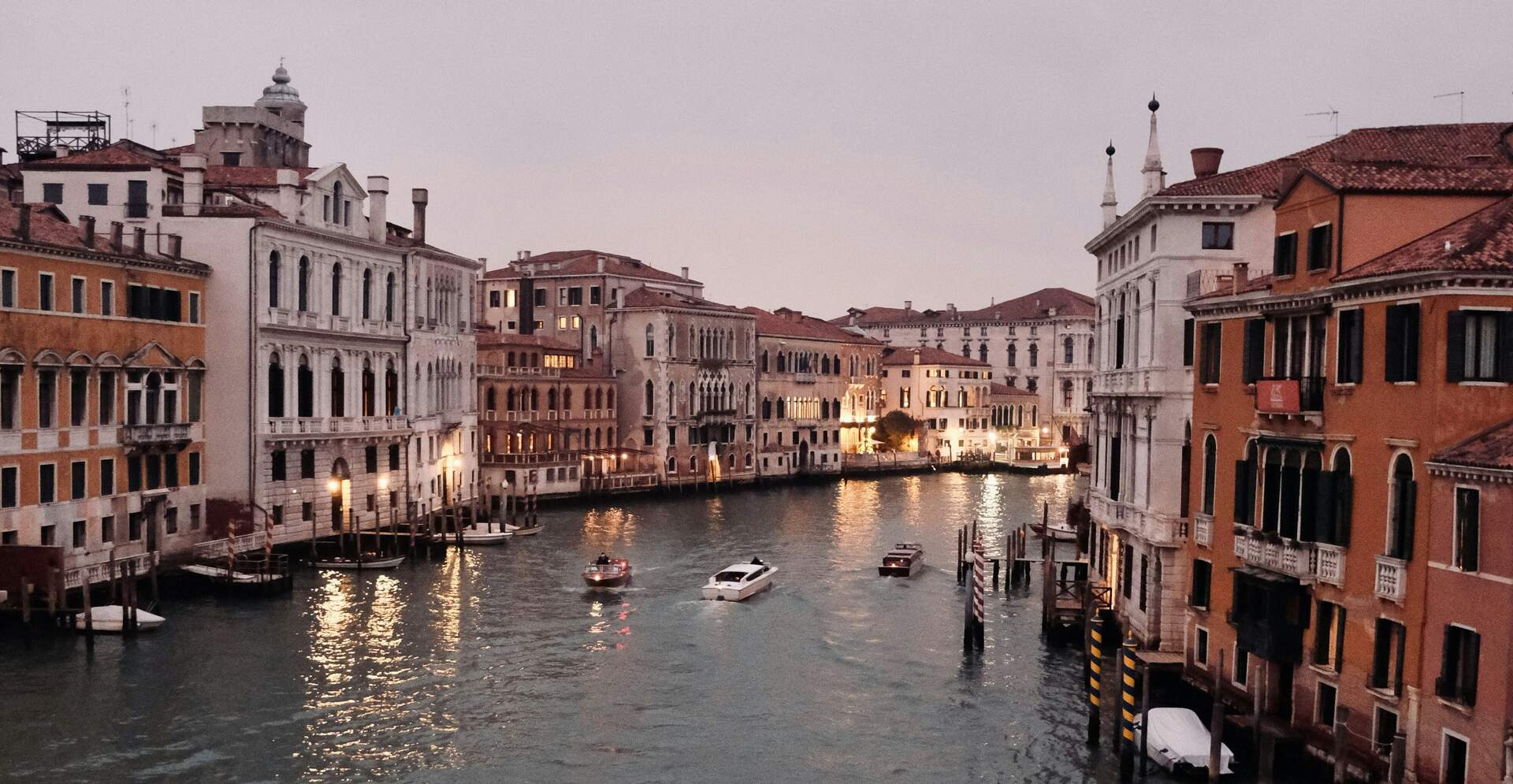
The Grand Canal is Venice’s main waterway, snaking 3.8 kilometers (2.4 miles) through the heart of the city in a reverse S-shape. This ancient channel, once the main trade route for merchant ships, is lined with over 170 buildings dating from the 13th to 18th centuries representing every architectural style in Venice’s history. Gothic palazzos with pointed arches sit next to Renaissance mansions with classical columns and Baroque churches with elaborate facades.
Taking vaporetto Line 1 down the entire Grand Canal is like riding through a living museum. You’ll pass the Ca’ d’Oro with its gilded facade, the Peggy Guggenheim Collection in a low-slung palazzo, the grand Hotel Danieli, and dozens of former merchant palaces now converted to museums, hotels, and government offices. Only four bridges cross the canal, making the water the primary highway through Venice.
Why visit: A Grand Canal cruise on vaporetto Line 1 is Venice’s best sightseeing bargain. For the price of a water bus ticket (€9.50 or included in your pass), you get a 45-minute cruise past the city’s most magnificent architecture with natural light and water reflections creating constantly changing views. This should be your first activity in Venice to orient yourself to the city’s layout.
Entrance: €9.50 vaporetto ticket (or included in transport pass)
Best time: Early morning (7-9am) or late afternoon (5-7pm) for best light
Hours: Vaporetto Line 1 runs 5am-midnight
Gallerie dell’Accademia
Campo della Carità, 1050, 30123 Venezia VE, Italy
The Accademia holds the world’s finest collection of Venetian art from the 14th to 18th centuries. This museum showcases the evolution of Venetian painting from Byzantine-influenced medieval works through the Renaissance masters to the dramatic Baroque period. You’ll see major works by Giovanni Bellini, Giorgione, Titian, Tintoretto, Veronese, and Canaletto all in one place.
The collection is arranged chronologically across 24 rooms in a former monastery. Highlights include Titian’s “Presentation of the Virgin,” Veronese’s “Feast in the House of Levi” (a massive 13-meter-wide canvas), Giorgione’s mysterious “The Tempest,” and Carpaccio’s St. Ursula cycle of paintings. The Accademia gives you essential context for understanding the art you’ll see in churches and palaces around Venice.
Why visit: You can’t understand Venetian art history without visiting the Accademia. The museum’s collection shows how Venice developed its distinctive painting style emphasizing color, light, and atmosphere rather than the line and form preferred in Florence and Rome. Even if you’re not an art expert, the masterpieces here are stunning, and the museum isn’t overwhelming in size.
4. Neighborhoods & Districts to Explore
Venice is divided into six sestieri (districts), each with distinct character and atmosphere. Understanding the neighborhoods helps you navigate this complex city and discover areas beyond the crowded tourist path from the train station to St. Mark’s Square. Each sestiere rewards exploration with hidden churches, quiet campi, local shops, and authentic restaurants.
Giudecca
Character: Giudecca is a crescent-shaped island just south of the main Venice islands, separated by the wide Giudecca Canal. This formerly industrial area has transformed into a quieter alternative to central Venice with converted warehouses, modern hotels, residential buildings, and the iconic Redentore Church. The waterfront promenade offers stunning views across to Venice proper without the crowds.
What makes it special: Giudecca feels like a local neighborhood despite being just a 5-minute vaporetto ride from San Marco. The island preserves working-class Venetian life with fewer tourists, local restaurants, and a relaxed atmosphere. The Zitelle and Redentore churches showcase Palladio’s Renaissance architecture. Sunset views from the southern fondamenta toward Venice create spectacular photographs. Several luxury hotels occupy converted industrial buildings.
Best for: Travelers seeking quiet accommodations with easy access to Venice, people who enjoy waterfront walks, those wanting local atmosphere and better restaurant value, luxury travelers staying at converted palazzo hotels, and anyone interested in Venice’s industrial heritage and modern residential life.
Must-see in this area: Il Redentore Church, waterfront promenade with Venice views, Palladio’s architecture, Casa dei Tre Oci gallery, local trattorias
How to get there: Vaporetto Lines 2, 4.1, and 4.2 with multiple stops along Giudecca
Location: Giudecca, 30133 Venezia VE, Italy
Castello
Character: Castello is Venice’s largest sestiere, stretching from touristy areas near St. Mark’s to quiet residential neighborhoods in the eastern sections. The western part near San Marco sees heavy foot traffic, while the eastern areas around Via Garibaldi feel authentically local with residents going about daily life. The Arsenal (historic naval shipyard) dominates the northern section, now hosting the Biennale art exhibitions.
What makes it special: Castello offers the full Venice spectrum from tourist hotspots to genuine neighborhood life in a 15-minute walk. You’ll find important churches with masterpiece art, the city’s widest street (Via Garibaldi), peaceful gardens at Giardini della Biennale, and working-class bars where locals drink spritz. The neighborhood preserves traditional Venetian life better than any other area accessible from the center.
Best for: Travelers seeking authentic local atmosphere, art enthusiasts visiting the Biennale, people who enjoy wandering residential areas, those wanting to escape crowds while staying central, and anyone interested in Venice’s maritime history at the Arsenale.
Must-see in this area: San Zaccaria Church, Scuola di San Giorgio degli Schiavoni (Carpaccio paintings), Arsenal and Naval History Museum, Via Garibaldi for people-watching, Giardini della Biennale
How to get there: Vaporetto Line 1 or 2 to Arsenale or Giardini stops, walkable from San Marco
Location: Via Garibaldi, 30122 Venezia VE, Italy
Dorsoduro
Character: Dorsoduro (“hard back,” referring to its stable ground) is Venice’s artsy, bohemian neighborhood popular with students from the nearby university. The sestiere combines high culture at the Accademia and Guggenheim museums with lively bar scenes along the canalsides. Sunny fondamenta (canal-side walkways) attract locals and visitors for evening spritz. The southern section along Zattere offers lagoon views and a more relaxed pace.
What makes it special: Dorsoduro feels less touristy than San Marco despite hosting major museums. The neighborhood attracts a younger, artsy crowd with affordable trattorias, contemporary galleries, and canalside bars that stay open late. Campo Santa Margherita buzzes with student life, outdoor cafés, and a daily market. The Zattere promenade provides lagoon views and sunset walks away from the crowds.
Best for: Art lovers visiting museums, young travelers seeking nightlife, budget travelers finding affordable restaurants, anyone wanting a local neighborhood vibe, sunset seekers on the Zattere, and people who enjoy the combination of culture and casual atmosphere.
Must-see in this area: Accademia Gallery, Peggy Guggenheim Collection, Santa Maria della Salute Church, Campo Santa Margherita, Zattere promenade, Squero di San Trovaso (gondola workshop)
How to get there: Vaporetto Line 1 or 2 to Accademia or Salute stops, Line 2 or 6 along Zattere
Location: Campo Santa Margherita, 30123 Venezia VE, Italy
San Polo & Santa Croce
Character: These two adjacent sestieri (often discussed together) form Venice’s commercial heart around the Rialto Markets. San Polo concentrates around the Rialto Bridge area with markets, shops, and restaurants, while Santa Croce extends west toward the train station and Piazzale Roma with a mix of tourist areas and residential zones. Both districts feel more workaday than romantic San Marco.
What makes it special: This area preserves Venice’s commercial traditions with the centuries-old Rialto Markets where locals still shop for fish and produce. Major churches like the Frari and Scuola Grande di San Rocco house art masterpieces. The neighborhoods include excellent bacari (wine bars) serving cicchetti (Venetian tapas) and more affordable restaurants than San Marco. Western sections offer quieter canals and authentic residential life.
Best for: Food enthusiasts exploring markets and bacari, budget travelers finding better restaurant value, art lovers visiting the Frari and San Rocco, people wanting central locations without San Marco crowds, and anyone interested in commercial Venice history.
Must-see in this area: Rialto Bridge and Markets, Frari Church, Scuola Grande di San Rocco, Campo San Polo, bacari crawl around Rialto, San Giacomo dell’Orio Church
How to get there: Vaporetto Line 1 to Rialto Mercato or San Silvestro stops, walkable from San Marco or train station
Location: Rialto Market, San Polo, 30125 Venezia VE, Italy
Cannaregio
Character: Cannaregio is Venice’s most populous sestiere, stretching from the train station area through the Jewish Ghetto to the northern lagoon edge. The southern sections near the train station see heavy tourist traffic, while northern areas remain peaceful and residential. The wide Strada Nova main street contrasts with quiet northern canals. The Ghetto area preserves centuries of Jewish history and culture.
What makes it special: Cannaregio offers Venice’s most authentic local life with residents’ everyday routines visible on every corner. The Jewish Ghetto, the world’s first ghetto (the word originated here), provides fascinating cultural and historical insights. Northern fondamenta let you walk alongside wide canals with boat traffic and local scenes. The sestiere includes excellent restaurants at lower prices than San Marco and quiet squares perfect for escaping crowds.
Best for: Budget travelers staying near the train station, history buffs exploring the Ghetto, people seeking authentic neighborhoods, those who enjoy residential atmosphere over tourist sights, anyone wanting to see where actual Venetians live, and travelers arriving by train.
Must-see in this area: Jewish Ghetto and museums, Ca’ d’Oro palace, Madonna dell’Orto Church (Tintoretto paintings), Fondamenta della Misericordia for bars and restaurants, quiet northern canals
How to get there: Train station in southern Cannaregio, Vaporetto Line 1 or 2 along the Grand Canal, Line 4.1/4.2 along northern edge
Location: Cannaregio, 30121 Venezia VE, Italy
Entrance: Basilica free, Pala d’Oro €5, Treasury €3, Museum €7, Terrace €7 (combined museum and terrace €10)
Best time: Early morning (9:30am opening) or late afternoon (after 4pm)
Hours: Monday-Saturday 9:30am-5:15pm, Sunday and holidays 2pm-5:15pm (last entry 4:45pm)
5. Food & Dining
Venetian cuisine reflects the city’s maritime history and lagoon environment, emphasizing fresh seafood, rice from the nearby Po Valley, and Eastern spices from centuries of trade with Constantinople. Mealtimes follow Italian traditions with breakfast (colazione) 7-10am, lunch (pranzo) noon-2pm, and dinner (cena) 7:30-10pm. Many restaurants close between lunch and dinner, and Sunday or Monday closures are common.
Must-Try Local Dishes & Specialties
- Sarde in Saor – Fried sardines marinated with sweet-and-sour onions, pine nuts, and raisins. This classic Venetian dish originated as a way to preserve fish for long sea voyages. The sweet-sour combination reflects Eastern influences on Venetian cuisine. Served cold as a cicchetti or appetizer.
- Baccalà Mantecato – Creamed salt cod whipped with olive oil until smooth and spreadable. Traditionally served on grilled polenta or crostini. This humble dish showcases how Venetians transformed preserved fish into something luxurious. Essential in any bacaro crawl.
- Risotto al Nero di Seppia – Black squid ink risotto made with cuttlefish, white wine, and fish stock. The dramatic black color comes from the squid’s ink sac. Rich, briny flavor with creamy rice texture. Often served with whole pieces of cuttlefish on top.
- Fegato alla Veneziana – Calf’s liver sliced thin and cooked with caramelized onions, white wine, and butter. The liver stays tender and sweet while onions add richness. Despite being organ meat, this is one of Venice’s most beloved dishes. Traditionally served with soft polenta.
- Risi e Bisi – Venetian risotto made with fresh peas, pancetta, onion, and Parmesan. The consistency is soupier than typical risotto, somewhere between soup and rice dish. A springtime specialty when fresh peas arrive. Historically served to the Doge on St. Mark’s feast day (April 25).
- Moeche – Soft-shell crabs caught during their molting season (March-April and October-November). These tiny crabs are fried whole and eaten shell and all. Crunchy exterior, soft interior, intensely crabby flavor. A seasonal delicacy that Venetians go crazy for when available.
- Bigoli in Salsa – Thick whole-wheat pasta (like thick spaghetti) with anchovy and onion sauce. The simple sauce of slowly cooked onions dissolved anchovies creates umami depth. A traditional working-class dish now found in upscale restaurants. The pasta’s thickness holds the sauce perfectly.
- Fritelle – Fried pastries traditionally eaten during Carnevale, filled with custard, raisins, pine nuts, or left plain and dusted with sugar. Light, airy dough fried until golden. Every pastry shop has its own fritelle recipe closely guarded. Available year-round now but tastes best during February’s Carnevale season.
Restaurant Recommendations by Budget
Budget-Friendly (Under €25 per meal)
- Cantina Do Spade – San Polo, 860, 30125 Venezia VE – Near Rialto Markets, this 500-year-old bacaro serves excellent cicchetti (€2-4 each) including baccalà mantecato and polpette. Stand at the bar like locals or grab a table for full meals. Try the house wine and order 6-8 cicchetti for a full meal. €15-20 per person.
- Rosticceria Gislon – Calle della Bissa, 5424, 30124 Venezia VE – Casual spot near Rialto for takeaway or quick sit-down meals. Excellent grilled seafood, pasta dishes, and house wine by the glass. Popular with locals for quick lunches. The mixed seafood grill is outstanding value. €12-18 per person.
- Osteria Al Garanghelo – Calle dei Raffaeller, 1621, 30135 Venezia VE – Hidden gem in Cannaregio away from tourists. Authentic Venetian cooking with daily specials based on market availability. Tiny space, friendly owner, honest prices. The spaghetti alle vongole and grilled fish are superb. €20-25 per person with wine.
- Ae Oche – Calle del Tintor, 1552, Santa Croce, 30135 Venezia VE – Pizzeria serving excellent thin-crust pizza and calzones. Generous portions, fast service, very affordable. The pizza fritta (fried dough) starter is delicious. Popular with university students. €10-15 per person.
Mid-Range (€25-50 per meal)
- Osteria alle Testiere – Calle del Mondo Novo, 5801, 30122 Venezia VE – Tiny 24-seat restaurant in Castello serving exquisite seafood with daily menu based on morning market finds. Book weeks ahead. The raw seafood appetizer and any pasta dish are phenomenal. Intimate atmosphere, knowledgeable staff. €40-50 per person with wine.
- Antiche Carampane – Rio Terà de le Carampane, 1911, 30125 Venezia VE – Traditional trattoria hidden in San Polo maze serving classic Venetian dishes. No tourists manage to find it. The fegato alla veneziana and risotto al nero are textbook perfect. Reservations essential. €35-45 per person.
- Trattoria alla Madonna – Calle della Madonna, 594, 30125 Venezia VE – Large historic restaurant near Rialto operating since 1954. Efficient service, seafood-focused menu, fair prices for the location. Popular with Venetians celebrating special occasions. The fritto misto and grilled fish are reliable choices. €30-40 per person.
- Osteria Bancogiro – Campo San Giacometto, 122, 30125 Venezia VE – Canalside location at Rialto with Grand Canal terrace seating. Modern takes on traditional dishes, excellent wine selection, romantic setting. The location premium is worth it for sunset aperitivo. €35-45 per person.
Fine Dining (€50+ per meal)
- Osteria Francescana – Salizada San Lio, 5801, 30122 Venezia VE – Chef Massimo Bottura’s Venice outpost offering innovative Italian cuisine. Tasting menus showcase seasonal ingredients with creative presentations. One Michelin star. Book months ahead. Exceptional wine list. €100-150 per person.
- Ristorante Quadri – Piazza San Marco, 120-124, 30124 Venezia VE – Two Michelin stars, located on St. Mark’s Square with terrace views. Chef Silvio Giavedoni creates modern Venetian cuisine with luxury ingredients. The dining room features 18th-century frescoes. Formal dress required. €150-250 per person with wine pairings.
- Ristorante Riviera – Fondamenta Zattere al Ponte Lungo, 1473, 30123 Venezia VE – Michelin-starred restaurant on Zattere with lagoon views. Focuses on sustainable seafood with refined preparations. More relaxed than other starred restaurants. The tasting menu changes monthly. €80-120 per person.
Food Markets & Street Food
Rialto Fish Market (Pescaria) – Campo de la Pescaria, San Polo, 30125 Venezia VE – Tuesday-Saturday 7:30am-2pm. Venice’s main fish market has operated here since 1097. Fishermen bring their lagoon catches daily. See spider crabs, razor clams, mantis shrimp, and seasonal specialties. The energy and seafood displays are spectacular even if you’re not buying. Arrive early (8-9am) for best selection.
Rialto Produce Market (Erbaria) – Campo de la Pescaria, San Polo, 30125 Venezia VE – Monday-Saturday 7:30am-2pm. Adjacent to the fish market, vendors sell fruits, vegetables, herbs, and regional specialties. Look for white asparagus in spring, radicchio in fall, and artichokes year-round. Prices are marked; quality is excellent. Locals shop here daily.
Campo Santa Margherita Market – Campo Santa Margherita, Dorsoduro, 30123 Venezia VE – Monday-Saturday 8am-1pm. Small daily market with fruit, vegetable, and cheese stands. Less touristy than Rialto, serving the Dorsoduro residential community. Grab supplies for picnics or watch locals interact with vendors. Several bakeries around the campo sell fresh bread.
Cicchetti & Bacari Culture
Bacari are Venetian wine bars serving cicchetti (pronounced “chi-KET-tee”), small plates similar to Spanish tapas. Venetians stop at bacari for a quick ombra (glass of wine, €2-3) and cicchetti (€2-5 each) before lunch or dinner, standing at the bar to eat and socialize. Order 5-7 cicchetti per person for a full meal. Popular bacari cluster around Rialto and in Cannaregio’s Fondamenta della Misericordia.
Dining Customs & Etiquette
Meal times: Venetians eat breakfast 7-10am (coffee and pastry), lunch noon-2pm (traditionally the main meal but changing), and dinner 7:30-10pm. Restaurants serving dinner before 7pm cater to tourists. Many restaurants close Sunday or Monday and take vacation in August or January.
Tipping: Service charge (coperto €2-4 per person) and service (servizio 10-15%) are usually included in the bill. Italians round up or leave €5-10 for exceptional service, not 15-20% American-style tips. Check your bill before adding extra. Cash tips are preferred over adding to credit cards.
Reservations: Essential for dinner at popular restaurants, especially in high season. Book by phone or email 2-7 days ahead. Top restaurants like Alle Testiere require weeks or months advance booking. Lunch reservations are less critical except at famous spots. Many bacari don’t take reservations.
Dress code: Smart casual for most restaurants. Venice is more formal than beach towns; avoid beachwear at dinner. Michelin-starred restaurants require jacket for men. Bacari and casual trattorias accept tourist attire. When in doubt, dress up slightly; Venetians appreciate effort.
Ordering: Italian meals follow a structure: antipasto (appetizer), primo (pasta/risotto), secondo (meat/fish), contorno (vegetables), and dolce (dessert). You don’t need to order every course; most people order primo and secondo or just primo. Pasta is a first course, not a side dish. Share appetizers but not main courses.
[AFFILIATE LINK: Book food tours in Venice – GetYourGuide/Viator]
6. Nightlife & Entertainment
Venice nightlife is quieter and more refined than party cities like Rome or Milan. Venetians enjoy evening aperitivo (pre-dinner drinks) from 6-8pm, then dinner, then perhaps a bar or concert. The scene focuses on wine bars, canalside drinks, classical music, and opera rather than nightclubs. Most bars close by 1-2am, and the vaporetto stops running at midnight, limiting late-night options.
Best Areas for Nightlife
- Campo Santa Margherita (Dorsoduro): Campo Santa Margherita, 30123 Venezia VE – University student hangout with numerous bars and cafés with outdoor seating. Lively, young crowd, affordable drinks. The square buzzes from aperitivo through late evening. Several bars stay open past midnight. Most casual nightlife area in Venice.
- Fondamenta della Misericordia (Cannaregio): Fondamenta della Misericordia, 30121 Venezia VE – Canalside street lined with trendy bars, wine bars, and restaurants. Popular for aperitivo with crowds spilling onto the fondamenta. Mix of locals and visitors, stylish but not pretentious. Beautiful setting along the canal.
- Rialto Area (San Polo): Near Rialto Bridge, San Polo, 30125 Venezia VE – Historic bacari concentration around Rialto Markets. More traditional, older crowd, authentic atmosphere. Excellent for aperitivo and cicchetti. Most places close earlier (10-11pm) than student areas.
Bars & Wine Bars
- Al Timon – Fondamenta dei Ormesini, 2754, 30121 Venezia VE – Canalside bar in Cannaregio with boats moored outside. Excellent wine selection, good cicchetti, relaxed vibe. Popular with locals and expats. The outdoor seating along the canal is perfect for summer evenings. Gets crowded after 8pm.
- Osteria alla Ciurma – Fondamenta della Misericordia, 2528/A, 30121 Venezia VE – Laid-back bar with good music, friendly staff, and affordable drinks. Students and young travelers fill the place. The spritz (€4) is excellent. Small interior but crowds overflow onto the fondamenta. Open until 1am.
- Cantina Vecia Carbonera – Cannaregio, 2329, 30121 Venezia VE – Tiny traditional wine bar with excellent selection of Italian wines by the glass. Local crowd, zero tourists. The owner knows every wine and will guide your choices. Standing room only. Perfect for wine lovers seeking authenticity.
- Caffè Florian – Piazza San Marco, 57, 30124 Venezia VE – Historic café opened 1720, serving drinks in opulent 18th-century rooms or outside in St. Mark’s Square. Live orchestra plays evening concerts (6-11pm). Extremely expensive (€15+ for coffee, €8+ cover charge) but the history and atmosphere are unique. Come for the experience, not the value.
Nightclubs & Dancing
Venice has very few nightclubs compared to other Italian cities. Most young Venetians go to Mestre (mainland Venice) for clubbing. The few Venice options:
- Piccolo Mondo – Calle Contarini-Corfu, 1056/A, 30124 Venezia VE – Venice’s only real nightclub, near Accademia Bridge. Small dance floor, DJ playing house and pop music, €10-15 cover includes first drink. Mix of tourists and locals. Open Thursday-Saturday until 4am. Gets very hot and crowded.
- Bacaro Jazz – San Marco, 5546, 30124 Venezia VE – Bar with live jazz performances most evenings from 9pm. Intimate venue, excellent musicians, good cocktails. €5-10 cover depending on performer. Sit at small tables or stand at the bar. Reservations recommended for table seating.
Live Music & Shows
- Teatro La Fenice – Campo San Fantin, 1965, 30124 Venezia VE – Venice’s legendary opera house presents operas, ballets, and classical concerts September-June. World-class performances in one of Europe’s most beautiful theaters. Ticket prices €30-300 depending on seat location and production. Book months ahead for famous operas. Dress code: smart to formal.
- Interpreti Veneziani – Chiesa di San Vidal, Campo San Vidal, 30124 Venezia VE – Daily classical concerts (8:30pm) featuring Vivaldi’s “Four Seasons” and other baroque masterpieces. Excellent musicians in an intimate church setting. Tickets €30-35. Book online or at the door. One hour duration, perfect after dinner.
- Musica a Palazzo – Palazzo Barbarigo-Minotto, Fondamenta Duodo o Barbarigo, 2504, 30123 Venezia VE – Unique operatic experience where audience moves through palazzo rooms following the performance. Intimate setting (70 people max), talented singers, spectacular baroque interiors. €75-85 per person. Book ahead. Performances of Rigoletto, La Traviata, and Barber of Seville.
Cultural Performances
Venice offers classical music concerts nightly in churches throughout the city. Scuola Grande di San Teodoro, Chiesa di San Vidal, and Chiesa di San Bartolomeo host regular concerts featuring Vivaldi, Mozart, and baroque chamber music. Tickets €20-35 available at ticket kiosks around St. Mark’s Square or online. Quality varies; Interpreti Veneziani are consistently excellent.
Aperitivo Culture
Aperitivo (6-8pm) is the most important social time in Venice. Order a spritz (Aperol or Campari with Prosecco, €4-6) or glass of wine, and most bars provide free snacks (chips, olives, small sandwiches). Some bars offer substantial buffets where the snacks could substitute for dinner. Join locals standing at bars or sit at outdoor tables to people-watch. This is Venice’s version of happy hour.
Family-Friendly Evening Entertainment
Evening activities for families include strolling in St. Mark’s Square to see it lit up, gelato walks through quiet neighborhoods, outdoor concerts in summer at Campo San Polo, and boat rides on the Grand Canal to see palazzos illuminated. Several churches offer family-friendly classical concerts. The Lido beach area has playgrounds and ice cream shops open evenings in summer.
7. Shopping
Best Shopping Districts
- Mercerie (San Marco): Mercerie, 30124 Venezia VE – Main shopping street connecting Rialto to St. Mark’s Square. Luxury brands (Gucci, Prada, Louis Vuitton), jewelry stores, high-end boutiques, and tourist shops. Expensive but excellent window shopping. Beautiful medieval street architecture.
- Calle Larga XXII Marzo (San Marco): Calle Larga XXII Marzo, 30124 Venezia VE – Designer fashion district near St. Mark’s Square. Italian and international luxury brands, elegant boutiques, shoe stores, accessories. More spacious than cramped Mercerie. Premium prices.
- Strada Nova (Cannaregio): Strada Nova, 30121 Venezia VE – Wide street from train station toward Rialto. Mix of practical shops, chain stores, local boutiques, and tourist shops. More affordable than San Marco areas. Good for everyday items, casual clothing, and souvenirs.
- Rialto Bridge Area (San Polo): Rialto Bridge, 30125 Venezia VE – Shops on and near the bridge sell leather goods, Murano glass, masks, and souvenirs. Very touristy, inflated prices, aggressive sales tactics. Better for browsing than buying. Quality varies dramatically.
Venetian Crafts & Artisan Shops
- Venetia Studium – Multiple locations including Calle Larga XXII Marzo, 2403, 30124 Venezia VE – Fortuny-style pleated silk lamps, scarves, and cushions. High-quality reproductions of historic Venetian designs. The lamps are iconic Venice souvenirs. Expensive but authentic craftsmanship. €150-1,000+ for lamps.
- Ca’ Macana – Dorsoduro, 3172, 30123 Venezia VE – Artisan mask workshop near Ca’ Rezzonico. Hand-crafted Carnevale masks using traditional techniques. You can watch mask-makers at work. Prices €40-300 depending on size and complexity. Real papier-mâché masks, not cheap tourist versions.
- Gilberto Penzo – Calle II dei Saoneri, 2681, 30123 Venezia VE – Handmade wooden model boats, gondolas, and maritime artifacts. Craftsman creates historically accurate models. Beautiful gifts for boat enthusiasts. Models €50-500+. Also sells DIY model kits.
- Papier Venezia – Campo dei Frari, 2995, 30125 Venezia VE – Traditional marbled paper workshop. Hand-marbled journals, cards, photo albums using centuries-old techniques. Watch artisans creating papers. Unique souvenirs. €15-80 depending on item.
Markets
Rialto Markets – Campo de la Pescaria, San Polo, 30125 Venezia VE – Tuesday-Saturday 7:30am-2pm for fish market, Monday-Saturday for produce. Venice’s working food markets where locals shop. Not for souvenirs but fascinating to explore. See seasonal Venetian ingredients and lagoon seafood. Come early (8-9am) for best atmosphere.
Campo Santa Maria Formosa Market – Campo Santa Maria Formosa, Castello, 30122 Venezia VE – Small weekly market (days vary) with produce, crafts, and local products. Less touristy than Rialto. Neighborhood atmosphere.
What to Buy – Local Products & Souvenirs
- Murano Glass – Authentic Murano glass from authorized dealers, not street vendors. Look for “Vetro Artistico Murano” trademark. Jewelry €30-200, sculptures €100-10,000+, chandeliers €1,000-50,000+. Visit Murano island factories for best selection and prices. Beware Chinese imports sold as “Murano” glass.
- Burano Lace – Hand-made lace from Burano island. Tablecloths, handkerchiefs, clothing details. Genuine handmade pieces cost €100-1,000+; anything cheaper is machine-made or imported. Visit Burano’s Lace Museum shop for authentic pieces. The craft is nearly extinct; few artisans remain.
- Carnevale Masks – Authentic papier-mâché masks from artisan workshops, not tourist shops. Simple masks €40-80, elaborate costumes €200-1,000+. Look for handmade details and artist signatures. Decorative masks for wall display or wearable masks for events.
- Marbled Paper – Hand-marbled papers, journals, and stationery using traditional techniques. Each piece unique. Journals €20-50, loose papers €5-15. Several workshops around Venice demonstrate the marbling process. Lightweight souvenir easy to pack.
- Prosecco & Wine – Bottles of Prosecco from nearby wine regions (€8-25), Veneto wines (Amarone, Valpolicella, Soave), grappa. Buy at wine shops or markets, not tourist traps. Can ship internationally but expensive. Consider wine-tasting tours in the Prosecco region.
- Italian Food Products – Risotto rice, balsamic vinegar, olive oil, dried porcini mushrooms, pasta. Buy at alimentari (grocery stores) for authentic products at fair prices. Rialto Market has specialty food vendors. Check customs rules for importing food.
Shopping Hours & Customs
Most shops open 9-10am to 7-8pm Monday-Saturday. Many close for lunch 1-3pm especially outside tourist areas. Sundays most shops are closed except in main tourist zones. August sees many shops closed for annual vacation. January sales (saldi) offer 30-70% discounts. Tourist shops stay open longer hours and Sundays.
Bargaining is not customary except at outdoor markets. High-pressure sales tactics are common in tourist shops; don’t feel obligated to buy. Credit cards widely accepted but small shops prefer cash. VAT (IVA) refunds available for non-EU visitors spending €155+ in one shop; ask for tax-free form.
San Marco
Character: San Marco is Venice’s tourist heart containing most famous landmarks including St. Mark’s Square, the Doge’s Palace, and the Theater La Fenice. The area combines overwhelming crowds on main routes with surprisingly quiet side streets just meters away. Luxury shops line the Mercerie shopping street connecting Rialto to St. Mark’s, while elegant palazzos house hotels and designer boutiques.
What makes it special: This sestiere concentrates Venice’s most iconic sights in a compact area allowing efficient sightseeing. The architecture represents Venice’s golden age with Gothic and Renaissance palaces lining every canal. Exclusive shopping, grand hotels, and upscale restaurants dominate the commercial offerings. Early morning or evening, when day-trippers leave, reveals San Marco’s stunning beauty without the crowds.
Best for: First-time visitors who want to see the major sights, luxury travelers seeking high-end hotels and shopping, architecture enthusiasts, and anyone with limited time who wants to maximize famous landmarks.
Must-see in this area: St. Mark’s Square and Basilica, Doge’s Palace and Bridge of Sighs, Teatro La Fenice, Mercerie shopping street, Harry’s Bar (invented the Bellini cocktail)
How to get there: Vaporetto Lines 1 and 2 to San Marco Vallaresso or San Zaccaria stops, easily walkable from Rialto Bridge
Location: Piazza San Marco, 30124 Venezia VE, Italy
8. Seasonal Events & Festivals
Venice hosts spectacular festivals year-round, from the world-famous Carnevale to art biennales and historic regattas. Major events fill hotels months in advance and raise prices significantly, but they offer unique cultural experiences worth planning around.
Annual Events Calendar
| Month/Season | Event Name | Description |
|---|---|---|
| January-February | Carnevale di Venezia | Two weeks before Lent, Venice’s famous Carnival fills streets with elaborate masks and 18th-century costumes. Events include balls in palazzos (€300-500), competitions, concerts, and street performances. Anyone can wear masks and costumes. Hotels book 6-12 months ahead; prices triple. The final weekend sees maximum crowds and festivities. |
| March-April | Su e Zo per i Ponti | Non-competitive charity walk (late March/early April) where thousands walk a route crossing numerous Venice bridges. Fun community event. Free to participate; register online. Various route options 5-15km. Family-friendly atmosphere. |
| April | Festa di San Marco | April 25 celebrates Venice’s patron saint St. Mark. Local holiday with special mass in St. Mark’s Basilica. Tradition for Venetian men to give women a red rose and bocolo (rosebud). Romantic atmosphere. Many businesses close. |
| May-November | Venice Biennale | Odd-numbered years only (2025, 2027). Six-month contemporary art exhibition at Giardini and Arsenale pavilions with national and themed exhibitions. Major event in art world. Art Biennale alternates with Architecture Biennale (even years). Tickets €25, students €15. Expect art professionals, collectors, and enthusiasts. Book hotels early. |
| May-June | Vogalonga | Late May. Non-competitive rowing marathon where thousands of rowers in traditional boats complete a 30km route through Venice and lagoon. Spectacular to watch from Rialto Bridge or St. Mark’s waterfront around 8-11am. Free to watch. Participatory if you have rowing experience and register ahead. |
| July | Festa del Redentore | Third Saturday of July. Venice’s biggest celebration commemorating 1577 plague end. Temporary bridge crosses Giudecca Canal to Redentore Church. Venetians picnic on boats in the bacino at sunset, then watch spectacular fireworks at 11:30pm. Reserve waterfront restaurant tables or rent a boat months ahead. Magic atmosphere. |
| August-September | Venice Film Festival | Late August-early September (10-11 days). Prestigious film festival at Lido. Red carpet premieres, industry screenings, celebrity sightings. Most screenings for industry only, but some public tickets available. Glamorous atmosphere on Lido. Hotels near Lido very expensive during festival. |
| September | Historic Regatta (Regata Storica) | First Sunday of September. Colorful historic boat parade on Grand Canal followed by gondola racing competitions. Boats dressed in Renaissance period style. Best views from Rialto Bridge or Ca’ Foscari palaces. Arrives noon, races 3-6pm. Free to watch. Exciting and beautiful tradition dating to 1315. |
| October | Marathon | Late October. Venice Marathon starts in Stra (mainland) and finishes in Venice. Unique route crossing long bridge into Venice, ending near St. Mark’s. Many street closures; affects tourism. Inspiring to watch runners arrive. Register 6+ months ahead if participating. |
| November | Festa della Madonna della Salute | November 21. Pilgrimage to Salute Church thanking the Madonna for ending the plague. Temporary bridge across Grand Canal. Locals light candles, attend mass. Traditional food like castradina (lamb stew). Spiritual, authentic local celebration. Best experienced respectfully as observer. |
| November | Venice Marathon | Last Sunday of October. Marathon route runs from Stra through Mestre and across the bridge into Venice, finishing at Riva Sette Martiri. Spectacular setting. Half-marathon and 10km races also offered. Streets closed during race (7am-2pm). Register months in advance. |
| December | Christmas Markets & Celebrations | Advent through Epiphany (January 6). Small Christmas markets in Campo San Polo and other squares. Nativity scenes in churches. New Year’s Eve concert in St. Mark’s Square (free). Quieter than summer but romantic atmosphere. Many shops close December 25-26 and January 1. |
Booking Considerations During Festival Periods
Carnevale (February) requires booking hotels 6-12 months ahead with rates 200-300% higher than normal. The Venice Biennale (May-November, odd years) affects availability in May-June opening months when art world professionals visit. Redentore Festival (third Saturday of July) fills waterfront hotels a year in advance. The Film Festival (late August-early September) makes Lido hotels expensive and hard to find. Book accommodation 3-6 months ahead for any major event.
9. Accommodation Recommendations
Venice offers everything from budget hostels to ultra-luxury palace hotels. Location matters enormously in this city where walking is primary transportation. Staying in the historic center costs more but eliminates commuting time. Consider noise levels, bridge access (important with luggage), and proximity to vaporetto stops when choosing accommodations.
Best Neighborhoods to Stay
| Neighborhood | Vibe | Price Range (per night) | Best For |
|---|---|---|---|
| San Marco | Tourist epicenter, luxury shopping, major sights | €150-500+ | First-time visitors, luxury travelers, those wanting to be at the heart of everything |
| Castello (East) | Local residential, quiet, authentic neighborhood life | €100-250 | Travelers seeking local atmosphere, those who enjoy walking, people avoiding crowds |
| Dorsoduro | Artsy, bohemian, university area with nightlife | €120-300 | Art lovers near museums, younger travelers, those seeking nightlife and restaurants |
| Cannaregio | Residential, near train station, good value | €80-200 | Budget travelers, train arrivals, those wanting local life with good access |
| San Polo/Santa Croce | Market district, central location, mix of tourist and local | €100-250 | Food enthusiasts near markets, central location seekers, good value for location |
| Giudecca | Quiet island, lagoon views, local feel | €90-350 | Those seeking peace and quiet, luxury hotel guests, people who don’t mind 5-minute boat ride |
Pros & Cons of Each Area
San Marco:
Pros: Walking distance to all major sights, iconic location, abundance of restaurants and shops, prestigious address, Grand Canal views from many hotels, central for all directions.
Cons: Most expensive area, overwhelming daytime crowds, tourist-trap restaurants, noisy until late, feels less authentic, hardest to find with luggage.
Castello:
Pros: Authentic local life, quieter streets, better restaurant value, easy lagoon access, Biennale venues nearby, mix of residential and tourist areas.
Cons: 15-25 minute walk to San Marco, fewer dining options in far eastern areas, less atmosphere in some parts, fewer vaporetto stops in eastern sections.
Dorsoduro:
Pros: Best museums nearby (Accademia, Guggenheim), excellent restaurant scene, student nightlife, Campo Santa Margherita liveliness, lagoon views from Zattere, artistic atmosphere.
Cons: Can be noisy near Campo Santa Margherita at night, somewhat removed from San Marco, bridges numerous heading toward center.
Cannaregio:
Pros: Best value for money, very close to train station, authentic residential feel, good local restaurants, Jewish Ghetto history, quiet northern canals.
Cons: Some areas feel far from main sights, Strada Nova can be crowded, near train station lacks charm, less scenic in parts.
San Polo/Santa Croce:
Pros: Central location, near Rialto Markets, excellent food scene, mix of sights and local life, good balance of atmosphere and access.
Cons: Very busy around Rialto Bridge, some areas touristy, varies greatly by specific location, can be confusing to navigate.
Giudecca:
Pros: Peaceful and quiet, excellent Venice views across water, authentic local life, some luxury hotels, easy vaporetto access, less expensive than San Marco.
Cons: Requires vaporetto to reach Venice proper (stops at midnight), limited restaurant options, feels separate from Venice action, not ideal for short stays.
Accommodation Types
Hotels: Range from simple 2-star to luxurious 5-star palace hotels in converted Gothic mansions. Expect small rooms by international standards, limited amenities in budget hotels, and grand luxury in top properties. Many historic buildings lack elevators. €80-500+ per night.
B&Bs and Guesthouses: Often in residential buildings with personal service from owners. Can offer excellent value and local insights. Breakfast quality varies. May require carrying luggage up stairs. €70-180 per night.
Apartments: Good for families or longer stays. Full kitchens let you save on meals. More space than hotels. Book through reputable sites. Check exact location and bridge count from vaporetto stop. €90-300+ per night.
Hostels: Dorm beds €25-45, private rooms €70-120. Social atmosphere, meet other travelers, common kitchens. Can be noisy. Most near train station in Cannaregio. Age limits sometimes apply.
Booking Tips
Book 3-6 months ahead for high season (April-October), 6-12 months for Carnevale and major events. Last-minute deals sometimes available in winter. Compare prices across booking sites, hotel direct websites, and Venice-specific sites. Many small hotels don’t appear on major booking sites. Always verify exact location on a map before booking; “near San Marco” can mean 25-minute walk.
Understand check-in procedures since many smaller properties have limited reception hours. Some require meeting owner at property for key handoff. Confirm whether breakfast is included. Ask about early/late check-in fees. Verify cancellation policies before booking.
[AFFILIATE LINK: Search hotels in Venice – Booking.com/Hotels.com]
[AFFILIATE LINK: Book vacation rentals in Venice – Airbnb/Vrbo]
[DISPLAY AD PLACEHOLDER #3]
10. Practical Information
Essential Travel Details
- Currency: Euro (€), approximately €1 = $1.08 USD (rates fluctuate). Exchange at banks for best rates, avoid airport/hotel exchanges. ATMs widespread with reasonable fees (€3-5 per withdrawal). Notify your bank before traveling.
- Credit Cards: Widely accepted at hotels, restaurants, shops, and museums. Small businesses and bacari may prefer cash. Visa and Mastercard most accepted; American Express less common. Contactless payment common. Always carry €50-100 cash.
- ATMs: Available throughout Venice including train station, Piazzale Roma, and near Rialto. Daily limits typically €250-500. Use bank ATMs rather than independent ATMs which charge higher fees. Withdraw larger amounts less frequently to minimize fees.
- Language: Italian is official language. English widely spoken in tourist areas, hotels, and restaurants. Learn basic phrases for politeness. Older Italians and those in non-tourist areas speak less English. Restaurant menus often have English translations.
- Tipping: Service charge (coperto €2-4) and service (servizio 10-12%) usually included in bills. Additional 5-10% or rounding up appreciated for excellent service, not expected. Cash tips preferred. Taxi drivers: round up fare. Hotel porters: €1-2 per bag.
- Electrical Plugs: Type F and L (European two-pin), 230V, 50Hz. US visitors need plug adapters and may need voltage converters for some devices. Buy adapters before traveling as Venice shops charge premium prices. Most modern electronics handle 230V.
- Emergency Number: 112 (general European emergency number for police, fire, ambulance)
- Police: 113 (Italian emergency police number) or 112
- Medical Emergency: 118 (ambulance) or 112
- Tourist Police: +39 041 271 5511 (for tourist-specific issues, scams, theft)
- SIM Cards: Buy at tobacco shops (tabacchi), phone stores, or airport. Major carriers: TIM, Vodafone, Wind Tre. Tourist data plans €15-30 for 20-50GB valid 28 days. Passport required for purchase. EU residents can use home SIM cards without roaming fees.
- WiFi: Free WiFi at most hotels, many restaurants and cafés (ask for password), some public squares. Venice Free WiFi available in St. Mark’s Square and other locations (register once, free for one year). Quality varies.
- Tap Water: Safe to drink throughout Venice. Fill reusable bottles at public fountains marked “acqua potabile.” Fountains in every campo (square). Saves money and plastic waste. Water tastes slightly different from US water but perfectly safe.
Daily Budget Guide (2026 Prices)
| Budget Type | Daily Cost | What’s Included |
|---|---|---|
| Budget Traveler | €60-100 | Hostel dorm bed (€30-45), street food and cheap meals (€20-30), vaporetto pass (€25 for 24hrs), one museum or church (€5-15), free walking |
| Mid-Range Traveler | €150-250 | 3-star hotel or B&B (€100-150), sit-down restaurants (€40-60), vaporetto pass (€25-45 for 48-72hrs), museum entries (€15-30), occasional water taxi, coffee and snacks |
| Luxury Traveler | €400+ | 4-5 star hotel (€250-500+), fine dining restaurants (€80-150), water taxis (€60-120), skip-the-line tours (€50-100), shopping, premium experiences like gondola with serenade (€130+) |
Language Basics – Essential Phrases
- Hello: Ciao (informal) / Buongiorno (formal, morning) / Buonasera (formal, evening)
- Thank you: Grazie
- Please: Per favore
- Excuse me: Scusi / Mi scusi
- How much?: Quanto costa?
- Where is…?: Dov’è…?
- I don’t understand: Non capisco
- Help!: Aiuto!
- Bathroom: Bagno / Toilette
- Check, please: Il conto, per favore
- Do you speak English?: Parla inglese?
- Yes/No: Sì / No
Safety Tips
Venice is generally very safe with low violent crime rates. The compact, pedestrian layout and constant crowds make serious crime rare. Tourist-focused petty crime (pickpocketing, scams) is the main concern. Women traveling solo report feeling safe walking at night. LGBTQ+ travelers find Venice welcoming and safe.
Areas to avoid: No truly dangerous neighborhoods exist in Venice. Be cautious in extremely crowded areas (Rialto Bridge, St. Mark’s Square, vaporetto Line 1) where pickpockets operate. The area near the train station can feel seedy at night with some homeless individuals and drug users, though violent crime remains rare. Avoid dark, empty alleys late at night as in any city.
Common scams:
- Restaurant cover charge scams – menus may not clearly list coperto (€2-4) and servizio (10-15%). Always check the bill carefully
- Fake Murano glass – street vendors sell Chinese-made glass as authentic Murano; verify Vetro Artistico Murano trademark
- Unlicensed water taxis – charge triple official rates or “adjust” meter; use only licensed taxis from official stands
- Pigeon feeding fines – vendors sell bird seed near St. Mark’s; feeding pigeons is illegal with €50-200 fines
- Overpriced gondola rides – confirm rate before boarding; official day rate €90/30min, night €110/30min
- Restaurant tourist menus – wildly overpriced fixed menus near major sights; eat where locals go
Pickpocketing: Common on crowded vaporettos, Rialto Bridge, St. Mark’s Square, and busy shopping streets. Thieves work in teams creating distractions. Keep bags in front, use anti-theft bags, secure valuables in interior pockets, don’t leave phones on restaurant tables.
Solo traveler safety: Venice is excellent for solo travelers with constant crowds providing safety. Women report minimal harassment compared to other Italian cities. Stick to populated areas at night. Share your itinerary with someone. Trust your instincts.
Cultural Customs & Etiquette
- Greetings: Handshake for formal introductions. Friends kiss both cheeks (left, then right). Always greet shopkeepers when entering (“Buongiorno”) and leaving (“Grazie, arrivederci”). Italians find it rude to not greet.
- Dress code: Italians dress more formally than Americans. Avoid beachwear, flip-flops, tank tops outside beach areas. Churches require covered shoulders and knees strictly enforced. Smart casual for restaurants. Jacket for fine dining and opera.
- Photography: Ask before photographing people. Many churches and museums prohibit photos or flash. Tripods often prohibited. Don’t photograph military or police facilities. Respect private property.
- Public behavior: Italians speak passionately but maintain lower voices indoors. Excessive loudness marks you as American. PDAs acceptable but moderate. Queue jumping is rude. Don’t sit on church or monument steps eating.
- Dining: Never order cappuccino after 11am (Italians drink it only at breakfast). Don’t expect doggy bags. Finish your plate or leave food; both acceptable. Don’t request major menu modifications. Meal pacing is slow; enjoy it.
- Gestures to avoid: The “OK” sign (thumb and forefinger circle) is vulgar in Italy. Pointing with one finger is rude; gesture with full hand. Don’t make horn gesture (index and pinky extended) unless at a rock concert.
Visa Requirements
Italy is part of the Schengen Area. US, Canadian, Australian, and many other passport holders can visit visa-free for up to 90 days within 180 days for tourism. Passport must be valid for 3 months beyond departure date. No pre-approval needed; stamp on arrival.
Starting 2025, ETIAS (European Travel Information and Authorization System) will require pre-travel authorization for visa-free visitors. Apply online for €7; valid 3 years or until passport expires. Check current requirements at your country’s foreign affairs website.
Health & Medical Information
Vaccinations: No vaccinations required for Italy. Routine vaccines (MMR, DTP, etc.) should be current. COVID-19 requirements change frequently; check current rules before traveling.
Pharmacies: Identified by green cross signs. Pharmacists can recommend over-the-counter treatments and some medications available without prescription in US. Rotating 24-hour pharmacies listed on every pharmacy door. Bring prescription copy for medications.
Hospitals: Ospedale dell’Angelo (Mestre mainland): Via Paccagnella, 11, 30174 Mestre VE, +39 041 965 7111. Venice has only emergency facilities; serious cases go to Mestre. European Health Insurance Card (EHIC) covers EU citizens. Non-EU citizens pay but costs are reasonable (€25-100 typical emergency visit).
Common health issues: Tap water is safe. Food safety standards are high. August heat and humidity can cause dehydration and heat exhaustion. Air pollution is moderate. Acqua alta flooding water is lagoon water (not sewage) but can contain bacteria; avoid open cuts contacting flood water. Mosquitoes present April-October; bring repellent.
[AFFILIATE LINK: Get travel insurance for your Venice trip – World Nomads/SafetyWing]
Accessibility Information
Venice presents significant accessibility challenges with 400+ bridges (most with steps), narrow streets, no cars, and boats as public transport. Many historic buildings lack elevators. However, improvements continue with more wheelchair-accessible water buses, ramped bridges, and adapted paths.
City website (veneziaunica.it) has detailed accessibility maps showing step-free routes. About 70% of the city is accessible via ramped bridges and street-level routes. Major vaporetto lines have wheelchair-accessible boats. Water taxis can accommodate wheelchairs with advance notice.
Accessible attractions include St. Mark’s Basilica (ground floor), Doge’s Palace (elevator to main floors), Peggy Guggenheim Collection (all one level), Rialto Markets. Many churches have steps at entrances. Museums increasingly have elevators or lifts.
Family-Friendly Considerations
Venice works for families with children if you set realistic expectations. The walking and bridges make strollers impractical; use baby carriers instead. Children under 6 ride vaporettos free; 6-14 get reduced rates. Many museums offer family tickets and children’s audioguides.
Family activities: gelato hunting, feeding cats in campo squares (not pigeons!), gondola rides, glass-making demonstrations on Murano, Lido beach, children’s Carnival costumes, park playgrounds in Giardini. Restaurants welcome children; ask for mezza porzione (half portion) pasta.
Baby supplies available at pharmacies and supermarkets though selection smaller than US. Few public changing facilities except in museums and major vaporetto stations. Breastfeeding generally accepted but Italian mothers are discrete.
11. Day Trips & Nearby Destinations
Venice’s location in the Veneto region provides excellent day-trip opportunities from Renaissance cities to wine country to beach escapes. The train system makes several destinations accessible within 30-90 minutes.
Murano, Burano & Torcello Islands
Distance: Murano 1.5 km / 15 minutes, Burano 9 km / 40 minutes, Torcello 10 km / 45 minutes by vaporetto
What to see: Murano is famous for glass-making with furnace demonstrations, glass museums, and shops selling authentic Murano glass. Watch artisans blow glass in furnaces heated to 1,000°C creating intricate sculptures and chandeliers. Burano is known for lace-making and rainbow-colored fishermen’s houses creating Instagram-perfect streets. The Lace Museum shows the nearly-extinct craft. Torcello is a peaceful island with Byzantine cathedral mosaics from the 7th century and ancient history as Venice’s original settlement before the city moved.


How to get there: Vaporetto Line 12 from Fondamente Nove to Murano (15 min), continuing to Burano (25 more min) and Torcello (5 more min). Boats run every 30 minutes. Day pass covers all islands.
Time needed: Full day for all three islands (2 hours Murano, 2-3 hours Burano, 1 hour Torcello) or half day for just Murano and Burano
Best for: Shoppers wanting authentic Murano glass, photographers attracted to colorful Burano, history enthusiasts exploring Torcello’s ancient sites, anyone seeking a break from crowded Venice
Location: Fondamenta dei Vetrai, 30141 Murano VE, Italy (Glass Museum)
Verona
Distance: 120 km / 75 miles, 1 hour 10 minutes by train
What to see: Verona is the setting for Shakespeare’s Romeo and Juliet with Juliet’s famous balcony house drawing tourists. Beyond the romantic fiction, Verona offers a spectacularly preserved Roman amphitheater (Arena di Verona) that hosts summer opera performances, medieval Castelvecchio fortress, beautiful piazzas, and excellent dining. The historic center is compact and walkable. The pink-hued buildings and Adige River create a romantic atmosphere Shakespeare would approve of.
How to get there: Frequent trains from Venezia Santa Lucia station (€9-25 depending on train type). High-speed Freccia trains take 1:10, regional trains 1:30-2:00. No reservation needed for regional trains. Return trains run until 11pm.
Time needed: Full day (leave Venice 8-9am, return 7-8pm)
Best for: Shakespeare fans, opera lovers (Arena performances June-September), history buffs, romantic couples, anyone wanting a walkable Renaissance city less touristy than Venice
Location: Piazza Bra, 37121 Verona VR, Italy (Arena di Verona)
Padua (Padova)
Distance: 40 km / 25 miles, 25-50 minutes by train
What to see: Padua houses the Scrovegni Chapel with Giotto’s revolutionary frescoes (1305) considered a breakthrough moment in Western art history. The chapel requires timed entry tickets booked weeks ahead. The city also features one of Europe’s oldest universities (founded 1222) where Galileo taught, St. Anthony’s Basilica (important pilgrimage site), historic cafés where intellectuals debated, beautiful covered market squares, and the world’s oldest botanical garden. Less touristy than Venice with authentic Italian city life.
How to get there: Trains every 15-30 minutes from Venezia Santa Lucia (€4-15, 25-50 minutes depending on train type). Regional trains cheapest and frequent. Book Scrovegni Chapel tickets online at cappelladegliscrovegni.it weeks in advance (€14).
Time needed: Full day or half day if only visiting Scrovegni Chapel
Best for: Art history enthusiasts (Giotto frescoes are essential viewing), university town atmosphere, religious pilgrims (St. Anthony’s Basilica), people seeking authentic Italian city without tourist crowds
Location: Piazza Eremitani, 8, 35121 Padova PD, Italy (Scrovegni Chapel)
Dolomites Mountains
Distance: 120-150 km / 75-95 miles, 2-3 hours by car or bus
What to see: The Dolomites are dramatic limestone mountain peaks offering spectacular alpine scenery completely different from Venice’s lagoon environment. Cortina d’Ampezzo is the main resort town with hiking trails, cable car rides to mountain peaks, and Alpine village charm. Summer brings wildflower meadows and hiking; winter offers skiing. Lake Misurina and Tre Cime di Lavaredo (three distinctive peaks) provide iconic photo opportunities. The dramatic rock formations turn pink and orange at sunrise and sunset.
How to get there: Rent a car for flexibility (2.5 hours drive) or take bus from Venice Mestre station to Cortina (€15-25, 2.5-3 hours, limited schedule). Guided day tours available (€80-120) but rushed. Consider overnight stay to fully experience the mountains.
Time needed: Full day minimum, better as overnight trip
Best for: Nature lovers, hikers, photographers, people seeking mountain scenery, those wanting dramatic contrast to Venice flatness, winter sports enthusiasts
Location: Cortina d’Ampezzo, 32043 Belluno, Italy
Prosecco Wine Country
Distance: 50-80 km / 30-50 miles north of Venice, 1-1.5 hours by car
What to see: Rolling hills covered with vineyards producing Italy’s famous Prosecco sparkling wine. The towns of Valdobbiadene and Conegliano anchor the DOCG (highest quality) Prosecco region with countless wineries offering tastings. Charming hilltop villages, family-run wineries, excellent restaurants, and stunning countryside views. The Prosecco Road (Strada del Prosecco) connects major producers. UNESCO World Heritage Site designation protects the traditional landscape.
How to get there: Rent a car for winery hopping or book organized wine tour (€70-150 including transportation, tastings, lunch). Tours pick up from Venice hotels. Independent travelers can train to Conegliano (1 hour, €8-15) then taxi to wineries but car is better.
Time needed: Full day
Best for: Wine enthusiasts, foodies, couples seeking romantic countryside, people wanting to escape Venice crowds, those interested in agriculture and winemaking
Location: Valdobbiadene, 31049 Treviso, Italy
Venice Lido
Distance: 1 km / 0.6 miles, 15 minutes by vaporetto
What to see: The Lido is a long barrier island separating the Venetian Lagoon from the Adriatic Sea. Sandy beaches offer swimming and sunbathing opportunities unavailable in Venice proper. The island features Belle Époque hotels, Art Nouveau architecture, tree-lined streets, bikes and cars (unusual for Venice area), and the Venice Film Festival venues. Public beaches mix with private lidos (beach clubs). Less atmospheric than Venice but provides a beach escape and different perspective on Venetian life.
How to get there: Vaporetto Lines 1, 2, 5.1, 5.2, 6, and 14 serve the Lido with frequent departures (10-20 minutes from San Marco). Bikes allowed on boats. Many visitors rent bikes on the Lido (€10-15/day) to explore the 11km island length.
Time needed: Half day or full day depending on beach time
Best for: Beach lovers, families with children wanting sand and swimming, Film Festival attendees (late August-early September), cyclists, people needing a break from intense sightseeing
Location: Lungomare Guglielmo Marconi, 30126 Lido di Venezia VE, Italy
[AFFILIATE LINK: Book guided day tours from Venice – GetYourGuide/Viator]
12. Insider Tips & Hidden Gems
Beyond the famous sights, Venice rewards curious explorers with secret gardens, hidden courtyards, local workshops, and quiet corners that most tourists never discover. These insider spots reveal authentic Venetian life away from the crowds.
Hidden Gems & Local Favorites
- Scala Contarini del Bovolo: San Marco, 4299, 30124 Venezia VE – Hidden spiral staircase tower from 1499 tucked in a courtyard near Campo Manin. The external spiral staircase (“bovolo” means snail in Venetian dialect) climbs five floors to a panoramic terrace with rooftop views. €7 entrance. Difficult to find but worth seeking out. Open 10am-6pm daily.
- Libreria Acqua Alta: Calle Lunga Santa Maria Formosa, 5176/b, 30122 Venezia VE – Quirky bookstore with books stacked in bathtubs, gondolas, and canoes (flood protection). Cats sleep on book piles. A staircase made entirely of books leads to a small canal-side balcony. Free to browse. Instagram-famous but genuinely charming. Open 9:15am-7:45pm.
- San Giorgio Maggiore Island: Isola di San Giorgio Maggiore, 30124 Venezia VE – Palladio’s church on its own island across from St. Mark’s offers stunning Venice views from its campanile (€6, elevator available). The views rival St. Mark’s Campanile but with 1/10 the crowds. The church interior is serene with Tintoretto paintings. Vaporetto Line 2 directly to the island (10 minutes from San Marco).
- Campo Santa Maria Formosa: Campo Santa Maria Formosa, 30122 Venezia VE – Large Castello square popular with locals but missed by tourists rushing between Rialto and San Marco. Morning vegetable market, children playing soccer, locals sitting at cafés, beautiful church, and authentic neighborhood vibe. Several good bacari and restaurants with outdoor seating. Perfect for people-watching.
- Giardini della Biennale: Viale Trento, 30122 Venezia VE – Venice’s only public park with gardens, trees, walking paths, children’s playground, and Biennale pavilions. Locals come here to jog, walk dogs, and relax. The park feels completely un-Venice-like with its greenery and open spaces. Free entry except during Biennale exhibitions. Vaporetto stop Giardini.
- Chiesa di San Sebastiano: Campo San Sebastiano, 1686, 30123 Venezia VE – Dorsoduro church covered floor to ceiling with Veronese paintings and frescoes. Less famous than other churches but art historians consider it one of Venice’s masterpieces. Veronese is buried here. €3 or Chorus Pass. Rarely crowded. Open Monday-Saturday 10:30am-4:30pm.
- Fondaco dei Tedeschi Rooftop Terrace: Calle del Fontego dei Tedeschi, Rialto, 30100 Venezia VE – Free rooftop terrace with 360-degree Venice views. Located in a luxury department store near Rialto Bridge. Book free timed tickets online (dfs.com) or try walk-up access. Outstanding photography location. Open 10:15am-7:30pm. One of Venice’s best free views.
Best Photo Spots
- Rialto Bridge from Riva del Vin: Riva del Vin, San Polo, 30125 Venezia VE – Embankment on San Polo side offering classic Rialto Bridge photos with Grand Canal. Best at sunrise (6-7am) or blue hour (8-9pm). Stand on the fondamenta for elevated angle. Busy midday but magical at dawn.
- Punta della Dogana: Dorsoduro, 2, 30123 Venezia VE – Tip of Dorsoduro peninsula where Grand Canal meets Giudecca Canal. Panoramic views of San Marco basin, Santa Maria della Salute, and San Giorgio Maggiore. Spectacular sunset location. The triangular point provides unique Venice perspective. Always accessible, never crowded.
- Bridge Ponte de Chiodo (No Railing Bridge): Cannaregio, 30121 Venezia VE – One of only two remaining bridges in Venice without railings. Medieval bridge crossing a small canal in residential Cannaregio. Unique photo opportunity. Located on Strada Nova near Ca’ d’Oro. Safe to cross despite lack of railings; locals use daily.
Local Secrets
13. Money-Saving Tips
Comprehensive Money-Saving Strategies
- Visit free churches instead of paid museums. Many of Venice’s greatest artworks hang in churches with free or €3 entrance fees. Churches like Madonna dell’Orto, San Giacomo dell’Orio, and Gesuati contain masterpieces.
- Buy the Chorus Pass (€14) if visiting 5+ churches, or San Marco City Pass (€40-48) if visiting museums. These passes save 30-50% on combined individual admissions.
- Eat cicchetti at bacari instead of sit-down restaurant meals. Six cicchetti and two glasses of wine cost €15-20 vs. €40+ at restaurants. Do a crawl hitting 2-3 bacari.
- Take advantage of lunch menus (pranzo) at restaurants serving the same food as dinner for 30% less. Most restaurants post lunch deals €12-18 for two courses.
- Fill water bottles at free public fountains throughout Venice. Tap water is safe and delicious. Buying bottled water costs €2-5 per bottle at restaurants.
- Stay in Cannaregio, Castello east, or Giudecca for accommodation savings of 30-50% compared to San Marco with easy access via vaporetto.
- Shop at Coop or Despar supermarkets for picnic supplies. Make sandwiches for lunch rather than eating out. Supermarkets charge normal prices vs. tourist markup.
- Visit museums and attractions on first Sundays of the month when some offer free admission. Check specific museum websites for details.
- Book trains to other cities at least 7-14 days in advance online at trenitalia.com or italotreno.it for “Super Economy” fares up to 70% off full price.
- Take the traghetto gondola ferry (€2) across the Grand Canal instead of expensive gondola tours. You get a gondola experience for 2% of the cost.
- Arrive at attractions when they open (9-10am) or close (5-6pm) to sometimes skip the line as crowds thin and ticket sellers want to close.
- Buy coffee and pastries at the bar counter standing up. Sitting at tables typically doubles or triples the price due to service charges.
- Download the Venezia Unica app to book attractions directly, often saving on booking fees charged by third-party resellers.
- Avoid restaurants with photo menus or touts outside. These tourist traps charge double what locals pay. Walk 5 minutes away from main sights for better value.
- Visit November-March (except Carnevale) when hotel rates drop 40-60% and you’ll find last-minute deals impossible in summer.
Free Activities & Attractions
- Walking the entire city: Venice is an open-air museum. Walking every neighborhood, getting lost in alleys, crossing bridges, and discovering hidden squares costs nothing and provides the best experience.
- Rialto Markets: Free to walk through the historic fish and produce markets seeing colorful displays and local life. Come Tuesday-Saturday morning 8-11am for full atmosphere.
- St. Mark’s Basilica: The basilica itself is free (though expect lines). Only the Pala d’Oro, Treasury, and Museum charge admission. See the golden mosaics for free.
- Sunset viewing from various spots: Punta della Dogana, Zattere promenade, Riva degli Schiavoni, Giudecca waterfront, and countless bridges offer spectacular free sunset views.
- Fondaco dei Tedeschi Rooftop: Free panoramic terrace near Rialto with 360-degree views. Book free timed tickets online in advance. One of Venice’s best viewpoints costs nothing.
Discount Cards & Passes Worth Buying
72-hour Vaporetto Pass: €45 – Unlimited water bus travel for 3 days. Pays for itself after 5 rides (single tickets €9.50). Essential for anyone taking vaporettos to islands, along Grand Canal, or across the city. Buy at any ACTV ticket office or vaporetto stop machine.
Chorus Pass: €14 – Entrance to 16 historic churches including Frari, Santa Maria dei Miracoli, Santo Stefano. Individual church entry costs €3, so pass pays for itself after 5 churches. Valid one year from first use.
Rolling Venice Card: €6 for ages 6-29 – Provides discounts at museums (20-30% off), restaurants, shops, plus reduced-rate vaporetto passes. Buy at ACTV offices with ID showing age. Saves €10-30 if using discounts.
Budget-Friendly Alternatives
Instead of €90 gondola rides, take the €2 traghetto across the Grand Canal. Instead of €30 museum entry, visit free churches with masterpiece paintings. Instead of €15 cappuccino at Caffè Florian, get excellent coffee standing at a neighborhood bar for €1.50. Instead of €50 restaurant dinners, eat cicchetti at bacari for €15-20. Instead of expensive tours, download free walking tour apps or follow online self-guided routes.
14. Common Tourist Mistakes to Avoid
Mistakes to Avoid
- Mistake: Bringing wheeled luggage and planning to roll it through Venice streets → Instead: Use backpacks or duffel bags. Venice has 400+ bridges with steps making wheeled luggage a nightmare. You’ll end up carrying it anyway while cursing every bridge.
- Mistake: Only visiting St. Mark’s Square and Rialto Bridge areas → Instead: Explore Castello, Cannaregio, and Dorsoduro neighborhoods where authentic Venice continues. The best experiences are away from the main tourist corridor.
- Mistake: Eating at restaurants with photo menus, touts outside, or right on St. Mark’s Square → Instead: Walk 5 minutes into side streets to find restaurants where locals actually eat with better food at half the price.
- Mistake: Visiting only in summer when Venice is overcrowded, hot, expensive, and overwhelming → Instead: Visit May, September, or October for better weather, fewer crowds, lower prices, and more authentic experiences. Even November-March offers magic if you accept potential acqua alta flooding.
- Mistake: Trying to see everything in one exhausting marathon day → Instead: Slow down and see less. Venice rewards wandering, sitting at cafés, getting lost, and absorbing the atmosphere, not frantic sight-checking.
- Mistake: Booking accommodations without checking exact location and vaporetto access → Instead: Verify location on Google Maps, count bridges from nearest vaporetto stop, and read reviews about noise and accessibility before booking.
- Mistake: Expecting to use GPS navigation like in normal cities → Instead: Accept that you’ll get lost frequently. Learn the yellow sign system pointing to San Marco, Rialto, Ferrovia, and Accademia to reorient yourself. Getting lost leads to the best discoveries.
- Mistake: Buying “Murano glass” from street vendors or tourist shops → Instead: Buy authentic Murano glass only from certified shops with the Vetro Artistico Murano trademark, or better yet, visit Murano island factories directly.
- Mistake: Not booking Doge’s Palace, Accademia, or popular restaurant reservations ahead in peak season → Instead: Book major attractions 1-2 weeks ahead online to skip the 2-hour lines. Reserve dinner at popular restaurants 3-7 days ahead.
- Mistake: Ordering cappuccino after 11am like a tourist → Instead: Order espresso or macchiato after lunch. Italians only drink milk-based coffee at breakfast. This marks you as American immediately.
15. Sample Itineraries
1 Day in Venice – Highlights Tour
Morning (9:00 AM – 12:00 PM): Start at St. Mark’s Square arriving right at 9am when St. Mark’s Basilica opens. Spend 45 minutes inside viewing the golden mosaics and Pala d’Oro. Walk next door to Doge’s Palace (pre-book tickets!) for a 1.5-hour tour seeing the grand council chambers and crossing the Bridge of Sighs. Grab a quick coffee (standing at the bar, not sitting) at a café away from the square.
Afternoon (12:00 PM – 5:00 PM): Walk to Rialto Bridge stopping at bacari for cicchetti lunch along the way. Cross the bridge and explore Rialto Markets if it’s still open (closes 2pm). Take vaporetto Line 1 down the entire Grand Canal to Piazzale Roma enjoying palace views (45 minutes), then return to San Marco or Accademia stop. If time allows, visit either Accademia gallery or Peggy Guggenheim Collection (choose one). Otherwise, get lost wandering the maze-like streets.
Evening (5:00 PM – 10:00 PM): Watch sunset from Punta della Dogana or Zattere promenade with views of Giudecca. Eat dinner in Dorsoduro or Castello at a restaurant away from St. Mark’s. Return to St. Mark’s Square around 9pm to see it illuminated and peaceful after crowds leave. Walk the empty streets enjoying the magical atmosphere before returning to your hotel.
3 Days in Venice – Perfect First Visit
Day 1: San Marco & Grand Canal
Morning: Arrive and check into hotel. Take vaporetto Line 1 down the entire Grand Canal from Piazzale Roma or train station to San Marco to orient yourself (45 minutes). Afternoon: Visit St. Mark’s Square, Basilica, and Doge’s Palace with skip-the-line tickets. Climb the Campanile for views. Evening: Wander through San Marco backstreets getting lost, have aperitivo at a bacaro, then dinner in a side-street trattoria. Return to St. Mark’s Square at night to see it lit up.
Day 2: Museums, Markets & Neighborhoods
Morning: Visit Rialto Markets around 8-9am when they’re most active. Walk to Frari Church to see Titian’s masterpiece Assumption painting. Continue to Scuola Grande di San Rocco for Tintoretto paintings. Afternoon: Lunch at a Campo San Polo restaurant. Visit either Accademia Gallery or Peggy Guggenheim Collection (choose based on art preference – Renaissance vs. Modern). Walk the Zattere promenade. Evening: Aperitivo in Campo Santa Margherita, then dinner in Dorsoduro neighborhood. Gelato walk afterward.
Day 3: Islands & Hidden Venice
Morning: Take vaporetto Line 12 from Fondamente Nove to Murano island. Watch glass-making demonstration at a furnace. Visit Glass Museum if interested. Continue to Burano island for colorful houses and lunch at a seafood restaurant. Afternoon: Quick stop at Torcello island to see the ancient cathedral, then return to Venice by 3pm. Explore Cannaregio neighborhood and Jewish Ghetto. Evening: Final dinner at a special restaurant you’ve been saving, perhaps with canal views. Walk your favorite areas one last time.
5-7 Days in Venice – In-Depth Exploration
Follow the 3-day itinerary above, plus add these experiences:
Day 4: Day Trip to Verona or Padua
Take an early train to Verona (1 hour) or Padua (30 minutes). In Verona, see the Roman Arena, Juliet’s balcony, medieval Castelvecchio, and walk the charming historic center. In Padua, visit the Scrovegni Chapel (book ahead!) with Giotto frescoes, St. Anthony’s Basilica, and the university area. Return to Venice by evening for dinner. This adds a completely different Renaissance city experience.
Day 5: Hidden Venice & Lesser-Known Sights
Morning: Visit San Giorgio Maggiore island for campanile views without crowds. Explore Castello’s eastern neighborhoods including Via Garibaldi for local life. See Madonna dell’Orto Church with Tintoretto paintings. Afternoon: Visit Scala Contarini del Bovolo spiral staircase. Browse Libreria Acqua Alta bookstore. Walk through residential Cannaregio finding hidden courtyards. Evening: Sunset at Fondamente Nove looking toward the islands, dinner at a locals-only trattoria.
Day 6: Art, Architecture & Shopping
Morning: Visit Ca’ d’Oro palace and gallery. See Chiesa di San Sebastiano (Veronese masterpieces). Explore Scuola Grande di San Giovanni Evangelista if open. Afternoon: Shopping in real Venetian boutiques away from tourist shops. Take a cooking class or food tour. Visit the Arsenal and Naval History Museum if interested in maritime history. Evening: Attend an opera at La Fenice or classical concert in a church. Late dinner afterward.
Day 7: Relaxation & Favorites
Morning: Revisit your favorite neighborhood for leisurely walk. Have coffee at a local café where you’ve become a regular. Do any last-minute shopping. Afternoon: Visit the Lido for beach time if weather is nice, or take a gondola ride you’ve been postponing. Sit in a quiet campo reading or people-watching. Evening: Farewell dinner at your favorite restaurant discovered during the week. Final walk through Venice at night, soaking in the atmosphere before departure.
[DISPLAY AD PLACEHOLDER #4]
16. Frequently Asked Questions
Is Venice safe for tourists?
Venice is very safe with extremely low violent crime rates. The main concerns are pickpocketing in crowded areas (St. Mark’s Square, Rialto Bridge, packed vaporettos) and tourist scams. Women traveling solo report feeling safe walking at night. LGBTQ+ travelers find Venice welcoming. The pedestrian-only layout and constant crowds make serious crime rare. Use normal city precautions regarding valuables and awareness.
Do I need a visa to visit Venice/Italy?
US, Canadian, Australian, UK, and many other passport holders can visit Italy visa-free for up to 90 days within a 180-day period for tourism. Passport must be valid for 3 months beyond your departure date. Starting 2025, ETIAS pre-authorization will be required (€7, valid 3 years). Check your specific country’s requirements at the Italian embassy website.
What’s the best way to get around Venice?
Walking is your primary transportation as Venice is car-free and compact. Vaporettos (water buses) handle longer distances and trips to islands. Buy a 72-hour vaporetto pass (€45) for unlimited travel if you’ll take 5+ rides. Water taxis are expensive (€60-80+) but convenient for luggage transfers. Gondolas are tourist experiences, not practical transport. The city is entirely walkable if you have time and comfortable shoes.
How much should I budget per day in Venice?
Budget travelers can manage on €60-100 daily (hostel, cheap meals, one museum, free walking). Mid-range travelers should budget €150-250 daily (3-star hotel, sit-down restaurants, vaporetto pass, attraction entries). Luxury travelers should expect €400+ daily (4-5 star hotel, fine dining, water taxis, premium experiences). Venice is expensive compared to other Italian cities. Accommodation and dining cost 30-50% more than Rome or Florence.
Is Venice expensive?
Yes, Venice is one of Italy’s most expensive cities, particularly for accommodation and dining near major sights. Hotels cost 30-50% more than mainland cities. Restaurants in tourist areas charge premium prices. However, you can save money by staying in Cannaregio or Castello neighborhoods, eating cicchetti at bacari instead of sit-down meals, using vaporetto passes, and visiting free churches instead of paid museums. Budget travelers can visit Venice affordably with smart choices.
Do people speak English in Venice?
English is widely spoken in tourist areas, hotels, restaurants, and shops. Most Venetians under 40 speak functional English. Older generations and people in non-tourist neighborhoods may speak limited English. Restaurant menus typically have English translations. Learning basic Italian phrases shows respect and improves interactions. You can navigate Venice without Italian, but efforts to speak the language are appreciated.
What should I pack for Venice?
Pack comfortable walking shoes (you’ll walk 10-15km daily), layers for variable weather, modest clothing for church visits (covering shoulders and knees), sunscreen and sunglasses for summer, waterproof jacket and folding umbrella for any season, and waterproof boots for November-March acqua alta flooding. Bring a daypack for water bottles and purchases. Use backpacks or duffels instead of wheeled luggage as bridges have steps. European plug adapter essential.
Is Venice good for solo travelers?
Venice is excellent for solo travelers with very safe streets, easy navigation despite complexity, many group tours available to meet people, atmospheric spots perfect for solo dining or coffee, and plenty of activities from museums to markets that work beautifully alone. The city rewards solitary wandering and getting lost. Hostels in Cannaregio offer social environments. Solo travelers report feeling comfortable exploring alone even at night.
Can I drink tap water in Venice?
Yes, Venice tap water is completely safe to drink and tastes good. Fill reusable bottles at public fountains marked “acqua potabile” found in every neighborhood square. The city maintains hundreds of these fountains. This saves money (restaurants charge €3-5 for bottled water) and reduces plastic waste. The water comes from the same alpine sources as surrounding regions and meets strict EU standards.
What’s the best time of year to visit Venice?
May and September-early October offer the best balance of good weather (15-23°C/59-73°F), manageable crowds, and moderate prices. April and late October are also good despite occasional rain. Summer (June-August) brings oppressive heat, maximum crowds, and highest prices. Winter (November-March) offers low prices and an authentic atmosphere but expect acqua alta flooding, cold rain, and some closures. Carnevale (February) is magical but extremely crowded and expensive.
How many days should I spend in Venice?
3-4 days is ideal for first-time visitors to see major sights without rushing, explore different neighborhoods, take an island trip, and experience Venice’s evening magic. 2 days minimum if you’re short on time. 5-7 days allows deeper exploration, day trips to Verona or Prosecco country, and a slower pace where you can truly understand the city. One day is too rushed and misses Venice’s best moments when day-trippers leave.
Is Venice sinking and will it disappear?
Venice is sinking very slowly (1-2mm per year) while sea levels rise faster (3mm per year). The MOSE flood barrier system, completed in 2020, protects against extreme high tides by closing off the lagoon. This has successfully prevented major flooding since activation. Venice faces long-term challenges but won’t disappear in our lifetimes. The city has survived 1,600 years through constant adaptation. Climate change is a serious concern, but Venice will exist fgenerations with proper management.
Ready to Explore Venice?
Venice is a city that exists nowhere else on Earth, a floating masterpiece of art, architecture, and human ingenuity that has captivated travelers for centuries. From the golden mosaics of St. Mark’s Basilica to the winding canals of Cannaregio, from Titian’s masterpieces in the Frari to the colorful houses of Burano, Venice offers experiences you’ll carry with you forever. Yes, it can be crowded and expensive, but stay overnight, explore beyond the main tourist corridor, eat where locals eat, and experience the magic of Venice at dawn or dusk when the day-trippers have departed. This is when you’ll understand why people fall hopelessly in love with La Serenissima.
Book your trip, pack comfortable walking shoes, leave room for getting lost, and prepare to fall under Venice’s spell. We’d love to hear about your adventures in the floating city – share your experiences, favorite discoveries, and travel tips in the comments below. Buon viaggio!