Madrid Travel Guide: Everything You Need to Know for 2026
Your complete guide to visiting Spain’s vibrant capital city
Table of Contents
- Madrid Overview
- Getting There & Around
- Top Attractions & Landmarks
- Neighborhoods & Districts to Explore
- Food & Dining
- Nightlife & Entertainment
- Shopping
- Seasonal Events & Festivals
- Accommodation Recommendations
- Practical Information
- Day Trips & Nearby Destinations
- Insider Tips & Hidden Gems
- Money-Saving Tips
- Common Tourist Mistakes to Avoid
- Sample Itineraries
- Frequently Asked Questions
1. Madrid Overview
Madrid is Spain’s beating heart, a city where royal grandeur meets modern energy on sun-drenched streets. The capital pulses with life from morning churros to midnight tapas, where world-class museums stand beside bustling plazas and locals greet each day with infectious warmth. This is a city that never sleeps, where dinner starts at 10 PM and the party continues until dawn.
You should visit Madrid because it offers an authentic Spanish experience without the coastal tourist crowds. Here you’ll find the “Golden Triangle” of art museums housing masterpieces by Velázquez, Goya, and Picasso. You’ll wander through Europe’s largest royal palace, row boats across the Retiro Park lake, and devour tapas in centuries-old taverns. The city balances sophistication with accessibility, offering both Michelin-starred dining and €5 bocadillos de calamares that taste like heaven.
Madrid can get crowded during peak season and scorching hot in summer, with temperatures soaring above 40°C (104°F). But the locals’ solution is brilliant: they simply shift their schedules later, embracing the cooler evening hours. This challenge transforms into one of Madrid’s greatest charms, creating a vibrant nightlife culture that’s unmatched in Europe.
Best Time to Visit Madrid
Spring (April-May): This is Madrid at its absolute best. Temperatures hover around 18-25°C (64-77°F), perfect for all-day exploration. The city blooms with wisteria and roses, outdoor terraces fill with locals, and major festivals like San Isidro bring street parties to every neighborhood. Hotel prices are moderate, crowds are manageable, and the long daylight hours mean more sightseeing time.
Summer (June-August): Peak season brings scorching heat, with July and August frequently hitting 35-40°C (95-104°F). Many Madrileños flee to the coast, leaving the city eerily quiet in August. The upside? Shorter museum lines, better hotel deals, and the chance to experience Madrid like a local by adopting the siesta lifestyle. Book accommodations with air conditioning and plan indoor activities for midday. Rooftop pools and late-night dining become essential.
Fall (September-October): Madrid’s second sweet spot arrives with golden autumn light perfect for photography. Temperatures drop to a comfortable 15-23°C (59-73°F), locals return energized from summer holidays, and cultural season kicks into high gear with theater, concerts, and art exhibitions. September still feels summery while October brings crisp evenings ideal for tapas crawls.
Winter (November-March): Madrid gets cold, with temperatures ranging from 5-12°C (41-54°F) and occasional snow. December brings magical Christmas lights and markets, while January-February offer rock-bottom hotel prices and empty museums. Bundle up and enjoy hot chocolate with churros, indoor museums, and the authentic local experience. The Retiro Park covered in snow is absolutely stunning.
How Long to Stay in Madrid
- 1-2 days: Rush through the highlights: Prado Museum, Royal Palace, Retiro Park, and one tapas dinner in La Latina. It’s possible for a weekend trip but you’ll barely scratch the surface.
- 3-4 days: The ideal first-time visit. Covers all major museums, main neighborhoods, authentic dining experiences, and time to simply wander and people-watch at Plaza Mayor. You’ll leave satisfied but wanting more.
- 5-7 days: Perfect for deep exploration. Add day trips to Toledo or Segovia, discover hidden neighborhood gems, take a cooking class, attend a flamenco show, explore markets, and embrace the slower Madrid pace.
- 1 week+: For Madrid enthusiasts who want to live like locals. Explore every district, visit smaller museums, take multiple day trips, discover neighborhood festivals, and truly understand why Madrileños are so proud of their city.
Quick Facts About Madrid
- Population: 3.3 million in the city, 6.7 million in the metro area
- Language: Spanish (English widely spoken in tourist areas, less so elsewhere)
- Currency: Euro (€)
- Time Zone: Central European Time (CET/UTC+1, CEST/UTC+2 in summer)
- Country Code: +34
- Area Code: 91
2. Getting There & Around
Airports Serving Madrid
Adolfo Suárez Madrid-Barajas Airport (MAD)
Avenida de la Hispanidad, s/n, 28042 Madrid, Spain
Located 12 km northeast of city center, this is one of Europe’s largest airports. All major international airlines use Terminal 4, while budget carriers like Ryanair operate from Terminal 1. The airport is modern, efficient, and well-connected to the city.
[AFFILIATE LINK: Find cheap flights to Madrid – Skyscanner/Expedia]
Getting from Airport to City Center
Metro Line 8: €5.00 (including €3 airport supplement), 30-40 minutes to Sol or Gran Vía. Trains run every 5-10 minutes from 6:05 AM to 1:30 AM. This is the most economical option. Buy tickets at the red machines in arrivals, pressing the English button. The ride is comfortable with dedicated luggage areas.
Cercanías Train (C1): €2.60 regular fare, 25 minutes to Atocha station. Runs every 30 minutes from 5:58 AM to 11:30 PM. Best if your hotel is near Atocha or you’re connecting to other Spanish cities. Not as convenient for city center hotels.
Express Airport Bus (EMT Line 203): €5.00, 40 minutes to Atocha, runs 24/7 every 15-20 minutes. Stops at key points including Cibeles and O’Donnell. Comfortable, reliable, and works when metro is closed. Buy tickets onboard with cash or card.
Official Taxi: €33 flat rate to anywhere inside the M-30 ring road (covers all central neighborhoods). Journey takes 20-35 minutes depending on traffic. White taxis with red diagonal stripe are official. The flat rate includes all luggage and passengers. No tipping required.
Rideshare (Uber/Cabify/Bolt): €25-40 depending on time and surge pricing, 20-35 minutes. Download apps before arrival. Cabify is Spain’s most popular rideshare app and often cheaper than Uber. Pick-up zones are clearly marked in arrivals.
Private Transfer: €45-70 pre-booked, direct to hotel door with meet-and-greet service. Best for families with lots of luggage or late-night arrivals. Driver waits at arrivals with your name sign.
[AFFILIATE LINK: Book airport transfers to Madrid – GetYourGuide/Viator]
Getting Around Madrid
Madrid’s public transportation system is efficient, affordable, and incredibly easy to navigate. The historic center is compact and walkable, but the metro will be your best friend for covering longer distances. Trains are clean, air-conditioned, and run frequently until past midnight. The city also embraces modern mobility with extensive bike lanes, bike-sharing systems, and electric scooters everywhere.
Metro/Subway System
Madrid’s metro is the second-largest in Europe with 12 color-coded lines plus 3 light metro lines (ML1, ML2, ML3) covering 294 kilometers and 302 stations. It’s spotlessly clean, safe, and runs from 6:05 AM to 1:30 AM daily. On Friday and Saturday nights, plus nights before public holidays, the metro operates 24 hours with trains every 15-30 minutes. The most useful lines for tourists are Line 1 (light blue), Line 2 (red), and Line 5 (green).
👉 Click here to Print the Metro Map
Tickets & Passes:
- Single ride: €1.50-2.00 (depending on zones)
- 10-ride Metrobús: €12.20 (works on metro and EMT buses, shareable)
- Tourist Travel Pass 1 day: €8.40
- Tourist Travel Pass 2 days: €14.20
- Tourist Travel Pass 3 days: €18.40
- Tourist Travel Pass 5 days: €26.80
- Tourist Travel Pass 7 days: €35.40
Buy tickets at red vending machines in every station (English option available) or load them onto your smartphone via Google Wallet or Apple Wallet. Many international credit cards now work with contactless entry, but check with your bank first. Tourist passes include unlimited metro, bus, and light rail within Zone A, perfect for visitors staying in central areas.
Buses & Trams
EMT city buses complement the metro with 200+ routes covering areas the metro doesn’t reach. Most buses run 6 AM to 11:30 PM, with night buses (Búhos) covering major routes until 6 AM. Bus stops display route maps and real-time arrival information. The same Metrobús ticket works on buses. Buses are especially useful for scenic routes along Gran Vía or reaching specific museums.
Taxis & Rideshare
Official Madrid taxis are white with a red diagonal stripe on the door and a taxi sign on the roof. Green light means available. Base fare is €2.50 (6 AM-10 PM weekdays) or €3.00 (nights, weekends, holidays) plus €1.15-1.45 per kilometer. Most accept credit cards. Taxis are metered and drivers are generally honest, especially in tourist areas.
Rideshare apps include Uber, Cabify (Spain’s favorite), Bolt, and Free Now (for official taxis via app). Cabify often beats Uber on price and offers upfront pricing. Download multiple apps and compare rates before booking. Airport rides are flat-rate €33 by taxi or €25-40 via apps.
Walking
Madrid’s historic center is wonderfully walkable with wide sidewalks, pedestrian streets, and relatively flat terrain. You can walk from Puerta del Sol to the Royal Palace in 15 minutes, or from the Prado Museum to Retiro Park in 10 minutes. The entire central tourist area from Plaza de España to Atocha station is about 3 kilometers end to end.
Walkability Score: 85/100 for the historic center. Sidewalks are well-maintained, crosswalks plentiful, and shade available under trees. Summer heat is the only challenge—plan walking tours for mornings or evenings during hot months.
Biking
Madrid has embraced cycling with 300+ kilometers of bike lanes and the BiciMAD bike-share system featuring 260 stations with 2,500 electric bikes. Annual passes cost €25, but tourists can buy 1-year subscriptions for the same price (even for short visits). First 30 minutes free, then €0.60 per 30 minutes. Download the BiciMAD app to locate and unlock bikes. The city is mostly flat, making cycling easy, though traffic can be intense on main roads.
Tourist Passes & Cards
The Madrid Card costs €59 (1 day), €69 (2 days), €79 (3 days), €89 (4 days), or €99 (5 days). It includes skip-the-line access to 50+ museums and attractions including the Prado, Reina Sofía, Royal Palace, and all city bus tours. It also includes discounts at restaurants and shops. Worth it only if you’re planning intense museum days—calculate based on your itinerary. The card pays for itself if you visit 4+ major museums in one day.
Hop-On Hop-Off Bus Tours
Madrid’s hop-on hop-off buses offer an excellent overview of the city, especially useful for first-time visitors, families, or anyone with limited mobility. Two main companies operate open-top double-decker buses with multiple routes covering all major attractions. Audio guides provide commentary in 14+ languages. You can hop off at any stop, explore at your own pace, then catch the next bus.

| Company | Price (2026) | Validity | Routes | Extra Features | Best For |
|---|---|---|---|---|---|
| Madrid City Tour (red buses) | Adult €25 Kids 7-15 €13 Under 7 free |
24h or 48h | 2 routes (Historic + Modern Madrid) | Free audio in 14 languages + kids channel Free walking tours included |
Families & first-timers |
| Big Bus Madrid (burgundy/cream buses) | Adult €29 (24h) €35 (48h) Kids €18 |
24h or 48h | 2 routes (Blue + Green) | Free app with live tracking Night tour included in 48h ticket |
People who love night views |
👉 Click here to buy your ticket
What You See on the Bus Tours
Both companies cover the same major sights with similar routes:
- Royal Palace and Almudena Cathedral
- Plaza Mayor and Puerta del Sol
- Prado Museum and art museum district
- Retiro Park and Puerta de Alcalá
- Santiago Bernabéu Stadium (Real Madrid)
- Gran Vía shopping boulevard
- Cibeles Fountain and Plaza de Cibeles
- Plaza de España and Templo de Debod
- Salamanca luxury shopping district
Most Popular Stops
- Prado Museum – Hop off for 2-3 hours of art viewing
- Royal Palace – Allow 90 minutes for palace tour
- Plaza Mayor / Sol – Central hub for walking and photos
- Bernabéu Stadium – Tour Real Madrid’s home (1-1.5 hours)
- Cibeles & Puerta de Alcalá – Quick photo stops (15-20 minutes)
Practical Tips for Bus Tours (2026)
- Buy online: Skip ticket office lines and save €2-4
- Start early: 9-10 AM departure means fewer crowds and better top-deck seats
- Best season: April-June or September-October for perfect weather. Avoid July-August heat—the open top becomes unbearable in 40°C temperatures
- Summer strategy: If visiting summer, take tours after 6 PM or sit downstairs in air-conditioned section
- Free with Madrid Card: The tourist pass includes unlimited bus tours—good value if you’re buying the card anyway
- Frequency: Both buses run every 15-30 minutes from 9 AM-8 PM (longer hours in summer)
- Audio guides: Available in English, Spanish, French, German, Italian, Portuguese, Dutch, Russian, Chinese, Japanese, Korean, Arabic, and more
Which Bus Company Should You Choose?
Choose Madrid City Tour (red buses) if you’re traveling with children—they offer a special kids audio channel with stories and games that keep children entertained. The included free walking tours add extra value.
Choose Big Bus Madrid if you want the night tour option. The 48-hour ticket includes a beautiful 1-hour illuminated tour showing Madrid’s monuments lit up after dark—incredibly romantic and photogenic.
[DISPLAY AD PLACEHOLDER #1]
3. Top Attractions & Landmarks
[AFFILIATE LINK: Book skip-the-line tickets for Madrid attractions – GetYourGuide/Viator]
Museo del Prado
Calle de Ruiz de Alarcón, 23, 28014 Madrid, Spain
The Prado is one of the world’s greatest art museums, home to the most comprehensive collection of Spanish masterpieces ever assembled. This neoclassical building houses over 8,000 paintings, including the world’s finest collections of works by Velázquez, Goya, and El Greco. You’ll stand before Las Meninas, Goya’s Black Paintings, and Bosch’s Garden of Earthly Delights—works that changed art history.
The museum opened in 1819 and has been expanding ever since, now covering three connected buildings. The main Villanueva Building holds the crown jewels, while the Jerónimos Building extension adds contemporary exhibition space. The collection spans from the 12th to early 20th centuries, with particularly strong holdings in Spanish, Flemish, and Italian Renaissance art.
Why visit: This is non-negotiable for art lovers and essential for understanding Spanish culture. Even if museums aren’t your thing, the Prado’s masterpieces tell Spain’s story through images. The emotion in Velázquez’s portraits and the darkness in Goya’s war paintings will stay with you forever. Skip the tour groups and wander at your own pace—great art needs contemplation, not rushed selfies.
Entrance: €15.00 adults, free for under 18 and students under 25, free for everyone Monday-Saturday 6-8 PM, Sunday 5-7 PM
Best time: Weekday mornings right at 10 AM opening, or during free evening hours (arrive early as lines form)
Hours: Monday-Saturday 10 AM-8 PM, Sunday 10 AM-7 PM, closed January 1, May 1, December 25


Royal Palace of Madrid (Palacio Real)
Calle de Bailén, s/n, 28071 Madrid, Spain
The Royal Palace is Western Europe’s largest royal palace by floor area, with 3,418 rooms spread across 135,000 square meters. Built in the 18th century on the site of a Moorish fortress, this baroque masterpiece was designed to rival Versailles in grandeur. The official residence of Spanish royalty, the current king uses it only for state ceremonies, leaving it open for visitors to explore its opulent halls, frescoed ceilings, and priceless art collections.
Inside you’ll find throne rooms dripping with gold, a porcelain room covered floor-to-ceiling in handmade tiles, a hall of mirrors, royal armories with medieval weapons, and paintings by Goya, Velázquez, and Caravaggio. The palace gardens, Campo del Moro and Sabatini Gardens, offer stunning views of the palace exterior and peaceful green spaces perfect for post-visit relaxation.
Why visit: This palace showcases the wealth and power of the Spanish empire at its peak. Walking through these rooms where kings made decisions affecting three continents gives you a visceral sense of history. The changing of the guard ceremony on Wednesdays and Saturdays adds pageantry. Even if palaces bore you, the sheer scale and craftsmanship are awe-inspiring—every surface decorated, every detail perfect.
Entrance: €13.00 adults (€15 with temporary exhibitions), €7.00 students, free for under 5, EU citizens free Monday-Thursday 4-6 PM (October-March) or 6-8 PM (April-September)
Best time: Weekday mornings at 10 AM opening, or during free EU citizen hours (arrive early)
Hours: October-March 10 AM-6 PM, April-September 10 AM-8 PM, closed for state ceremonies (check website)


Museo Reina Sofía
Calle de Santa Isabel, 52, 28012 Madrid, Spain
The Reina Sofía is Spain’s premier modern and contemporary art museum, housed in a beautifully renovated 18th-century hospital. The collection focuses on Spanish art from the late 19th century to the present, with particular depth in Surrealism, Cubism, and contemporary installation art. The star attraction is Picasso’s Guernica, his monumental anti-war painting depicting the 1937 bombing of the Basque town—one of the 20th century’s most powerful artistic statements.
Beyond Guernica, you’ll find major works by Joan Miró, Salvador Dalí, Juan Gris, and contemporary Spanish artists. The museum brilliantly contextualizes the art with the Spanish Civil War, Franco dictatorship, and transition to democracy. The modern extension by Jean Nouvel adds stunning contemporary architecture with a red-accented facade and panoramic rooftop restaurant.
Why visit: Guernica alone justifies the visit—standing before this massive canvas, understanding what Picasso was expressing about war’s horror, is a profound experience. The museum completes Madrid’s art trilogy (Prado for old masters, Thyssen for everything in between, Reina Sofía for modern). It’s also the most thought-provoking of the three, challenging visitors to engage with art’s political dimensions. Contemporary art lovers could spend all day here.
Entrance: €12.00 adults, €10.00 temporary exhibitions only, free for under 18 and EU students under 25, free for everyone Monday, Wednesday-Saturday 7-9 PM, Sunday 1:30-7 PM
Best time: Weekday afternoons after 3 PM, or free evening hours (arrive 30 minutes early)
Hours: Monday and Wednesday-Saturday 10 AM-9 PM, Sunday 10 AM-7 PM, closed Tuesdays, January 1 and 6, May 1 and 15, November 9, December 24-25 and 31
Retiro Park (Parque del Buen Retiro)
Plaza de la Independencia, 7, 28001 Madrid, Spain
Retiro Park is Madrid’s green lung, a 350-acre oasis of gardens, monuments, and tree-lined paths right in the heart of the city. Originally a royal retreat created in the 17th century for King Philip IV, the park opened to the public in 1868 and has been Madrid’s favorite playground ever since. The park features the stunning Crystal Palace, a glass pavilion housing rotating art exhibitions, and the grand Monument to Alfonso XII overlooking the boating lake.
The park includes formal French gardens, an English landscape garden, rose gardens with over 4,000 bushes, tree-lined promenades, fountains, sculptures, and the historic royal observatory. On weekends, the park transforms into an outdoor entertainment venue with street performers, musicians, puppet shows, and artists painting caricatures. Locals jog, picnic, practice capoeira, and simply lounge on the grass soaking up the sun.
Why visit: Retiro offers the perfect antidote to museum fatigue and urban intensity. Rent a rowboat on the lake for €6 and glide past the monument while street musicians play Spanish guitar on the shore. Watch sunset paint the Crystal Palace in golden light. Have a picnic with market-fresh ingredients. This is where Madrid breathes, where you’ll see the city at its most relaxed and authentic. Essential for understanding how Madrileños live, not just what they’ve built.
Entrance: Free entry to park, €2-4 for some exhibitions in Crystal Palace
Best time: Early morning for joggers and tai chi, late afternoon/evening for people-watching and performances, avoid midday summer heat
Hours: October-March 6 AM-10 PM, April-September 6 AM-midnight, open daily year-round
Almudena Cathedral
Calle de Bailén, 10, 28013 Madrid, Spain
The Almudena Cathedral is Madrid’s main Catholic church, completed in 1993 after over 100 years of construction. While relatively modern compared to Europe’s ancient cathedrals, Almudena impresses with its neoclassical exterior and colorful neo-Gothic interior. The cathedral stands directly opposite the Royal Palace, and Pope John Paul II consecrated it in 1993. Its crypt houses beautiful chapels with Romanesque style, and the museum displays religious art and artifacts.
The interior surprises with vibrant contemporary stained glass and modern ceiling paintings in bold colors—unusual for a cathedral but beautiful. The main altar features a 16th-century crucifix, and side chapels display various religious icons. The dome offers panoramic city views (separate ticket required). The cathedral crypt, built in neo-Romanesque style, is one of Madrid’s hidden architectural gems with over 400 columns creating atmospheric spaces.
Why visit: While not as historically significant as European medieval cathedrals, Almudena offers a unique perspective on modern religious architecture. The colorful interior contrasts sharply with traditional dark Gothic cathedrals. The location next to the Royal Palace makes it convenient to combine visits. The crypt is genuinely impressive and often overlooked. Free entry to main church makes it an easy add to your itinerary.
Entrance: Cathedral free, Museum and dome €7.00, crypt free
Best time: Weekday mornings for fewer visitors, late afternoon for beautiful light through stained glass
Hours: Cathedral daily 9 AM-8:30 PM, museum Monday-Saturday 10 AM-2:30 PM
Gran Vía Architecture Walk
Gran Vía, 28013 Madrid, Spain
Gran Vía is Madrid’s most famous street, a 1.3-kilometer boulevard of early 20th-century architecture cutting through the city center from Plaza de España to Calle de Alcalá. Built between 1910-1931 as Madrid’s modernization project, the street showcases eclectic architecture ranging from art nouveau to art deco to rationalism. Monumental buildings house international fashion brands, theaters showing Broadway musicals, cinemas, hotels, restaurants, and the energy of thousands of pedestrians from dawn to midnight.
The street’s most iconic buildings include the Telefónica Building (Spain’s first skyscraper), the art deco Capitol Building with its distinctive facade, the Carrión Building with its curved corner and rooftop Schweppes sign, and the ornate Metrópolis Building marking the street’s eastern end. Each edifice tells stories of Madrid’s 20th-century ambitions, when the city was racing to match Barcelona’s modernisme movement and European capitals’ grand boulevards.
Why visit: Gran Vía captures Madrid’s theatrical personality—big, bold, and always performing. You’ll walk this street multiple times as it connects major neighborhoods and metro lines. The architecture rewards looking up (most tourists never do) to see gargoyles, sculptures, and decorative details. Evening brings magical energy with lit facades, theater marquees glowing, and crowds heading to shows. It’s Madrid’s Times Square or Champs-Élysées—touristy but undeniably iconic. The Christmas lights make December unforgettable.
Entrance: Free street access, shopping/dining at various price points
Best time: Late afternoon/evening (5-8 PM) for best light and energy, weekday mornings for fewer crowds
Hours: Always open, but most interesting with shops/theaters operating (10 AM-11 PM)
Cibeles Fountain and Palace
Plaza de Cibeles, 28014 Madrid, Spain
The Cibeles Fountain is Madrid’s most iconic monument, depicting the Roman goddess Cybele riding a chariot pulled by lions. Built in 1782, the neoclassical fountain has become the symbol of Madrid and the celebration site for Real Madrid’s victories—thousands gather here when the team wins championships. The fountain sits in the center of the spectacular Plaza de Cibeles, surrounded by four monumental buildings representing Spain’s banking and communication power.
The Palacio de Cibeles (formerly the Postal Palace) dominates the square with its white wedding-cake architecture. Now Madrid’s City Hall, the palace offers a rooftop observation deck (Mirador) with 360-degree city views from the 8th floor, plus an excellent restaurant and cultural exhibitions. The building’s interior features a stunning glass-roofed atrium. The plaza itself serves as one of Madrid’s main traffic circles, creating constant motion around the static fountain.
Why visit: Cibeles represents Madrid’s grandeur and modern identity. The fountain is photogenic from every angle, especially illuminated at night. The surrounding palace architecture showcases turn-of-the-century opulence. The Mirador viewpoint offers one of Madrid’s best panoramas for just €3, less crowded than other observation points. If you’re in Madrid when Real Madrid wins a championship, experiencing the celebration here is unforgettable—though be prepared for absolute mayhem.
Entrance: Plaza and fountain free, Mirador observation deck €3.00
Best time: Early morning or evening for best light on fountain, night for dramatic lighting, sunset from Mirador
Hours: Plaza 24/7, Mirador Tuesday-Sunday 10:30 AM-1:30 PM and 4-7 PM
Puerta de Alcalá
Plaza de la Independencia, s/n, 28001 Madrid, Spain
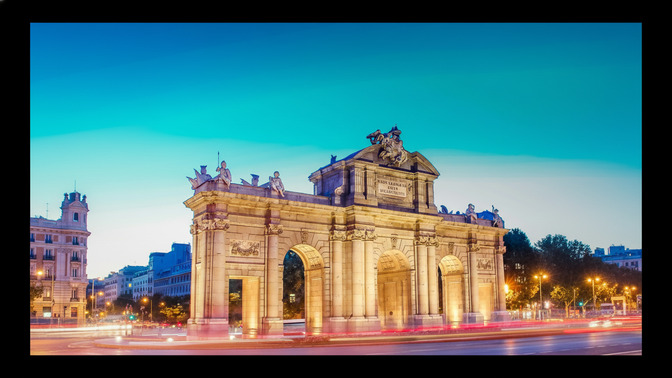
The Puerta de Alcalá is one of Madrid’s most photographed monuments, a neoclassical granite arch built in 1778 as a city gate. King Charles III commissioned Francesco Sabatini to design this monumental entrance to Madrid, replacing an earlier 16th-century gate. The five-arch structure features elaborate decoration including sculptures, columns, and royal coat of arms. It stands at the edge of Retiro Park marking the eastern boundary of the historic center.
The monument is interesting for its asymmetrical design—the facades facing the city center and facing the park are different, as they were designed by different architects working simultaneously. Three arches are semi-circular while two are flat, creating visual interest. The gate no longer serves any practical purpose (it sits in the middle of a roundabout), but remains a beloved Madrid icon. The sculpture groups atop the gate represent the virtues of temperance, justice, prudence, and fortitude.
Why visit: Puerta de Alcalá is Madrid’s postcard image and makes for perfect photos, especially with the gate framing Retiro Park behind. The monument is particularly stunning at night when illuminated. It’s a convenient stop when entering or exiting Retiro Park. The surrounding area offers benches and green space for resting. The gate represents Madrid’s 18th-century expansion beyond medieval walls. Quick visit but essential for the classic Madrid photo.
Entrance: Free, exterior monument
Best time: Early morning or late afternoon for best light, evening for illumination, less crowded weekday mornings
Hours: Always visible, 24/7 access

Plaza de España and Cervantes Monument
Plaza de España, 28008 Madrid, Spain
Plaza de España is one of Madrid’s largest squares, featuring the impressive monument to Miguel de Cervantes at its center. The monument includes a stone sculpture of Cervantes overlooking bronze statues of his most famous creations, Don Quixote on horseback and Sancho Panza on his donkey. Behind them, a semicircular colonnade frames the scene. The square underwent major renovation completing in 2021, transforming it from traffic-choked roundabout into pedestrian-friendly green space with fountains and gardens.
The plaza is bordered by two of Madrid’s early skyscrapers: the Edificio España (1953) and Torre de Madrid (1957), which dominated the skyline before modern towers were built. The recently renovated square now features tree-lined walkways, children’s playgrounds, public art, and plenty of benches. On weekends, street performers and musicians entertain crowds while children play in the fountains. The square marks the western end of Gran Vía and the edge of the historic center.
Why visit: The renovated Plaza de España has transformed into a genuine gathering place for locals and tourists. The Cervantes monument pays homage to Spain’s greatest writer with his iconic characters. It’s a pleasant place to rest during Gran Vía walks, offering shade, greenery, and people-watching. The surrounding early skyscrapers provide photo opportunities showing Madrid’s mid-century modernization. Children love the playgrounds and fountains. The plaza connects to Templo de Debod (10-minute walk) and Malasaña neighborhood.
Entrance: Free
Best time: Afternoon for shade under trees, weekends for street performers, early evening for local atmosphere
Hours: Open 24/7, most active 10 AM-10 PM
4. Neighborhoods & Districts to Explore
Madrid is a city of distinct neighborhoods, each with its own character, history, and local pride. The compact center makes neighborhood hopping easy, letting you experience multiple personalities in one day. From aristocratic Salamanca to bohemian Malasaña, traditional La Latina to LGBTQ+ Chueca, each barrio tells a different Madrid story.
La Latina
Character: La Latina is Madrid’s traditional soul, a maze of narrow medieval streets, ancient taverns, and Sunday morning markets. The neighborhood preserves old Madrid’s essence with families running tapas bars for generations, neighbors chatting on corners, and balconies draped with laundry. The architecture mixes original medieval buildings with 19th-century additions, creating charming irregularity. Sunday mornings transform Calle de la Ribera de Curtidores into El Rastro flea market, Madrid’s most famous weekly tradition.
What makes it special: This is tapas bar heaven, where Cava Baja street alone hosts 20+ legendary establishments serving traditional Spanish small plates. The neighborhood invented the tapas crawl, moving from bar to bar sampling each establishment’s specialty. Plaza de la Paja offers outdoor seating with views of San Andrés church, while hidden patios and rooftop terraces provide escape from the crowds. The basilica of San Francisco el Grande displays a massive dome rivaling Rome’s churches.
Best for: Food lovers, traditionalists, anyone wanting authentic Madrid nightlife, Sunday market shoppers, couples seeking romantic cobblestone ambiance
Must-see in this area: El Rastro flea market (Sunday mornings), Cava Baja tapas bars, Plaza de la Paja, Basilica de San Francisco el Grande, hidden patios off Calle de la Cava Baja
How to get there: Metro La Latina (Line 5) or Tirso de Molina (Line 1), 10-minute walk from Plaza Mayor
Location: Plaza de la Cebada, 28005 Madrid, Spain
Malasaña
Character: Malasaña is Madrid’s hipster headquarters, a formerly working-class neighborhood now dominated by vintage shops, record stores, street art, and alternative culture. Named after a teenage heroine of Madrid’s 1808 uprising against Napoleon, the neighborhood retains its rebellious spirit. Graffiti covers walls, independent boutiques sell handmade goods, and bars play indie rock instead of reggaeton. The 1980s movida madrileña (Madrid scene) was born here, and that creative, countercultural energy still pulses through the streets.
What makes it special: Authentic bohemian atmosphere without forced gentrification. Plaza del Dos de Mayo becomes an outdoor living room where locals drink beer on the steps, musicians jam, and skateboarders practice tricks. Vintage clothing stores, vinyl shops, and independent bookstores line Calle de Velarde. The neighborhood’s bars stay grungy and unpretentious, serving cheap drinks and attracting artists, students, and creatives. Street art adorns every corner, with major murals by international artists.
Best for: Young travelers, nightlife seekers, vintage shoppers, street art enthusiasts, anyone tired of tourist polish and wanting raw Madrid energy
Must-see in this area: Plaza del Dos de Mayo, Calle de Velarde vintage shops, street art murals, Mercado de San Ildefonso food market, record stores on Calle de la Palma
How to get there: Metro Tribunal (Lines 1, 10), Noviciado (Line 2), or Bilbao (Lines 1, 4)
Location: Plaza del Dos de Mayo, 28004 Madrid, Spain
Chueca
Character: Chueca is Madrid’s LGBTQ+ heart, a neighborhood transformed from seedy red-light district in the 1980s to vibrant, inclusive community today. Rainbow flags fly year-round, same-sex couples walk hand-in-hand without second thought, and acceptance is the default. The streets mix trendy restaurants, fashion boutiques, design stores, and the highest concentration of gay bars and clubs in Spain. During Pride Week (late June/early July), Chueca becomes the epicenter of Europe’s largest LGBTQ+ celebration.
What makes it special: The neighborhood pioneered Madrid’s gentrification but maintained soul through fierce community pride. Plaza de Chueca pulses with outdoor cafes where diverse crowds mix freely. Small streets like Calle de Augusto Figueroa host cutting-edge fashion boutiques and specialty food shops. The Mercado de San Antón food market on three levels offers quality dining with rooftop terrace views. The neighborhood’s energy is inclusive, creative, and unapologetically fabulous.
Best for: LGBTQ+ travelers, fashionistas, foodies, nightlife enthusiasts, anyone wanting progressive Madrid atmosphere, couples of all orientations
Must-see in this area: Plaza de Chueca, Mercado de San Antón, Calle de Augusto Figueroa boutiques, Society Club (nightlife), LL Bar (cocktails), Pride Week celebrations
How to get there: Metro Chueca (Line 5) puts you in the heart, or walk from Gran Vía in 5 minutes
Location: Plaza de Chueca, 28004 Madrid, Spain
Salamanca
Character: Salamanca is Madrid’s most elegant neighborhood, where old money lives in 19th-century apartment buildings with doormen and marble lobbies. The grid-pattern streets showcase beautiful Belle Époque architecture, tree-lined boulevards, and an atmosphere of refined sophistication. This is conservative, wealthy Madrid where ladies lunch at exclusive restaurants, businessmen close deals at private clubs, and Hermès, Chanel, and Prada maintain flagship stores. The neighborhood exudes quiet confidence without ostentation.
What makes it special: World-class shopping along Calle de Serrano and Calle de Ortega y Gasset rivals Paris or Milan. But Salamanca offers more than luxury retail—the residential streets show how affluent Madrileños actually live, with their neighborhood markets (Mercado de la Paz), corner cafes, and tree-lined squares. The architecture is consistently beautiful without tourist crowds. Museums like the Archaeological Museum and Sorolla Museum provide cultural depth. It’s elegant without being snooty.
Best for: Luxury shoppers, architecture lovers, food enthusiasts (Michelin-starred restaurants cluster here), anyone wanting to escape tourist hordes, photography enthusiasts
Must-see in this area: Calle de Serrano shopping, Plaza de Colón, National Archaeological Museum, Sorolla Museum, Mercado de la Paz, IE Business School area
How to get there: Metro Serrano (Line 4), Velázquez (Line 4), or Retiro (Line 2)
Location: Calle de Serrano, 28001 Madrid, Spain
Lavapiés
Character: Lavapiés is Madrid’s most multicultural neighborhood, a former working-class district now home to immigrants from Morocco, Bangladesh, Senegal, and Latin America. The streets smell like cumin, coriander, and frying empanadas. Indian restaurants neighbor Moroccan tea houses, Senegalese fabric shops, and Pakistani grocers. Street art covers every surface, old tabernas survive alongside new cultures, and an alternative art scene thrives in converted warehouses and occupied buildings. It’s gritty, diverse, and completely authentic.
What makes it special: This is real multicultural Madrid without sanitization. You can eat incredible international food for €8, find jazz clubs in historic buildings, watch experimental theater, and meet artists from everywhere. The neighborhood maintains working-class roots while attracting creative types priced out of Malasaña. Sunday’s Rastro market extends into Lavapiés’ lower streets. The Tabacalera art center occupies a former tobacco factory with free exhibitions and events.
Best for: Budget travelers, foodies seeking international cuisine, alternative culture enthusiasts, photographers, anyone wanting Madrid’s most diverse experience
Must-see in this area: Tabacalera cultural center, Indian restaurants on Calle del Amparo, Mercado de San Fernando, street art throughout, historic Corrala building, jazz clubs
How to get there: Metro Lavapiés (Line 3) or Tirso de Molina (Line 1)
Location: Plaza de Lavapiés, 28012 Madrid, Spain
Chamberí
Character: Chamberí is residential Madrid at its most livable—neither touristy nor edgy, just genuine neighborhoods where Madrileños raise families, shop at corner stores, and frequent neighborhood restaurants. The architecture spans belle époque mansions to 1970s apartment blocks, creating eclectic streetscapes. Small plazas host children’s playgrounds and elderly playing cards. This is where you come to see how locals actually live when not performing for visitors.
What makes it special: Andén 0 ghost metro station preserved as a museum shows Madrid’s first metro line exactly as it looked in 1919. The Sorolla Museum displays the Valencian painter’s works in his former home and studio. Markets like Mercado de Vallehermoso offer authentic shopping without tourist markup. Ponzano street has become foodie central with creative tapas bars and wine shops. Chamberí gives you Madrid without the tourism industry’s filter.
Best for: Travelers wanting local experience, food enthusiasts, families, anyone tired of tourist crowds, culture seekers, extended stays
Must-see in this area: Andén 0 ghost metro station, Sorolla Museum, Calle de Ponzano restaurants, Mercado de Vallehermoso, Santander Park, residential architecture
How to get there: Metro Iglesia (Line 1), Bilbao (Lines 1, 4), or Alonso Martínez (Lines 4, 5, 10)
Location: Plaza de Chamberí, 28010 Madrid, Spain
Huertas (Barrio de las Letras)
Character: Huertas, also called Barrio de las Letras (Literary Quarter), was home to Golden Age writers like Cervantes, Lope de Vega, and Quevedo in the 16th-17th centuries. Literary quotes are embedded in the sidewalks, the Cervantes House Museum occupies his former residence, and the neighborhood maintains intellectual atmosphere. By day it’s quiet and cultured; by night it transforms into party central for tourists and young Spaniards hitting the dozens of bars and nightclubs.
What makes it special: The duality—highbrow literary history meets lowbrow party scene. You can tour Lope de Vega’s house in the afternoon, have vermouth at a 200-year-old tavern, see a play at one of several theaters, then join the nightlife circus. Plaza de Santa Ana anchors the area with beautiful buildings and outdoor cafes. The streets between Santa Ana and Atocha station contain some of Madrid’s oldest establishments and most creative new bars side by side.
Best for: Literature lovers, nightlife seekers, theater-goers, anyone wanting central location with culture and party options, history enthusiasts
Must-see in this area: Plaza de Santa Ana, Cervantes House Museum, Lope de Vega House Museum, literary quotes in sidewalks, Teatro Español, historic taverns, nightlife on Calle de las Huertas
How to get there: Metro Antón Martín (Line 1) or Sol (Lines 1, 2, 3), walking distance from Atocha station
Location: Plaza de Santa Ana, 28012 Madrid, Spain
5. Food & Dining
Madrid’s food culture centers on simple ingredients prepared perfectly and shared generously. Madrileños eat late—lunch at 2-4 PM, dinner at 10 PM-midnight. The day starts with café con leche and a tostada (toast with tomato and olive oil), continues with a long lunch often including a menú del día (set menu), afternoon merienda snack, and ends with tapas or full dinner. Quality ingredients matter more than complex techniques: Iberian ham sliced paper-thin, golden fried calamari, perfectly runny tortilla española.
Must-Try Local Dishes & Specialties
- Cocido Madrileño – Madrid’s signature chickpea stew with vegetables, meats (chorizo, morcilla, chicken, beef), and bones simmered for hours. Traditionally served in three courses: soup, chickpeas/vegetables, then meat. A winter comfort dish found in traditional restaurants, especially on Thursdays and Sundays.
- Bocadillo de Calamares – Fried squid rings in a crusty baguette, Madrid’s beloved street food. Sounds simple but the contrast of crunchy batter, tender squid, and fresh bread is addictive. Best at bars around Plaza Mayor, though locals prefer La Campana or Bar El Brillante near Atocha.
- Tortilla Española (Tortilla de Patatas) – Thick potato and egg omelet, the national comfort food. The runny vs. cooked-through debate divides the nation. Every bar makes it differently—try multiple versions to form your opinion. Bodega de la Ardosa’s version is legendary.
- Jamón Ibérico de Bellota – Acorn-fed Iberian ham from black pigs, Spain’s crown jewel ingredient. The best quality melts on your tongue with nutty, sweet flavor. Order by the plate at specialty shops like Museo del Jamón or high-end restaurants. Expensive (€30-50 for quality portions) but worth experiencing once.
- Churros con Chocolate – Fried dough strips dipped in thick hot chocolate, Madrid’s breakfast indulgence or late-night snack. The chocolate is pudding-thick for optimal churro dunking. Chocolatería San Ginés has served these 24/7 since 1894. Locals order porras (thicker churros) while tourists get regular churros.
- Gallinejas and Entresijos – Fried lamb intestines, a traditional Madrid tapa not for the squeamish. Crunchy outside, tender inside, served with lemon. Found at old-school taverns in La Latina and Lavapiés. Locals love them; tourists usually skip them.
- Callos a la Madrileña – Tripe stew with chorizo, morcilla, and paprika in tomato sauce. Another organ meat dish traditional to Madrid. Rich, warming, and intensely flavorful. The texture takes getting used to, but the taste rewards adventurous eaters.
- Huevos Rotos – “Broken eggs” fried and served over crispy fried potatoes, often with jamón or chorizo. The runny yolks mix with potatoes creating rich comfort food. Every bar makes it, but Casa Lucio claims to have invented the dish.
- Patatas Bravas – Fried potato cubes with spicy tomato sauce and garlicky aioli. Every bar has their own sauce recipe, making this the most variable tapa. Traditionalists insist bravas sauce should be spicy, not just tomato with paprika. La Tasquita de Enfrente makes exceptional versions.
- Soldaditos de Pavía – Fried cod fritters in light batter, crispy and salty. Named after soldiers from Pavia due to the golden color resembling their uniforms. Perfect with cold beer on a hot day. Best at traditional taverns.
Restaurant Recommendations by Budget
Budget-Friendly (Under €15 per meal)
- Lateral – Multiple locations including Plaza de Santa Ana – Modern tapas bar chain with creative small plates €3-7 each. Order 3-4 per person for a full meal. The space is bright and contemporary, perfect for light lunches. Their brioche with foie gras and apple compote is addictive.
- Bar El Brillante – Glorieta del Emperador Carlos V, 8 – The locals’ choice for bocadillo de calamares near Atocha station. No-frills counter service, €4 sandwiches that are twice as good as the tourist traps around Plaza Mayor. Order yours with lemon juice.
- Casa Labra – Calle de Tetuán, 12 – Since 1860, this standing-only tavern has served perfect cod croquettes and salted cod. €2.50 gets you the best croquetas in Madrid. Crowded at lunch but worth the squeeze. Order at the bar, eat standing, move on.
- El Sur – Calle Torrecilla del Leal, 12 – Excellent Andalusian tapas near Antón Martín metro. Enormous portions for €6-10. Their fried fish, salmorejo, and grilled vegetables are outstanding. Arrive early (8-8:30 PM) or late (11 PM+) to avoid waits.
- Mercado de San Fernando – Calle de Embajadores, 41 – Authentic neighborhood market in Lavapiés with food stalls serving everything from Venezuelan arepas to Spanish tortilla for €5-10. No tourists, all locals, very cheap. Visit Thursday-Saturday for best vendor selection.
Mid-Range (€15-40 per meal)
- Taberna La Bola – Calle de la Bola, 5 – Family-run since 1870, famous for Madrid’s best cocido madrileño (€24). The chickpea stew arrives in three courses as tradition demands. Reserve ahead for Thursday or Sunday when locals fill the dining rooms. The tile walls and zinc bar preserve 19th-century atmosphere.
- Bodega de la Ardosa – Calle de Colón, 13 – Historic tavern in Malasaña serving possibly Madrid’s best tortilla española (€8). The interior preserves original tiles, zinc bar, and vermouth barrels. Try their salmorejo and croquetas too. Crowded weekends so go weekdays 1-2 PM for lunch.
- Juana La Loca – Plaza de la Puerta de Moros, 4 – Creative pintxos (Basque tapas) in La Latina. Each small plate €4-7 showcases seasonal ingredients with modern techniques. The foie gras with berry compote and the morcilla (blood sausage) with caramelized apple are exceptional. Expect to spend €25-35 per person.
- Malacatín – Calle de la Ruda, 5 – Cozy restaurant serving updated traditional dishes. The rabo de toro (oxtail) and secreto ibérico (Iberian pork cut) are phenomenal. Mains €16-22, intimate atmosphere, great service. Reserve ahead as only 30 seats.
- Casa Revuelta – Calle de Latoneros, 3 – Tiny standing-only bar near Plaza Mayor famous for cod tapas since 1885. Order the bacalao rebozado (fried cod) and tortilla. €15-20 per person standing at the bar with wine. Get there by 1:30 PM or forget it—locals pack the place.
Fine Dining (€40+ per meal)
- Botín – Calle de Cuchilleros, 17 – Certified by Guinness as the world’s oldest restaurant (founded 1725). Hemingway ate here and mentioned it in novels. The specialty is cochinillo asado (roast suckling pig, €50) cooked in the original 18th-century wood oven. Touristy but legitimately historical and the food is excellent. Reserve weeks ahead.
- Casa Lucio – Calle de la Cava Baja, 35 – Where Spanish royalty and celebrities eat huevos rotos. Lucio himself (now in his 80s) still oversees the kitchen. Mains €24-40, exceptional quality ingredients simply prepared. The atmosphere is elegant tavern—white tablecloths but not stuffy. Book a month ahead for weekend dinners.
- DiverXO – Calle de Padre Damián, 23 – Madrid’s only 3-Michelin-star restaurant, chef Dabiz Muñoz’s avant-garde Asian-Spanish fusion laboratory. Tasting menus start at €250 per person. Wild, theatrical, polarizing food that pushes every boundary. Reserve months ahead through their website. Not for everyone but an experience you’ll never forget.
- Cebo – Carrera de San Jerónimo, 34 – 1-Michelin-star contemporary Spanish cuisine in the Urban Hotel. Chef Aurelio Morales creates refined dishes showcasing seasonal products. Tasting menu €125. Beautiful plating, impeccable service, elegant atmosphere. Much more approachable than DiverXO while still delivering Michelin quality.
Food Markets & Street Food
Mercado de San Miguel – Plaza de San Miguel, s/n – Already covered in attractions but worth repeating: this is gourmet tapas heaven in a beautiful iron-and-glass structure. €20-40 per person to graze multiple stalls. Crowded weekends, better Tuesday-Thursday 6-8 PM.
Mercado de San Antón – Calle de Augusto Figueroa, 24 – Three-floor market in Chueca. Ground floor has fresh products, second floor has dining stalls serving international cuisines, third floor rooftop terrace offers sit-down restaurant with city views. €12-25 per person. More local feel than San Miguel.
Mercado de San Fernando – Calle de Embajadores, 41 – Authentic neighborhood market in Lavapiés selling fresh produce, meats, and fish on weekdays, with food stalls Thursday-Saturday serving incredibly cheap international food. Venezuelan, Indian, Spanish, Japanese options all under €10.
El Rastro Flea Market – Calle de la Ribera de Curtidores – Sunday mornings attract vendors selling empanadas, churros, and snacks. The surrounding bars in La Latina fill with market-goers drinking vermouth and eating tapas. This is where to experience the Sunday tradition of shopping, snacking, and socializing.
Dining Customs & Etiquette
Meal times: Breakfast 7-10 AM (coffee and toast), lunch 2-4 PM (main meal), afternoon snack 6-7 PM, dinner 10 PM-midnight. Restaurants often don’t seat dinner guests until 9 PM. Kitchen closing times (often midnight-1 AM) are strictly observed.
Tipping: Not mandatory but appreciated. Leave €1-2 at casual places, 5-10% at mid-range restaurants, 10% at fine dining if service was excellent. Many Spaniards just round up the bill. Tipping isn’t expected at bars for drinks or tapas.
Reservations: Essential for popular restaurants on weekends and any night at high-end places. Book online via ElTenedor (Spanish OpenTable) or call directly. Many traditional taverns don’t take reservations—arrive early or be prepared to wait.
Dress code: Casual for most places, smart casual for mid-range restaurants, jacket for fine dining. Spaniards dress up more than Americans or Northern Europeans. Avoid athletic wear at dinner.
[AFFILIATE LINK: Book food tours in Madrid – GetYourGuide/Viator]
6. Nightlife & Entertainment
Madrid earned its reputation as the city that never sleeps. Dinner at 10 PM is the opening act, with bars filling around midnight and clubs hitting peak energy at 3-4 AM. The movida madrileña spirit—that 1980s cultural explosion of freedom after Franco—still infuses the nightlife with creative energy and anything-goes attitude. From flamenco tablaos to electronic music clubs, rooftop cocktail bars to punk rock dives, Madrid’s nightlife matches every mood and budget.
Best Areas for Nightlife
- Malasaña – Plaza del Dos de Mayo and surrounding streets – Alternative, indie, rock bars and clubs. Young crowd, cheap drinks (€3-6 beers), grungy atmosphere. Live music venues, vinyl bars, late-night cafes. The vibe is creative and unpretentious. Busiest Thursday-Saturday from midnight-4 AM.
- Chueca – Around Plaza de Chueca – LGBTQ+ headquarters with diverse bars and clubs. From sophisticated cocktail lounges to packed dance clubs playing house and techno. The crowd is mixed orientation, friendly, and fabulous. Thursday-Saturday peak 1-5 AM. Pride Week (late June) is legendary.
- La Latina – Cava Baja and surrounding streets – Tapas bars that transition to late-night scene. More relaxed than clubbing, focusing on conversation, wine, and vermouth. Attracts 25-45 age group. Peak hours 10 PM-2 AM before crowds move to Malasaña or Chueca clubs.
- Huertas (Barrio de las Letras) – Around Plaza de Santa Ana – Tourist-heavy bar zone with everything from Irish pubs to flamenco shows to dance clubs. International crowd, many English speakers. Can feel generic but convenient for centrally located hotels. Peak midnight-3 AM.
- Lavapiés – Various streets – Alternative cultural scene with jazz clubs, experimental venues, and multicultural bars. Less touristy, more authentic. Attracts artists, students, and alternative crowd. More about experiencing culture than pure partying.
Bars & Pubs
- 1862 Dry Bar – Calle del Pez, 27, Malasaña – Speakeasy-style cocktail bar behind an unmarked door. Expert mixologists create classic and innovative cocktails €10-14. Intimate atmosphere, jazz music, quality ingredients. Arrive before 11 PM to get in without waiting.
- Salmon Guru – Calle de Echegaray, 21, Huertas – Award-winning cocktail bar with creative presentations and theatrical flair. Cocktails €12-16 but worth it for the experience. The menu reads like a story, each drink tells a narrative. Reserve ahead for weekends.
- La Venencia – Calle de Echegaray, 7, Huertas – Historic sherry bar unchanged since 1920s. No cocktails, just sherry poured from wooden barrels and simple tapas. Cash only, no photos allowed, grumpy but beloved bartenders. Completely authentic and cheap (€3-4 glasses). Peak late afternoon 7-9 PM.
- Café Comercial – Glorieta de Bilbao, 7, Chamberí – Historic café with beautiful art nouveau interior, transformed into evening gathering spot. Coffee by day, cocktails and conversation by night. Locals meet friends here for hours. Open until 2 AM weekends.
- Círculo de Bellas Artes Rooftop – Calle de Alcalá, 42 – €5 entry to stunning rooftop terrace with panoramic city views. Cocktails €12-15 but the vista is worth it. Perfect for sunset drinks before hitting clubs. Open until midnight most nights.
Clubs & Dancing
- Teatro Kapital – Calle de Atocha, 125 – Seven-floor mega-club near Atocha station with different music on each floor (reggaeton, house, hip-hop, Latin, karaoke, VIP). Capacity 3,000+, tourist favorite. Cover €15-20 includes first drink. Dress code enforced. Peak 2-5 AM Friday-Saturday.
- Sala El Sol – Calle de los Jardines, 3, Gran Vía area – Legendary club since the movida madrileña era. Live bands and DJs playing indie rock, electronic, pop. Smaller capacity (300) creates intimate energy. Cover €10-15. Check schedule for concerts. True Madrid institution.
- Fabrik – Avenida de la Industria, 82, Humanes de Madrid – Massive warehouse club 20 minutes from center specializing in techno and electronic. International DJs, 4 AM-noon sessions. Cover €20-30. Take taxi or special late-night bus. For serious ravers only.
- Teatro Eslava – Calle del Arenal, 11 – Multi-room club in converted theater near Opera. Mainstream house, pop, Spanish music. Mixed age crowd 25-40. Cover €15 includes drink. Good production values, less touristy than Kapital.
- Independance Club – Calle de Atocha, 125 (same building as Kapital, different entrance) – Alternative to Kapital with edgier electronic and house music. Smaller, more intimate vibe. Cover €12-18. Popular with locals who find Kapital too touristy.
- Mondo Disko – Calle de Alcalá, 20 – Friday and Saturday night club in the Círculo de Bellas Artes building. Electronic and house music, stylish crowd. Cover €15-18. The same building as the rooftop bar, so you can start with sunset views then move to the club.
Live Music & Shows
- Cardamomo – Calle de Echegaray, 15, Huertas – Authentic flamenco tablao with nightly shows at 9 PM and 11 PM. Cover €39 includes drink, or €69 with dinner. Small intimate space, passionate performers. One of Madrid’s best flamenco experiences. Book online ahead.
- Corral de la Morería – Calle de la Morería, 17, La Latina – Madrid’s most prestigious flamenco venue since 1956. Show and dinner from €85. World-class dancers in historic setting. Reserve weeks ahead. Dinner starts 8 PM, show 10:30 PM.
- Café Berlín – Calle de Jacometrezo, 4 – Jazz club hosting local and international acts. Intimate venue (150 capacity), quality acoustics. Cover €12-25 depending on performer. Shows start 10 PM. Check lineup online.
- Teatro Real – Plaza de Isabel II, s/n – Madrid’s opera house with world-class productions September-July. Tickets €20-200 depending on seat and production. The building itself is stunning. Take advantage of €20 restricted-view seats to experience opera affordably.
- Sala Clamores – Calle de Alburquerque, 14 – Historic jazz club since 1981 hosting jazz, blues, and Latin music. Intimate atmosphere, excellent acoustics. Cover €12-20. Shows at 9 PM and 11 PM. Popular with serious music lovers.
- La Riviera – Paseo Bajo de la Virgen del Puerto, s/n – Large concert venue hosting international and Spanish rock, pop, and indie bands. Capacity 2,500. Ticket prices vary €20-60 depending on artist. Check schedule online. Located near Príncipe Pío metro station.
Cultural Performances
Beyond flamenco and opera, Madrid offers excellent theater (mostly in Spanish), classical concerts at Auditorio Nacional, and contemporary dance. The Matadero cultural center hosts cutting-edge performances and exhibitions. Check TimeOut Madrid or local listings for current shows. Most theaters close August when Madrileños flee the heat.
Teatro Español – Calle del Príncipe, 25 – Historic theater in Huertas presenting Spanish classics and contemporary plays. Beautiful 19th-century building. Tickets €15-35. Performances in Spanish.
Auditorio Nacional de Música – Calle del Príncipe de Vergara, 146 – Home of Spanish National Orchestra with classical concerts, chamber music, and recitals. Tickets €10-60. World-class acoustics. Season runs September-June.
Family-Friendly Evening Entertainment
Retiro Park’s Puppet Theater (Marionetas del Retiro) performs traditional puppet shows weekends and holidays. Parque de Atracciones amusement park stays open until midnight summer weekends. The teleférico cable car operates until sunset offering aerial views. Many restaurants welcome children at dinner—Spaniards take kids everywhere. The Christmas lights displays (November-January) delight all ages.
Parque de Atracciones – Casa de Campo – Amusement park with rides, shows, and entertainment. Summer hours extend until midnight weekends. Day passes €32 adults, €24 children. Metro Batán (Line 10) then free shuttle bus.
Teleférico Cable Car – Paseo del Pintor Rosales, s/n – Aerial cable car crossing Casa de Campo park with panoramic views. Operates until sunset. €6 one-way, €9 round trip. Kids love it. Connects to zoo and amusement park.
7. Shopping
Best Shopping Districts
- Calle de Serrano & Salamanca – Salamanca neighborhood – Luxury shopping avenue with every international designer: Hermès, Chanel, Prada, Gucci, Louis Vuitton. Also Spanish luxury brands like Loewe (leather goods). High-end department store El Corte Inglés flagship. Beautiful window shopping even if not buying. Expect €500+ for most items.
- Gran Vía – City center – International chain stores (Zara, H&M, Mango, Primark), department stores, souvenir shops. Very touristy but convenient. The historic buildings make window shopping scenic. Prices similar to other European capitals. Pedestrianized sections make browsing pleasant.
- Calle de Fuencarral – Malasaña – Alternative fashion, vintage stores, independent boutiques, sneaker shops. Younger crowd, more affordable (€30-150 range). Urban streetwear, second-hand clothing, record stores. More personality than Gran Vía’s corporate retail.
- Chueca Shopping Area – Around Plaza de Chueca – Fashion-forward boutiques, design shops, quirky gifts. Mix of Spanish designers and international brands. More cutting-edge than mainstream. Prices mid-range to high (€50-300). Great for unique pieces.
Markets
El Rastro – Calle de la Ribera de Curtidores and surrounding streets – Madrid’s legendary Sunday morning flea market, operating since medieval times. Over 3,500 vendors sell antiques, vintage clothing, leather goods, jewelry, books, records, art, and junk. The market sprawls through La Latina’s streets from Plaza de Cascorro downhill. Arrive 9-10 AM for best selection before noon crowds become unbearable. Bargaining is expected. Watch for pickpockets in the crush. After shopping, join locals at surrounding tapas bars for vermouth and conversation. Open Sundays and holidays 9 AM-3 PM.
Mercado de Motores – Museo del Ferrocarril, Paseo de las Delicias, 61 – Hip market in the railway museum featuring vintage goods, crafts, food trucks, and live music. Second weekend of each month except August. Young creative crowd, €3 entry. Food and shopping from noon-10 PM. Great atmosphere with DJs and outdoor seating.
Mercadillo de Sellos y Monedas – Plaza Mayor – Sunday morning stamp and coin collectors market. Mostly locals trading and selling collectibles. Free to browse. An authentic tradition mostly overlooked by tourists. Open Sundays 10 AM-2 PM.
What to Buy – Local Products & Souvenirs
- Jamón Ibérico – Premium Spanish ham, the ultimate foodie souvenir. Buy vacuum-sealed slices to take home (check customs regulations). Museo del Jamón and specialty shops sell quality products €30-100 depending on grade. Get de bellota (acorn-fed) for best quality.
- Spanish Wine – Rioja, Ribera del Duero, and Priorat wines offer exceptional value. Wine shops like Lavinia or El Corte Inglés gourmet section have good selections €8-30. Spanish regulations allow 2 liters per person in checked luggage to most countries.
- Leather Goods – Spain produces excellent leather at reasonable prices. Wallets, bags, belts, and jackets. Salvador Bachiller (multiple locations) offers quality and style €40-200. El Rastro has leather vendors with negotiable prices.
- Spanish Ceramics – Hand-painted Talavera tiles, plates, and pottery make colorful souvenirs. Antigua Casa Talavera (Calle de Isabel la Católica, 2) specializes in traditional ceramics €15-100. Fragile but beautiful.
- Espadrilles – Traditional rope-soled canvas shoes, comfortable and stylish. Alpargatas range €15-60 at Castañer or department stores. Summery souvenir that’s actually useful.
- Spanish Saffron – The world’s most expensive spice, but Spanish saffron offers great value. Small tins €8-15 at gourmet shops. Essential for paella. Much cheaper than same quality elsewhere.
- Mantilla Shawl – Traditional Spanish lace shawl worn for special occasions. Beautiful and uniquely Spanish. Quality pieces €50-200 at traditional shops in La Latina or Salamanca.
- Fútbol Jersey – Real Madrid or Atlético Madrid official jerseys from team stores. Real Madrid’s shop at Santiago Bernabéu stadium has best selection, €90-120 for replica jerseys.
Shopping Hours & Customs
Standard hours: Monday-Saturday 10 AM-2 PM and 5-8:30 PM, with siesta closure between. Large chains and malls stay open continuously 10 AM-9 PM. Sunday most shops closed except tourist zones (Gran Vía, Sol) and shopping malls. August many independent shops close for 2-3 weeks as owners vacation. Sales periods: January-February (winter sales) and July-August (summer sales) offer 30-70% discounts.
Bargaining expected only at El Rastro flea market and some antique shops. Fixed prices elsewhere. VAT (IVA) is 21% included in prices. Non-EU tourists can claim VAT refund on purchases over €90.15 at single store—ask for tax-free form, validate at airport customs before checking bags, collect refund at airport or via mail.
8. Seasonal Events & Festivals
Madrid’s festival calendar reflects Spanish love of celebration, religious traditions, and cultural pride. From massive street parties to solemn processions, each season brings reasons to gather. The city’s calendar follows Catholic holy days, regional pride days, and modern cultural festivals. Participating in Madrid’s festivals offers the deepest cultural immersion possible.
Annual Events Calendar
| Month/Season | Event Name | Description |
|---|---|---|
| January | Reyes Magos (Three Kings Day) | January 5 evening parade through city center with floats, candy throwing, and royal processions. January 6 is the traditional gift-giving day, more important than Christmas. Free to watch, arrive early for parade route spots (Cibeles to Plaza Mayor). |
| February | Carnival (Carnaval) | Week before Lent brings costume parties, parades, and celebrations. Madrid’s carnival is smaller than Cádiz or Tenerife but still fun. The Burial of the Sardine parade (ending carnival) is quirky tradition. Dates vary based on Easter. |
| March/April | Semana Santa (Holy Week) | Week before Easter features religious processions with penitents in pointed hoods carrying massive floats through streets. Less intense than Seville’s celebrations but still moving. Free to watch. Most processions evening/night. Dates vary with Easter. |
| April-May | Book Fair (Feria del Libro) | Late May-early June, two weeks of book stalls in Retiro Park. Publishers offer discounts, authors do signings. Lovely way to browse books under trees. Free entry to fair, books at various prices. |
| May | San Isidro Festival | May 15 honors Madrid’s patron saint with week-long celebrations: free concerts, traditional dancing, bullfights at Las Ventas, food festivals. Locals picnic at San Isidro meadow wearing traditional dress. The Pradera de San Isidro gets crowded but festive. Madrid’s biggest annual celebration. |
| June | Madrid Pride (Orgullo) | Last week of June/first week of July brings Europe’s largest LGBTQ+ Pride celebration. Chueca fills with stages, parties, and million+ attendees. Massive parade Saturday. Free events, some ticketed parties. Hotel prices skyrocket—book months ahead. Incredibly inclusive atmosphere. |
| July | Veranos de la Villa | July-August summer cultural program with free outdoor concerts, theater, cinema, and dance performances in parks and plazas throughout city. Check program online for schedule. Madrid’s answer to summer heat—free culture after sunset. |
| August | San Cayetano, San Lorenzo, La Paloma | Successive neighborhood festivals in La Latina and Lavapiés (early-mid August) with street decorations, dancing, traditional music, and food stalls. Very local atmosphere. La Paloma (August 15) is most important. |
| September | Madrid Fashion Week | Mercedes-Benz Fashion Week Madrid showcases Spanish designers. Most shows are industry-only but some public events. Fashionable crowds fill Salamanca neighborhood. Check IFEMA schedule for public access events. |
| October | Autumn Festival (Festival de Otoño) | October-November brings contemporary theater, dance, and music performances at venues city-wide. Cutting-edge international and Spanish artists. Ticketed events €15-40. Strong programming for performing arts fans. |
| November | Día de Todos los Santos (All Saints’ Day) | November 1 families visit cemeteries to honor deceased. Bakeries sell special sweets like huesos de santo (marzipan bones). Understated but important tradition. Not a tourist spectacle but culturally significant. |
| December | Christmas Season (Navidad) | Late November-January 6 brings spectacular lights on Gran Vía and other streets, Christmas market in Plaza Mayor selling nativity figures, ice skating at various locations, and festive atmosphere. New Year’s Eve (Nochevieja) centers on Puerta del Sol where crowds eat 12 grapes at midnight—each chime one grape for good luck. Incredibly crowded but quintessentially Madrid. |
Booking Considerations During Festival Periods
Madrid Pride (late June) causes hotel prices to double or triple with rooms booked months ahead. San Isidro (mid-May) similarly impacts availability. New Year’s Eve is impossible for hotels near Sol—book by October or stay further out. Christmas season (late December) has moderate impact. Most other festivals don’t significantly affect accommodation. Summer festivals during August actually bring lower prices as many Madrileños leave town.
9. Accommodation Recommendations
Madrid offers accommodations for every budget and style, from hostels to five-star luxury. The compact center means most areas work well for tourists—it’s more about neighborhood vibe than convenience. Book early for peak season (April-June, September-October) and festival periods. Summer (July-August) and winter (January-February) offer better deals as many Madrileños vacation elsewhere.
Best Neighborhoods to Stay
| Neighborhood | Vibe | Price Range (per night) | Best For |
|---|---|---|---|
| Sol / Gran Vía | Central chaos, nonstop energy, tourist hub | €80-250 | First-time visitors, short stays, shopaholics |
| La Latina | Traditional, tapas heaven, charming streets | €70-200 | Food lovers, romantic getaways, culture seekers |
| Malasaña / Chueca | Hip, LGBTQ+ friendly, nightlife, alternative | €70-220 | Young travelers, LGBTQ+ visitors, nightlife fans |
| Salamanca | Elegant, quiet, luxury shopping, upscale | €150-400 | Luxury travelers, shoppers, peace and quiet |
| Retiro / Jerónimos | Museum district, park access, residential calm | €100-300 | Families, museum enthusiasts, joggers |
Pros & Cons of Each Area
Sol / Gran Vía:
Pros: Walking distance to everything, excellent metro connections (3 lines at Sol), shopping at your doorstep, surrounded by restaurants and services, can’t get more central.
Cons: Noise 24/7, tourist crowds and scams, overpriced restaurants, pickpockets everywhere, feels generic not authentic, street noise penetrates most hotels.
La Latina:
Pros: Best neighborhood for food, charming medieval streets, authentic atmosphere, walkable to major sights, Sunday El Rastro market, feels like real Madrid.
Cons: Weekend nights get loud from bar crowds, some streets hilly, fewer hotel options than Sol, Sunday mornings chaotic with market.
Malasaña / Chueca:
Pros: Hip neighborhood vibe, excellent nightlife, great cafes and restaurants, vintage shopping, inclusive LGBTQ+ atmosphere, local feel with tourist convenience.
Cons: Can be loud Thursday-Saturday nights, some streets feel gritty, parking difficult, party noise until 3-4 AM on weekends.
Salamanca:
Pros: Quiet residential streets, beautiful architecture, luxury shopping, excellent restaurants, safe and clean, feels exclusive.
Cons: More expensive, less nightlife, fewer budget dining options, can feel sterile, 15-20 minute walk to main tourist sights.
Retiro / Jerónimos:
Pros: Park access for morning jogs, near major museums (Prado, Reina Sofía), quieter than center, elegant surroundings, family-friendly.
Cons: Less restaurant variety nearby, evening entertainment requires going elsewhere, can feel removed from action, fewer metro options.
Booking Tips
Book 2-3 months ahead for peak season and festivals (April-June, September-October, Pride Week, New Year’s Eve). One month ahead suffices for shoulder season. July-August and January-February allow last-minute deals. Wednesday-Thursday check-in gets better rates than Friday-Saturday. Many Madrid hotels don’t include breakfast—check carefully as adding it later costs €15-25 per person. Air conditioning is essential May-September. Request rooms facing interior courtyards to minimize street noise in central areas. Apartments via Airbnb offer good value for 4+ nights and groups.
[AFFILIATE LINK: Search hotels in Madrid – Booking.com/Hotels.com]
[AFFILIATE LINK: Book vacation rentals in Madrid – Airbnb/Vrbo]
[DISPLAY AD PLACEHOLDER #3]
10. Practical Information
Essential Travel Details
- Currency: Euro (€), approximately €1 = $1.10 USD (rates fluctuate). Exchange at banks for best rates, avoid airport exchange booths (poor rates and high fees). ATMs widely available.
- Credit Cards: Widely accepted at hotels, restaurants, shops. Visa and Mastercard universal, American Express less common. Many places require chip-and-PIN. Contactless payment common. Small bars and markets may be cash-only.
- ATMs: Everywhere in central Madrid. Most accept international cards (look for Visa/Mastercard/Plus logos). Your bank charges foreign transaction fees (typically €3-5 per withdrawal plus 1-3%). Daily limit usually €200-600. Best bank networks: Santander, BBVA, CaixaBank—avoid Euronet ATMs (terrible exchange rates).
- Language: Spanish (Castilian). English spoken in tourist areas, hotels, major restaurants, museums. Less English in neighborhood bars, small shops, among older residents. Learning basic Spanish phrases appreciated and helpful.
- Tipping: Restaurants 5-10% for good service (not obligatory), bars €1-2 or round up, taxis round up to next euro, hotel porters €1-2 per bag, housekeeping €1-2 per day. Tipping much less expected than US/Canada.
- Electrical Plugs: Type C and F (two round pins), 230V, 50Hz. North American devices need adapter and possibly converter. UK devices need adapter only. Buy adapters before arrival—airport prices inflated.
- Emergency Number: 112 (police, ambulance, fire—English speakers available)
- Police: 091 (National Police)
- Medical Emergency: 061 (ambulance)
- Tourist Police: 915 488 537 (English-speaking officers for reporting crimes)
- SIM Cards: Available at airport (Terminal 4 has Orange, Vodafone, Movistar stores), phone shops city-wide, or some El Corte Inglés department stores. Tourist SIM cards €15-30 for 15-30 days with 10-30GB data. Movistar has best coverage. Bring unlocked phone.
- WiFi: Free in most hotels, many cafes and restaurants (ask for password—”la contraseña del wifi”), some metro stations, Retiro Park. Generally reliable. Coffee shops expect you to order something.
- Tap Water: Completely safe to drink. Madrid’s tap water comes from mountain reservoirs and tastes clean. Restaurants serve free tap water if requested (“agua del grifo”). Refill bottles at any sink or public fountains in parks.
Daily Budget Guide (2026 Prices)
| Budget Type | Daily Cost | What’s Included |
|---|---|---|
| Budget Traveler | €60-90 | Hostel bed €25-35, breakfast included, lunch menú del día €12-15, supermarket snacks €5-8, tapas dinner €15-20, metro 10-ride pass, free museum hours, walking tours, one beer/wine |
| Mid-Range Traveler | €130-200 | 3-star hotel €80-120, breakfast €10, lunch restaurant €20-25, afternoon coffee/snack €8, dinner restaurant €35-45, museum entries €25, metro/some taxis, two drinks at bars, gelato/treats |
| Luxury Traveler | €300+ | 4-5 star hotel €200+, hotel breakfast included, nice lunch €40-60, dinner at quality restaurant €60-100, skip-the-line tickets, taxis/Uber everywhere, cocktails/wine €30-50, shopping/souvenirs, rooftop bar visits |
Language Basics – Essential Phrases
- Hello: Hola (OH-lah)
- Thank you: Gracias (GRAH-thee-ahs)
- Please: Por favor (por fah-VOR)
- Excuse me: Perdón (per-DON) or Disculpe (dees-KOOL-peh)
- How much?: ¿Cuánto cuesta? (KWAN-toh KWES-tah?)
- Where is…?: ¿Dónde está…? (DON-deh es-TAH?)
- I don’t understand: No entiendo (no en-tee-EN-doh)
- Help!: ¡Socorro! (so-KO-roh!) or ¡Ayuda! (ah-YOO-dah!)
- Bathroom: Baño (BAHN-yoh) or aseo (ah-SEH-oh)
- Check, please: La cuenta, por favor (lah KWEN-tah, por fah-VOR)
Safety Tips
Madrid is generally safe with low violent crime rates. Most issues involve pickpocketing and petty theft targeting distracted tourists. The city feels safe walking at night in tourist areas and most neighborhoods. Police presence is visible, especially around tourist zones.
Areas to avoid: The park near Atocha station late at night, parts of Lavapiés after midnight (though improving), empty metro cars late at night. These aren’t dangerous, just exercise more caution. No neighborhoods are truly off-limits.
Common scams:
- Distraction theft at outdoor cafes—one person asks directions while partner steals phone/bag from table
- Fake petition signatures requesting donations—gypsies especially around Sol and Plaza Mayor
- Three-card monte and shell games on Gran Vía—all are scams, never play
- Rose sellers pressuring couples in restaurants—politely refuse, you’re not obligated to buy
- Overpriced flamenco show tours from street vendors—book directly online instead
Pickpocketing: Very common in crowded tourist areas (Sol, Gran Vía, Plaza Mayor, metro Line 1, El Rastro market). Groups work together creating distractions. Keep valuables in front pockets, bags zipped and in front of you, don’t put phones on tables, be aware in crowds. Most theft is non-confrontational—they want your stuff, not to hurt you.
Solo traveler safety: Madrid is excellent for solo travelers. Women traveling alone report feeling safe walking around central neighborhoods day and night. Use common sense: stick to well-lit streets after midnight, don’t flash expensive jewelry, trust your instincts. The city is LGBTQ+ friendly, especially in Chueca. Solo dining is normal—no one will judge you eating alone.
Cultural Customs & Etiquette
- Greetings: Single cheek kiss (right cheek) for friends and after introductions, handshake for formal/business, both are common. Always greet shopkeepers with “Hola” when entering.
- Dress code: Madrileños dress more formally than Northern Europeans or Americans. Avoid shorts and flip-flops except in summer heat. Churches require covered shoulders and knees. Evening dress is smart-casual minimum.
- Photography: Generally fine in public. Ask permission before photographing people. Flash photography prohibited in most museums. Some churches don’t allow photos—respect signs.
- Public behavior: Spaniards are loud and animated—don’t be alarmed by shouting, it’s just conversation. Public displays of affection are common. Smoking is prohibited indoors but common at outdoor terraces. Queue culture exists but is less rigid than UK.
- Dining: Bread is for eating, not sharing germs—take your piece, don’t pass basket. Leaving small amounts of food on plate is fine. Finishing everything signals you’re still hungry. Don’t rush—meals are social events.
- Gestures to avoid: The “OK” sign (thumb and forefinger circle) can be offensive. Beckoning with palm up and fingers together is proper—don’t use single finger. The “fig” gesture (thumb between fingers) is very offensive.
Visa Requirements
Spain is part of the Schengen Area. US, Canadian, Australian, UK, and many other passport holders can visit visa-free for up to 90 days within 180-day period for tourism. No visa required, just valid passport with 6 months validity beyond travel dates. Starting 2025, ETIAS (European Travel Information and Authorization System) will require online pre-authorization (€7, valid 3 years) before travel—similar to US ESTA. Check your country’s specific requirements at Spanish embassy website or official EU immigration site.
Health & Medical Information
Vaccinations: No required vaccines for Spain. Routine vaccinations (measles, diphtheria, tetanus, etc.) should be up to date. Hepatitis A and B recommended for some travelers. No malaria, yellow fever, or tropical disease risks.
Pharmacies: Farmacias everywhere, marked with green cross. Many medications available over-counter that require prescription elsewhere (including some antibiotics). Pharmacists are knowledgeable and speak some English in tourist areas. 24-hour pharmacies called “farmacias de guardia” rotate—lists posted at all pharmacies or search online.
Hospitals: Public healthcare (Sistema Nacional de Salud) is excellent but primarily for residents. Private hospitals (Sanitas, HM Hospitales, Quirónsalud) provide faster English-speaking service for tourists—expect to pay €100-200 for consultations, more for procedures. Travel insurance strongly recommended. European Health Insurance Card (EHIC) covers EU citizens for necessary treatment. Emergency rooms (Urgencias) treat everyone regardless of ability to pay.
Common health issues: Tap water is safe. Food hygiene standards are high—food poisoning is rare. Summer heat (35-40°C) causes dehydration and heat exhaustion—drink water constantly, seek shade 2-6 PM. Air pollution occasionally high but not dangerous for short visits. Altitude is low (650m) so no altitude sickness.
[AFFILIATE LINK: Get travel insurance for your Madrid trip – World Nomads/SafetyWing]
Accessibility Information
Madrid’s accessibility has improved dramatically in recent years. Most metro stations now have elevators (look for wheelchair symbol on metro maps), though some older stations remain stairs-only. Buses are 100% wheelchair accessible with hydraulic lifts. Sidewalks are generally well-maintained with curb cuts, though cobblestone streets in La Latina and historic center can be challenging. Taxis required by law to transport wheelchairs—Eurotaxi and Radio Taxi Cómodo specialize in adapted vehicles.
Major museums (Prado, Reina Sofía, Thyssen) are fully accessible with elevators, ramps, and wheelchair loans. Royal Palace has accessible routes though some areas remain difficult. Retiro Park is mostly accessible on paved paths. Many restaurants have step-free entries, though older establishments may have stairs. Hotels 3-star and above generally have accessible rooms—request when booking.
Family-Friendly Considerations
Madrid welcomes families—children are expected everywhere including nice restaurants at 11 PM. Spaniards take kids everywhere so family facilities are common. Most restaurants have high chairs (trona), many have kids menus. Museums offer family-friendly activities and audio guides. Parks have playgrounds—Retiro Park, Parque del Oeste, and Casa de Campo have large play areas.
Baby supplies (diapers, formula, etc.) available at any Carrefour, Mercadona, or pharmacy. Strollers work on metro (use elevators) and buses. Many museums offer stroller parking. Changing facilities available in modern museums, shopping centers, and large restaurants but less common in traditional establishments. Breastfeeding in public is legal and generally accepted, though some older Spaniards may disapprove discreetly.
11. Day Trips & Nearby Destinations
Madrid’s central location makes it perfect base for exploring historic Spanish cities. Multiple UNESCO World Heritage sites sit within an hour, offering medieval walls, aqueducts, palaces, and cathedrals that complement Madrid’s energy with small-town charm. All trips are easily done by train or bus, returning same evening.
Toledo
Distance: 70 km / 44 miles, 33 minutes by high-speed train (AVE) or 1 hour by bus
What to see: Toledo is Spain’s medieval jewel, a walled city perched on a hill where Christian, Jewish, and Muslim cultures coexisted for centuries. The Gothic cathedral rivals any in Europe with Goya and El Greco paintings inside. Wander the labyrinthine alleys discovering 10th-century mosques, medieval synagogues, and the El Greco Museum. The city’s sword-making tradition continues in craft shops. Walk the city walls for panoramic views over the Tagus River. Every street reveals another centuries-old building, creating time-travel atmosphere.
How to get there: AVE trains from Madrid Puerta de Atocha every 30 minutes (33 minutes, €13-21 each way). Slower regional trains also available (€10, 90 minutes). Buses from Plaza Elíptica every 30 minutes (1 hour, €6 each way). Train is faster and more comfortable. Book tickets online at Renfe.com or buy at station.
Time needed: Full day (6-8 hours) to see main sights and wander without rushing
Best for: History enthusiasts, architecture lovers, photographers, anyone wanting medieval atmosphere and religious art
Location: Plaza del Ayuntamiento, 1, 45002 Toledo, Spain (Tourist Information Office)
Segovia
Distance: 90 km / 56 miles, 30 minutes by high-speed train or 1.5 hours by bus
What to see: Segovia’s Roman aqueduct—165 massive granite arches built 2,000 years ago without mortar—is one of ancient Rome’s most impressive surviving structures. The fairytale Alcázar castle inspired Disney’s Cinderella Castle with its towers and dramatic cliff-edge position. The Gothic cathedral dominates the plaza. Walk medieval streets finding Romanesque churches and enjoying cochinillo asado (roast suckling pig), Segovia’s culinary specialty. The Jewish quarter preserves history of Spain’s expelled Jewish community. Views from the Alcázar over surrounding plains are breathtaking.
How to get there: AVE trains from Madrid Chamartín station (30 minutes, €13-24 each way) but station is 5km from center requiring bus connection. Bus from Moncloa station direct to Segovia center (1.5 hours, €8 each way) is often more convenient. Buses run hourly. Train is faster if you don’t mind the transfer.
Time needed: Full day (6-8 hours) including lunch
Best for: History buffs, castle enthusiasts, photographers, foodies (roast pig!), families (kids love the castle)
Location: Plaza Mayor, 10, 40001 Segovia, Spain (Tourist Information Office)
El Escorial
Distance: 50 km / 31 miles, 1 hour by train or bus
What to see: The Royal Monastery of San Lorenzo de El Escorial is King Philip II’s 16th-century monument to Spanish power—part monastery, part royal palace, part mausoleum, part library. The massive complex holds royal tombs including most Spanish kings since Charles V, a library with 40,000 rare books, Titan and El Greco paintings, and austere royal apartments reflecting Philip’s religious devotion. The basilica’s scale impresses. The Valley of the Fallen (Valle de los Caídos), a controversial Franco-era monument, is nearby but requires separate visit.
How to get there: Cercanías train C-8 from Atocha or Sol station to El Escorial (1 hour, €4 each way, every 30 minutes). Exit station, walk 15 minutes uphill to monastery or take local bus. Regular buses also run from Moncloa station (1 hour, €4).
Time needed: Half day (4-5 hours) for monastery tour and town exploration
Best for: History enthusiasts, royal family followers, architecture lovers, anyone interested in Spanish Golden Age
Location: Avenida Juan de Borbón y Battemberg, s/n, 28200 San Lorenzo de El Escorial, Madrid, Spain
Ávila
Distance: 110 km / 68 miles, 1.5 hours by train or bus
What to see: Ávila’s perfectly preserved medieval walls encircle the entire old town—2.5 kilometers of walls with 88 towers and 9 gates. You can walk sections of the walls (€5 entry) for incredible views. The 12th-century cathedral is built into the city walls with fortress-like appearance. Ávila claims Santa Teresa, the mystical nun and writer—her convent and relics attract pilgrims. The highest provincial capital in Spain (1,132m elevation) brings cold winters but beautiful summer weather. The walls illuminated at night create magical atmosphere.
How to get there: Trains from Chamartín station (1.5 hours, €10-19 each way, 8-10 daily). Buses from Estación Sur (1.5-2 hours, €8-13, many daily). Train is faster and more comfortable.
Time needed: Full day (6-8 hours) to walk walls, see cathedral, and wander old town
Best for: Medieval architecture lovers, photographers (walls are stunning), religious pilgrims, hikers (surrounding countryside)
Location: Avenida de Madrid, 39, 05001 Ávila, Spain (Tourist Information Office)
Aranjuez
Distance: 48 km / 30 miles, 45 minutes by train
What to see: The Royal Palace of Aranjuez served as Spanish kings’ spring residence with elaborate 18th-century baroque and rococo interiors. The palace gardens are the real attraction: the Parterre Garden’s geometric beauty, the Island Garden’s romantic English landscaping, and the Prince’s Garden stretching along the Tagus River. Take a rowboat on the canals. The town itself has pleasant boulevards and traditional restaurants. UNESCO World Heritage Site status recognizes the cultural landscape. Less touristy than other day trips, offering relaxed escape.
How to get there: Cercanías train C-3 from Atocha station (45 minutes, €4 each way, every 15-30 minutes). Station is walking distance to palace. Most convenient day trip by train.
Time needed: Half day (4-5 hours) for palace tour and garden stroll
Best for: Garden lovers, families (spacious gardens for kids to run), palace enthusiasts, anyone wanting relaxed day trip
Location: Plaza de Parejas, s/n, 28300 Aranjuez, Madrid, Spain
Chinchón
Distance: 45 km / 28 miles, 1 hour by bus
What to see: Chinchón’s circular Plaza Mayor, surrounded by 3-story wooden balconies, is one of Spain’s most beautiful squares. The plaza hosts bullfights during festivals with temporary seating erected. The town specializes in anís (anise liquor)—visit the distilleries for tastings. Medieval castle ruins crown the hill. Traditional restaurants serve roast lamb and hearty Castilian food. It’s quintessential Spanish small-town life—locals chatting in cafes, laundry hanging from balconies, siesta-quiet afternoons. Perfect for photographers and those seeking authentic rural Spain.
How to get there: Bus 337 from Conde de Casal metro station (1 hour, €4, hourly). No train service. Buses less frequent on weekends—check schedule ahead.
Time needed: Half day (3-4 hours) for plaza, lunch, and wandering
Best for: Photographers, foodies (roast lamb!), anyone wanting off-beaten-path Spanish village experience
Location: Plaza Mayor, 6, 28370 Chinchón, Madrid, Spain (Tourist Information Office)
[AFFILIATE LINK: Book guided day tours from Madrid – GetYourGuide/Viator]
12. Insider Tips & Hidden Gems
Beyond the guidebook highlights, Madrid hides countless treasures known mainly to locals. These are the places Madrileños actually go, the views tourists miss, the traditions that make the city special. Discovering Madrid’s hidden side transforms you from tourist to temporary local.
Hidden Gems & Local Favorites
- Ermita de San Antonio de la Florida: Paseo de la Florida, 5, 28008 Madrid – Goya’s tomb and his last masterpiece, a frescoed dome depicting miracles of Saint Anthony. Fewer visitors than major museums but equally stunning art. The painter’s remains rest here. Free entry, closes at 2 PM, worth the morning visit.
- Cerralbo Museum: Calle de Ventura Rodríguez, 17, 28008 Madrid – A 19th-century aristocratic palace preserved exactly as the Marquis of Cerralbo left it, stuffed with paintings, armor, porcelain, and antiques. Walking through feels like visiting wealthy relatives. €3 entry, free Thursdays after 5 PM and Sundays. Severely undervisited gem.
- Anden 0 – Chamberí Ghost Station: Plaza de Chamberí, s/n, 28010 Madrid – Madrid’s original metro station from 1919, preserved as museum. Original tiles, advertising, ticket booths frozen in time. Free entry but requires advance booking online. Fascinating for architecture and history enthusiasts.
- Capricho Park (Parque de El Capricho): Paseo de la Alameda de Osuna, 25, 28042 Madrid – Madrid’s most romantic park, an 18th-century landscape garden with palace, bunker, hermitage, and beautiful tree-lined paths. Open weekends and holidays only, free entry. Locals picnic here away from Retiro’s crowds. Worth the metro ride (El Capricho, Line 5).
- Matadero Madrid: Plaza de Legazpi, 8, 28045 Madrid – Former slaughterhouse converted to contemporary arts center with exhibitions, theater, film, and creative spaces. Free entry to most areas. Sunday book market. Industrial architecture meets cutting-edge culture. The insiders’ alternative to traditional museums.
- Casa de América: Paseo de Recoletos, 2, 28001 Madrid – Stunning palace with free exhibitions about Latin American art and culture, plus rooftop terrace café with Cibeles views. Most tourists walk past without entering. Free entry, beautiful interior courtyard.
- Tío Pío Park (Cerro Tío Pío): Calle de Benjamín Palencia, 28038 Madrid – Local favorite sunset spot with panoramic Madrid views from seven hills. Young people gather with wine and guitar for evening hangouts. Zero tourists, 100% local vibe. Metro Portazgo (Line 1), then 15-minute walk.
Best Photo Spots
- Templo de Debod at sunset: Calle Ferraz, 1 – Already mentioned but worth repeating: the Egyptian temple silhouetted against colorful sunset sky is Madrid’s most iconic shot. Arrive 90 minutes before sunset for best position. West-facing for golden hour light.
- Círculo de Bellas Artes rooftop: Calle de Alcalá, 42 – €5 entry to rooftop terrace with 360-degree city views. The iconic Metropolis building and Gran Vía stretch out before you. Best light late afternoon. The rooftop bar adds atmosphere.
- Puente de Segovia at sunrise: Puente de Segovia, 28005 Madrid – The 16th-century bridge crossing the Manzanares River with Casa de Campo behind creates beautiful reflections in morning light. Completely empty before 8 AM. Great for architectural photography.
- Plaza de Oriente gardens: Plaza de Oriente, 28013 Madrid – The Royal Palace from the gardens with the monument to Philip IV in foreground. Best light is afternoon when sun hits palace facade. Less crowded than typical tourist viewpoints.
- Crystal Palace reflection in Retiro: Parque del Retiro – The glass palace reflected in the pond creates dreamlike images. Best early morning when water is still and light is soft. Use a polarizing filter for dramatic skies.
Local Secrets
13. Money-Saving Tips
Comprehensive Money-Saving Strategies
- Visit museums during free hours: Prado Monday-Saturday 6-8 PM, Reina Sofía Monday and Wednesday-Saturday 7-9 PM, Thyssen-Bornemisza never free but skip-the-line worth it
- Buy the 10-ride Metrobús ticket (€12.20) instead of single rides—saves €3-5 per day and shareable with travel companions
- Shop at supermarkets for breakfast and snacks: Carrefour Express, Mercadona, Dia stores have fresh bread, jamón, cheese, fruit for €10-15 daily
- Drink water from fountains—Madrid tap water is excellent and safe, saving €2-3 per bottle
- Free walking tours (tip-based) provide excellent city orientation for €10-15 tip versus €40+ official tours
- Avoid restaurants around Plaza Mayor, Gran Vía, and Puerta del Sol—walk 5 minutes to neighborhood streets for half the price
- Buy Paseo del Arte ticket (€32) covering Prado, Reina Sofía, and Thyssen if visiting all three—saves €10 and valid one year
- Take the metro from airport (€5) instead of taxi (€33)—saves €28 per direction
- Visit Sunday’s El Rastro flea market for unique souvenirs at bargaining prices versus fixed-price tourist shops
- Attend free concerts and events: check Veranos de la Villa summer program, Madrid city website, and Retiro Park schedule for free performances
- Book hotels Sunday-Thursday for 30-40% lower rates than Friday-Saturday
- Exchange money at banks or use ATMs avoiding airport exchange bureaus (5-10% worse rates)
- Skip bottled water at restaurants—ask for “agua del grifo” (tap water) which is free and perfectly safe
- Buy Spanish wine at supermarkets (€5-12) for excellent quality versus restaurant markups (same bottle €20-35)
- Take advantage of Spanish siesta for afternoon rests in air-conditioned hotel instead of paying for afternoon activities in peak heat
Free Activities & Attractions
- Retiro Park: Free entry to Madrid’s green lung with rowboats (€6), Crystal Palace (usually free exhibitions), and people-watching
- Temple of Debod: Free Egyptian temple with sunset views and surrounding park
- Plaza Mayor, Sol, and historic center: Free wandering through beautiful squares and streets
- El Rastro flea market: Free to browse Sunday mornings (though you’ll likely buy something!)
- Changing of the guard: Royal Palace ceremony first Wednesday monthly and some Saturdays (check schedule)—free spectacle
- Museum free hours: Already covered but worth repeating—save €40 visiting during free times
- Street performers and buskers: Gran Vía, Plaza Mayor, and Retiro Park host talented musicians and performers
- Neighborhood markets: Mercado de San Fernando, Mercado de la Paz offer free browsing and samples
- Window shopping Salamanca: Free to admire luxury goods and beautiful architecture along Calle Serrano
- Cathedral viewing: Almudena Cathedral free entry to main area (museum costs extra)
Discount Cards & Passes Worth Buying
Madrid Card: €59-99 depending on days (1-5 days available). Includes skip-the-line access to 50+ museums and attractions, city bus tour, and restaurant discounts. Worth it only if you’re doing intense museum days—visiting 4+ major museums daily makes it pay off. Calculate based on your specific itinerary. Not worth it for casual visitors.
Paseo del Arte Ticket: €32 for combined entry to Prado, Reina Sofía, and Thyssen-Bornemisza (separately €40). Valid one year so you can spread visits. Easy recommendation for art lovers planning all three museums.
Madrid Tourist Travel Pass: €8.40-35.40 for 1-7 days unlimited metro, bus, and light rail. Pays for itself after 4-5 rides daily. Essential for active travelers covering lots of ground. Skip if you plan to walk everywhere and use taxi occasionally.
Budget-Friendly Alternatives
Instead of paid rooftop bars (€12-18 cocktails), visit Círculo de Bellas Artes rooftop for just €5 entry and bring wine from a supermarket. Instead of expensive flamenco shows (€40-70), find free performances at bars in Lavapiés on weekends. Instead of taxi from airport (€33), take metro (€5). Instead of hotel breakfast (€15), grab coffee and tostada at a café (€4). Instead of guided food tours (€80+), create your own tapas crawl in La Latina (€25). Instead of Teatro Real opera tickets (€80-200), attend free concerts at churches and cultural centers. Instead of expensive boat rides, rent rowboats in Retiro (€6 for 45 minutes).
14. Common Tourist Mistakes to Avoid
Mistakes to Avoid
- Mistake: Eating around Plaza Mayor, Gran Vía, or Puerta del Sol → Instead: Walk 5-10 minutes to La Latina, Malasaña, or Lavapiés for half the price and triple the quality. Tourist-zone restaurants exist for location, not food.
- Mistake: Visiting only the Prado and calling it done with museums → Instead: Madrid has three world-class museums (add Reina Sofía and Thyssen) plus dozens of smaller gems. The Prado alone doesn’t represent Madrid’s cultural wealth.
- Mistake: Taking taxis everywhere and ignoring excellent metro → Instead: The metro is schedule for concerts. True Madrid institution.
- Fabrik – Avenida de la Industria, 82, Humanes de Madrid – Massive warehouse club 20 minutes from center specializing in techno and electronic. International DJs, 4 AM-noon sessions. Cover €20-30. Take taxi or special late-night bus. For serious ravers only.
- Teatro Eslava – Calle del Arenal, 11 – Multi-room club in converted theater near Opera. Mainstream house, pop, Spanish music. Mixed age crowd 25-40. Cover €15 includes drink. Good production values, less touristy than Kapital.
Live Music & Shows
- Cardamomo – Calle de Echegaray, 15, Huertas – Authentic flamenco tablao with nightly shows at 9 PM and 11 PM. Cover €39 includes drink, or €69 with dinner. Small intimate space, passionate performers. One of Madrid’s best flamenco experiences. Book online ahead.
- Corral de la Morería – Calle de la Morería, 17, La Latina – Madrid’s most prestigious flamenco venue since 1956. Show and dinner from €85. World-class dancers in historic setting. Reserve weeks ahead. Dinner starts 8 PM, show 10:30 PM.
- Café Berlín – Calle de Jacometrezo, 4 – Jazz club hosting local and international acts. Intimate venue (150 capacity), quality acoustics. Cover €12-25 depending on performer. Shows start 10 PM. Check lineup online.
- Teatro Real – Plaza de Isabel II, s/n – Madrid’s opera house with world-class productions September-July. Tickets €20-200 depending on seat and production. The building itself is stunning. Take advantage of €20 restricted-view seats to experience opera affordably.
Cultural Performances
Beyond flamenco and opera, Madrid offers excellent theater (mostly in Spanish), classical concerts at Auditorio Nacional, and contemporary dance. The Matadero cultural center hosts cutting-edge performances and exhibitions. Check TimeOut Madrid or local listings for current shows. Most theaters close August when Madrileños flee the heat.
Family-Friendly Evening Entertainment
Retiro Park’s Puppet Theater (Marionetas del Retiro) performs traditional puppet shows weekends and holidays. Parque de Atracciones amusement park stays open until midnight summer weekends. The teleférico cable car operates until sunset offering aerial views. Many restaurants welcome children at dinner—Spaniards take kids everywhere. The Christmas lights displays (November-January) delight all ages.
15. Sample Itineraries
1 Day in Madrid – Highlights Tour
Morning (9:00 AM – 12:00 PM): Start at Puerta del Sol for the Kilometer Zero marker and Bear statue photo. Walk 10 minutes to Plaza Mayor for architecture photos while the square is still relatively quiet. Grab coffee and tostada at a café on Calle de Cava Baja (€4-5). Continue to the Royal Palace arriving when it opens at 10 AM—tour takes 90 minutes. Exit through Sabatini Gardens for palace exterior photos.
Afternoon (12:00 PM – 5:00 PM): Walk 20 minutes through historic center to Mercado de San Miguel for lunch tapas (€20-25, 12:30-2 PM). Metro to Atocha or walk 15 minutes to reach the Prado Museum. Spend 2 hours seeing highlights: Velázquez’s Las Meninas, Goya’s Black Paintings, Bosch’s Garden of Earthly Delights. Exit and walk 10 minutes through Retiro Park, perhaps renting a rowboat if time allows (€6, 45 minutes).
Evening (5:00 PM – 10:00 PM): Walk to Temple of Debod for sunset (check sunset time and arrive 30 minutes early). After sunset, metro to La Latina for tapas dinner crawl along Cava Baja street—hit 3-4 bars, ordering one specialty at each (Casa Lucio for huevos rotos, Txirimiri for Basque pintxos, Juana La Loca for creative tapas). Finish with drinks at a rooftop bar or Malasaña dive bar depending on your energy.
3 Days in Madrid – Perfect First Visit
Day 1: Historic Center & Main Sights
Start at Puerta del Sol at 9 AM before crowds, walk through Plaza Mayor, tour Royal Palace (10 AM opening), explore Plaza de Oriente gardens, lunch at Mercado de San Miguel (12:30 PM), afternoon walking Gran Vía and shopping district, Temple of Debod for sunset, dinner in La Latina with tapas crawl on Cava Baja. Covers the essential Madrid postcard images and introduces you to tapas culture. Walk most of this route—it’s compact and beautiful.
Day 2: Museums & Culture
Prado Museum first thing at 10 AM opening (2 hours), walk through Retiro Park and rent rowboat (1 hour), lunch menú del día at neighborhood restaurant near Atocha (€15, 2-3 PM), afternoon at Reina Sofía Museum (2 hours, focus on Guernica and Spanish Civil War), evening in Malasaña exploring vintage shops and street art, dinner at modern tapas bar, drinks and live music at Café Berlín or alternative bar in Malasaña. This day balances high culture with contemporary Madrid energy.
Day 3: Neighborhoods & Local Life
Sleep in, late breakfast in Chueca at Plaza de Chueca café (10 AM), explore Chueca boutiques and Mercado de San Antón, metro to Salamanca for window shopping on Calle Serrano (noon), lunch at elegant restaurant in Salamanca (menú del día €18-25), afternoon either Thyssen-Bornemisza Museum OR day trip to Toledo (take early afternoon train), return for sunset drinks at Círculo de Bellas Artes rooftop (€5 entry), final dinner at traditional restaurant like Casa Lucio or Botín (reserve ahead!), optional flamenco show at Cardamomo. This day shows Madrid beyond tourist highlights.
5-7 Days in Madrid – In-Depth Exploration
Follow the 3-day itinerary above, then add:
Day 4: Day Trip to Toledo
Take 8:35 AM AVE train from Atocha (33 minutes, €13-21), arriving in Toledo 9:08 AM. Walk medieval streets, tour the cathedral (€12, 90 minutes), visit El Greco Museum, lunch on traditional Castilian food, wander Jewish Quarter, see city walls and views, catch 6:35 PM train back to Madrid, light tapas dinner in Madrid. Toledo is non-negotiable for history lovers—the medieval atmosphere transports you 500 years back.
Day 5: Hidden Gems & Off-the-Beaten-Path
Morning at Cerralbo Museum (opens 9:30 AM, free Sundays, otherwise €3), walk to Templo de Debod area, explore Parque del Oeste, lunch in Chamberí neighborhood on Calle de Ponzano (excellent restaurants), afternoon visiting Matadero Madrid contemporary arts center, evening in Lavapiés exploring multicultural restaurants and alternative bars, dinner at Indian restaurant or traditional tavern. This day shows local Madrid tourists rarely see.
Day 6: Day Trip to Segovia OR Shopping & Relaxation
Option A: Early train or bus to Segovia (see Day Trips section for details), full day exploring aqueduct, castle, cathedral, lunch on roast suckling pig. Option B: Sleep in, morning at El Rastro flea market if Sunday (9 AM-2 PM) or window shopping Salamanca, afternoon spa treatment or hotel pool, leisurely late lunch, explore any neighborhoods you missed, rooftop sunset drinks, final special dinner at a Michelin-starred restaurant you’ve been saving (DiverXO or Cebo—book weeks ahead!).
Day 7: Revisit Favorites & Departure
Last morning visiting any sights you loved or missed, final churros with chocolate at San Ginés, souvenir shopping (avoid tourist traps—go to authentic shops like Antigua Casa Talavera for ceramics), relaxed lunch at favorite restaurant from earlier in trip, metro to airport with time to spare. Leave room in luggage for jamón, wine, and memories. Consider same-day luggage storage at Atocha station if departing evening.
Weekend Getaway (2 Days)
Day 1 (Friday evening arrival): Check into hotel, evening tapas crawl in La Latina (8 PM onwards), experience Madrid nightlife in Malasaña or Chueca (midnight-3 AM). Sleep in Saturday morning.
Day 2 (Saturday): Late breakfast, quick visit to Prado Museum (10 AM-noon), lunch in Retiro Park area, afternoon exploring Retiro Park and Temple of Debod, early dinner, evening flamenco show at Cardamomo (9 PM or 11 PM show).
Day 3 (Sunday): El Rastro flea market (9 AM-2 PM), vermouth and tapas in La Latina, afternoon Royal Palace tour, depart evening. This weekend hits Madrid’s essential experiences: museums, parks, tapas, markets, and nightlife.
Madrid for Families (4 Days)
Day 1: Retiro Park (rowboats, playgrounds, Crystal Palace), lunch picnic, Prado Museum highlights with kids audio guide (1 hour), afternoon break at hotel, early dinner in Huertas.
Day 2: Royal Palace (kids love the armor room), Almudena Cathedral, lunch near Plaza Mayor, afternoon at Parque de Atracciones amusement park (Casa de Campo), return for early dinner.
Day 3: Madrid Zoo (Casa de Campo, full day), or morning at Natural Science Museum then afternoon teleférico cable car ride, dinner at family-friendly restaurant.
Day 4: El Rastro market Sunday morning (kids enjoy the chaos), Plaza Mayor street performers, lunch at Mercado de San Miguel (kids can choose from many stalls), afternoon departure or Reina Sofía if kids interested in modern art.
[DISPLAY AD PLACEHOLDER #4]
16. Frequently Asked Questions
Is Madrid safe for tourists?
Yes, Madrid is very safe with low violent crime rates. The main risk is pickpocketing in crowded tourist areas like Puerta del Sol, Gran Vía, Plaza Mayor, and metro Line 1. Keep valuables secure, bags in front, and stay aware in crowds. Violent crime against tourists is extremely rare. Women traveling alone generally feel safe walking around central neighborhoods at night. The city has visible police presence and well-lit streets.
Do I need a visa to visit Madrid/Spain?
US, Canadian, Australian, UK, and many other passport holders can visit Spain visa-free for up to 90 days within 180-day period for tourism. Your passport needs 6 months validity beyond travel dates. Starting 2025, ETIAS pre-authorization (€7, valid 3 years) will be required—similar to US ESTA. Check your specific country’s requirements at the Spanish embassy website.
What’s the best way to get around Madrid?
The metro is the best option—cheap (€1.50-2 per ride), fast, clean, and covers all tourist areas. Buy the 10-ride Metrobús pass (€12.20) shareable with companions. The historic center is highly walkable. Taxis and rideshares (Cabify, Uber) are affordable for convenience but unnecessary for most trips. Buses work well but metro is simpler for tourists.
How much should I budget per day in Madrid?
Budget travelers can manage on €60-90 per day (hostel, menú del día lunches, tapas dinners, free museum hours, metro). Mid-range travelers should budget €130-200 daily (decent hotel, restaurants, museum entries, some taxis). Luxury travelers need €300+ (4-5 star hotels, fine dining, skip-the-line tickets, taxis everywhere). Food is reasonably priced compared to other Western European capitals.
Is Madrid expensive?
Madrid is moderately priced—cheaper than London, Paris, or Barcelona but more expensive than Portugal or Eastern Europe. Accommodation costs €80-200 for mid-range hotels. Meals range €12-40 depending on style. Museums cost €10-15. Beer/wine is affordable at €3-6 in local bars, double that in tourist zones. Overall, it offers good value compared to most major European capitals, especially for food.
Do people speak English in Madrid?
English proficiency varies. Hotels, major museums, tourist restaurants, and young people in service industries usually speak good English. Neighborhood bars, small shops, older residents, and anywhere off the tourist path may not speak English. Learning basic Spanish phrases helps tremendously and is appreciated. Restaurant menus often have English translations in tourist areas. Overall, you can get by with English but Spanish makes everything easier.
What should I pack for Madrid?
Comfortable walking shoes are essential—you’ll walk 15,000+ steps daily on cobblestones and pavement. Spring/fall: layers for variable weather (15-25°C), light jacket for evenings. Summer: light clothing, hat, sunscreen, sunglasses for intense heat (30-40°C). Winter: warm coat, scarf, gloves for cold (5-12°C). Smart-casual clothes for evening—Madrileños dress up more than Americans. Adapter for electronics (Type C/F plugs). Refillable water bottle.
Is Madrid good for solo travelers?
Excellent for solo travelers. The city is safe, people are social and welcoming, eating/drinking alone is completely normal, and there are many opportunities to meet others through walking tours, hostel social events, or simply chatting at bars. Women traveling alone report feeling safe and comfortable. The tapas culture makes solo dining easy—sit at the bar, order small plates, talk to bartenders and neighbors.
Can I drink tap water in Madrid?
Yes, absolutely. Madrid’s tap water is safe, clean, and tastes good—it comes from mountain reservoirs. Restaurants will serve free tap water if you ask for “agua del grifo.” Fill your water bottle at any sink or public fountain. No need to buy bottled water unless you prefer it. This saves money and reduces plastic waste.
What’s the best time of year to visit Madrid?
April-May and September-October offer the ideal combination of pleasant weather (18-25°C), manageable crowds, and moderate prices. Spring brings blooming gardens and festivals like San Isidro. Fall has beautiful light and cultural season starting. Avoid peak summer (July-August) unless you tolerate heat well—temperatures hit 35-40°C. Winter (December-February) is cold but has Christmas atmosphere and low prices.
How many days do I need in Madrid?
Minimum 3 days to see main highlights without rushing. 4-5 days is ideal for first-time visitors to cover museums, neighborhoods, and day trips. A week allows deep exploration including multiple day trips and living like a local. Even 2 days can work for a quick weekend, hitting Prado, Royal Palace, Retiro Park, and tapas bars. Madrid rewards longer stays—the more time you have, the more you’ll discover.
Is Madrid walkable?
Very walkable in the historic center. Major sights (Sol to Royal Palace to Retiro Park) are within 30-minute walks of each other. The city is relatively flat making walking easy. However, summer heat (35-40°C) makes midday walking exhausting. Use metro for longer distances or hot days. Good walking shoes are essential—cobblestones and 20,000+ daily steps are normal.
What’s the deal with siesta in Madrid?
Traditional siesta (2-5 PM closure) is dying in Madrid. Large stores and chains stay open all day. However, many small family-run shops, restaurants, and businesses still close 2-5 PM, reopening for evening hours 5-8:30 PM. Museums and tourist attractions stay open through siesta. Don’t plan serious shopping mid-afternoon unless targeting major chains or tourist zones.
Can I use Uber in Madrid?
Yes, Uber operates in Madrid but Cabify (Spanish equivalent) is more popular and often cheaper. Both work well. Official white taxis with red stripe are also reliable and use meters. From airport, official taxis have flat €33 rate to city center—often cheaper than rideshare apps with surge pricing. Download multiple apps and compare prices before booking.
Are credit cards widely accepted?
Yes, Visa and Mastercard accepted almost everywhere including small bars and shops. Contactless payment is common. Some very traditional taverns and market stalls are cash-only. American Express less widely accepted. Carry €50-100 cash for emergencies but cards work for 95% of purchases. ATMs abundant for cash withdrawals.
What about tipping in Madrid?
Tipping is much less expected than in North America. Leave €1-2 at casual bars/cafes, 5-10% at mid-range restaurants for good service, 10% at fine dining. Many locals just round up the bill. Bar taps and drinks require no tip. Never tip at fast food or takeaway. Service staff earn living wages, so tips are genuine bonuses, not expected income.
Should I book museums in advance?
Absolutely, especially for Prado Museum and Royal Palace during peak season (April-June, September-October). Lines can be 1-2 hours without advance tickets. Online tickets let you skip queues and often cost the same. Book 1-2 days ahead minimum, weeks ahead for weekends and holidays. Free museum hours require advance booking too—they don’t mean unlimited entry.
What souvenirs should I buy in Madrid?
Best authentic souvenirs: vacuum-sealed jamón ibérico (check customs rules), Spanish wine, leather goods (wallets, bags), Talavera ceramics, saffron, artisan olive oil, Spanish cookbooks, Real Madrid/Atlético jerseys. Avoid: mass-produced flamenco dolls, generic tourist shirts, overpriced “handmade” goods around Plaza Mayor. Shop at El Rastro market or authentic shops for genuine Spanish products at fair prices.
Is Madrid LGBTQ+ friendly?
Extremely LGBTQ+ friendly. Spain was the third country to legalize same-sex marriage (2005) and Madrid hosts Europe’s largest Pride celebration. Chueca neighborhood is the heart of LGBTQ+ life with rainbow flags year-round. Same-sex couples show affection openly without issues anywhere in the city. Madrid ranks among Europe’s most accepting cities. Pride Week (late June/early July) brings million+ attendees.
Ready to Explore Madrid?
Madrid isn’t just a city—it’s a feeling. It’s the energy of strangers becoming friends over shared tapas at midnight. It’s the reverence of standing before Velázquez’s brushstrokes. It’s the joy of discovering that perfect plaza where locals gather every evening. This city rewards those who embrace its rhythm: eating late, staying up later, and always, always making time for one more café con leche and one more conversation.
Pack your walking shoes, open mind, and appetite for life. Madrid is ready to welcome you with sunshine, incredible art, amazing food, and the warmest people in Europe. ¡Buen viaje! Share your Madrid adventures and questions in the comments below—we’d love to hear what captured your heart in this extraordinary city.