Barcelona Travel Tips: Everything You Need to Know for 2026
Your complete guide to visiting the Catalan capital of art, architecture, and Mediterranean magic
Table of Contents
- Barcelona Overview
- Getting There & Around
- Top Attractions & Landmarks
- Neighborhoods & Districts to Explore
- Food & Dining
- Nightlife & Entertainment
- Shopping
- Seasonal Events & Festivals
- Accommodation Recommendations
- Practical Information
- Day Trips & Nearby Destinations
- Insider Tips & Hidden Gems
- Money-Saving Tips
- Common Tourist Mistakes to Avoid
- Sample Itineraries
- Frequently Asked Questions
1. Barcelona Overview
Barcelona is where Gothic quarters meet modernist masterpieces, and sandy beaches touch vibrant city streets. This Catalan capital dances to its own rhythm, from Gaudí’s whimsical architecture to tapas bars buzzing until dawn.
What makes Barcelona special? It’s one of the few major cities where you can tour a medieval cathedral in the morning, lounge on the beach by afternoon, and watch the sunset from a Gaudí rooftop terrace. The city combines 2,000 years of history with cutting-edge design, world-class cuisine, and a Mediterranean lifestyle that values good food, late nights, and outdoor living.
Barcelona faces some challenges with overtourism and pickpockets, but don’t let that stop you. With smart planning and local knowledge, you’ll discover why this city consistently ranks among Europe’s most beloved destinations. The key is exploring beyond La Rambla and embracing the authentic Catalan spirit.
Best Time to Visit Barcelona
Spring (April-May): Perfect weather with temperatures between 15-20°C (59-68°F). The city blooms with flowers, outdoor terraces open, and crowds are manageable before summer hits. Hotel prices are reasonable, and you can enjoy both beach and sightseeing comfortably. Book accommodations 2-3 weeks ahead.
Summer (June-August): Peak tourist season with hot temperatures reaching 28-32°C (82-90°F). Beaches are packed, major attractions have long lines, and prices soar. However, the city buzzes with energy, festivals fill the calendar, and terrace dining extends late into warm evenings. Book everything 2-3 months ahead. Many locals leave in August, so some smaller restaurants close.
Fall (September-October): Another ideal window with pleasant temperatures (18-24°C/64-75°F). The Mediterranean stays warm enough for swimming through October. Summer tourists have departed, but weather remains excellent. The golden autumn light makes photography magical. September hosts major festivals like La Mercè.
Winter (November-March): Off-peak season with the fewest crowds and lowest prices. Temperatures range from 8-15°C (46-59°F) – mild but requiring a jacket. Rain is more common, especially November and March. Perfect for museum-hopping and experiencing local life without tourist chaos. Christmas markets and lights create festive atmosphere in December.
How Long to Stay in Barcelona
- 2-3 days: Hit the highlights (Sagrada Família, Park Güell, Gothic Quarter, La Rambla, beach) in a fast-paced weekend trip. You’ll see the famous sights but miss the authentic neighborhoods.
- 4-5 days: Perfect for first-time visitors. Cover major attractions, explore different neighborhoods, enjoy proper meals, take a day trip to Montserrat or Costa Brava, and still have time to wander and discover.
- 6-7 days: Ideal for truly experiencing Barcelona. Visit all Gaudí masterpieces, explore every major neighborhood, take multiple day trips, enjoy cooking classes or wine tours, and adopt the local late-dining schedule.
- 1 week+: For Barcelona enthusiasts. Time for deep neighborhood exploration, multiple day trips to nearby coastal towns or wine regions, language classes, and living like a local with market shopping and afternoon siestas.
Quick Facts About Barcelona
- Population: 1.6 million (city), 5.5 million (metro area)
- Language: Catalan and Spanish (English widely spoken in tourist areas)
- Currency: Euro (€)
- Time Zone: Central European Time (CET/UTC+1)
- Country Code: +34
- Area Code: 93
2. Getting There & Around
Airports Serving Barcelona
Barcelona-El Prat Airport (BCN)
08820 El Prat de Llobregat, Barcelona, Spain
Located 12km southwest of the city center. This is the main international airport serving Barcelona, handling flights from across Europe and intercontinental routes. Modern terminal with excellent facilities.
Girona-Costa Brava Airport (GRO)
17185 Vilobí d’Onyar, Girona, Spain
Located 90km north of Barcelona. Budget airlines like Ryanair use this smaller airport. Good option if you find cheaper flights, but factor in longer transfer time and cost to Barcelona.
[AFFILIATE LINK: Find cheap flights to Barcelona – Skyscanner/Expedia]
Getting from Barcelona Airport to City Center
Aerobus: €5.90 single, €10.20 return, 35 minutes to Plaça Catalunya. Buses run every 5-10 minutes from 5:00am to 1:00am. Most convenient for first-time visitors. Stops at major points including Plaça Espanya and Plaça Catalunya. Buy tickets from machines at airport or pay driver.
Metro Line 9 (Orange): €5.15 single (airport supplement included), 32 minutes to city center. Runs 5:00am to midnight weekdays, 5:00am to 2:00am Friday/Saturday, continuous on Saturday nights. Connects to other metro lines. Cheapest option but requires transfers for most destinations.
Renfe Train: €4.60, 25 minutes to Barcelona Sants station, then transfer to metro. Runs every 30 minutes from 5:42am to 11:38pm. Good if staying near Sants or connecting to other Spanish cities.
Taxi: €30-35 flat rate to city center (inside Ronda de Dalt), 20-30 minutes depending on traffic. Official yellow and black taxis wait outside arrivals. Credit cards accepted. Good for groups or late arrivals.
Private Transfer: €40-55 pre-booked, direct to hotel. Driver meets you with name sign. Best for families with luggage or early morning/late night arrivals.
[AFFILIATE LINK: Book airport transfers to Barcelona – GetYourGuide/Viator]
Getting Around Barcelona
Barcelona has an excellent public transportation system combining metro, buses, trams, and funiculars. The city center is compact and walkable, but the metro makes reaching distant attractions quick and easy. Most tourists stick to the metro and walking, occasionally using buses for routes the metro doesn’t cover.
Metro System (TMB)
Barcelona’s metro has 12 lines covering most tourist areas. Trains run frequently (2-5 minutes during peak hours), are clean, air-conditioned, and easy to navigate. The system operates Monday-Thursday 5:00am-midnight, Friday 5:00am-2:00am, Saturday 24 hours, and Sunday 5:00am-midnight. Some lines have reduced schedules.
Tickets & Passes:
- Single ticket: €2.55 (75 minutes, includes transfers)
- T-Casual (10 rides): €12.15 (best value for short stays, can share with travel companions)
- Hola Barcelona 2 days: €16.30
- Hola Barcelona 3 days: €23.70
- Hola Barcelona 4 days: €30.80
- Hola Barcelona 5 days: €38.00
Buy tickets at metro station machines (English available), tobacco shops (estancos), or TMB information offices. The T-Casual card is the most economical for most visitors taking 4+ trips per day.
👉 Click here to Printthe Metro Map
Buses
Barcelona’s bus network fills gaps where metro doesn’t reach and offers scenic rides through the city. Bus routes are extensive, running roughly 5:00am to 11:00pm. Night buses (Nit Bus) operate when metro closes. Same tickets work on both metro and buses. Useful for reaching Montjuïc, Park Güell, or traveling along the coast.
Taxis & Rideshare
Official Barcelona taxis are yellow and black. Base fare €2.50, then €1.25 per km (€1.50 at night/weekends). Meter starts running when you enter. Most drivers speak limited English but know major attractions. Available everywhere, but hailing can be difficult in busy areas. Taxi stands marked with blue “TAXI” sign. Credit cards accepted.
Uber, Bolt, and Cabify operate in Barcelona but face local restrictions. Traditional taxis often faster and more available. Free Now app books official taxis and shows upfront pricing.
Walking
Barcelona’s center is wonderfully walkable. The Gothic Quarter, Born, and Raval neighborhoods are best explored on foot. The entire stretch from Barceloneta beach to Port Vell to La Rambla is a pleasant 30-minute walk. Most major attractions cluster in compact areas accessible by walking. The city is relatively flat except for hills around Park Güell and Tibidabo.
Walkability Score: 88/100 for central neighborhoods. Pedestrian-friendly streets, wide sidewalks, and pedestrianized areas make walking enjoyable. Watch for motorcycles on sidewalks – common but technically illegal.
Biking
Barcelona is increasingly bike-friendly with 200km of bike lanes. The waterfront promenade from Barceloneta to Forum offers dedicated bike paths. Bicing (bike-share) requires local registration, but tourists can use Donkey Republic, Lime bikes, or rent from shops (€10-15/day). Beach to Montjuïc via waterfront is a fantastic bike route.
Barcelona Tourist Passes
Barcelona Card includes unlimited public transport plus free or discounted entry to attractions. Available for 3, 4, or 5 days (€55-75). Worth it if you plan intensive sightseeing. Skip-the-line benefits at major attractions save time during peak season. Calculate based on your planned visits – sometimes individual tickets are cheaper.
[DISPLAY AD PLACEHOLDER #1]
3. Top Attractions & Landmarks
[AFFILIATE LINK: Book skip-the-line tickets for Barcelona attractions – GetYourGuide/Viator]
Sagrada Família
Carrer de Mallorca, 401, 08013 Barcelona, Spain
Antoni Gaudí’s unfinished masterpiece dominates Barcelona’s skyline with its soaring spires and intricate facades. Construction began in 1882 and continues today, with completion targeted for 2026 (the centenary of Gaudí’s death). This UNESCO World Heritage basilica combines Gothic and Art Nouveau forms in ways never seen before.
The interior feels like a forest with tree-like columns supporting the ceiling. Stained glass windows flood the space with colored light. The Nativity and Passion facades tell biblical stories through sculptural details. Climbing the towers offers stunning city views and close-ups of Gaudí’s organic designs.
Why visit: This is Barcelona’s most iconic sight and one of the world’s most unique buildings. The combination of architectural innovation, artistic detail, and spiritual atmosphere creates an unforgettable experience. No visit to Barcelona is complete without seeing Gaudí’s life work.
Entrance: €26 basic, €36 with tower access, €30 with audio guide, free under 11
Best time: Early morning (9am opening) or late afternoon for better light through stained glass
Hours: Daily 9am-6pm (winter), 9am-8pm (summer)


Park Güell
Carrer d’Olot, s/n, 08024 Barcelona, Spain
Gaudí’s whimsical park on Carmel Hill showcases his unique vision of organic architecture. Originally conceived as a housing development, it became a public park filled with colorful mosaics, curved benches, and gingerbread-house structures. The famous serpentine bench offers panoramic Barcelona views.
The Monumental Zone contains Gaudí’s most elaborate work including the dragon stairway, the Hypostyle Room with its forest of columns, and the Austria Gardens. The free areas surrounding the paid zone offer equally stunning city views and peaceful walking paths through Mediterranean gardens.
Why visit: Park Güell represents Gaudí at his most playful and colorful. The mosaic work (trencadís technique) uses broken tiles to create organic patterns that inspired art movements worldwide. The views over Barcelona to the Mediterranean are spectacular, especially at sunset.
Entrance: €10 online advance, €13 at gate (if available), free under 6
Best time: Early morning (8am) before crowds or late afternoon for sunset views
Hours: Daily 9:30am-5:30pm (winter), 9:30am-7:30pm (spring/fall), 9:30am-8pm (summer)
Casa Batlló
Passeig de Gràcia, 43, 08007 Barcelona, Spain
Gaudí transformed this apartment building into a fantastical marine-inspired masterpiece. The facade resembles a dragon’s scaly back with bone-like balconies and a colorful mosaic tile roof. Inside, curved walls, organic shapes, and innovative light wells showcase Gaudí’s revolutionary approach to architecture.
The building tells the legend of Sant Jordi (Saint George) and the dragon. The rooftop represents the dragon’s back, while the facade’s colors suggest the sea. Modern AR technology enhances the visit, showing how rooms functioned and revealing hidden design elements. The Noble Floor demonstrates how wealthy families lived in early 1900s Barcelona.
Why visit: Casa Batlló offers the most immersive Gaudí experience, combining architecture, art, and cutting-edge technology. Unlike Park Güell or Sagrada Família, this is a complete building you can explore from basement to rooftop, understanding how Gaudí’s vision extended to every detail of daily life.
Entrance: €35 standard, €49-55 premium experiences, various ticket types available
Best time: First entry at 9am or after 5pm to avoid peak crowds
Hours: Daily 9am-8pm (last entry 7pm)
La Rambla & La Boqueria Market
La Rambla, 91, 08001 Barcelona, Spain (market address)
La Rambla is Barcelona’s most famous street, stretching 1.2km from Plaça Catalunya to Port Vell. This tree-lined pedestrian boulevard buzzes with street performers, flower stands, and outdoor cafes. While touristy, it remains culturally significant and worth experiencing once.
La Boqueria market sits halfway down La Rambla behind an ornate iron entrance. Inside, hundreds of stalls sell fresh produce, seafood, jamón, cheese, and prepared foods. The colorful juice bars and tapas counters toward the entrance attract tourists, while locals shop at vendors deeper inside offering better quality and prices.
Why visit: La Rambla represents classic Barcelona – a place to see and be seen. La Boqueria offers an authentic taste of Catalan market culture (if you venture beyond the touristy front). The market’s visual spectacle of colorful produce and hanging jamón makes great photos.
Entrance: Free (pay for food/drinks)
Best time: Early morning (8-9am) for market when locals shop; avoid La Rambla at night
Hours: La Rambla 24/7, La Boqueria Monday-Saturday 8am-8:30pm (closed Sundays)
Gothic Quarter (Barri Gòtic)
Plaça de Sant Jaume, 08002 Barcelona, Spain (central point)
The Gothic Quarter is Barcelona’s medieval heart, a labyrinth of narrow streets dating back 2,000 years. Roman walls still stand alongside Gothic palaces, hidden plazas, and the magnificent Barcelona Cathedral. This atmospheric neighborhood invites aimless wandering – getting lost is part of the experience.
Key sights include the Barcelona Cathedral, Plaça del Rei, remnants of the Roman temple of Augustus, and countless medieval buildings. By day, the quarter reveals historical layers; by night, it transforms into a lively dining and drinking scene. Every corner holds a story spanning from Roman Barcino to modern Catalunya.
Why visit: The Gothic Quarter offers the most concentrated dose of Barcelona’s history. You can walk streets that have existed for 2,000 years, see architecture spanning from Roman to medieval periods, and experience the intimate scale of medieval urban life contrasted with modern Eixample’s wide boulevards.
Entrance: Free to wander; Cathedral €9 (free certain hours)
Best time: Morning for sightseeing, evening for atmosphere and dining
Hours: Streets always open; Cathedral and museums have varying hours
[DISPLAY AD PLACEHOLDER #2]
Casa Milà (La Pedrera)
Passeig de Gràcia, 92, 08008 Barcelona, Spain
La Pedrera (“The Stone Quarry”) is Gaudí’s last civil work before dedicating himself entirely to Sagrada Família. The wave-like stone facade and wrought-iron balconies look like frozen waves. The building broke all architectural rules of its time, creating an undulating structure without load-bearing walls.
The rooftop features surrealist chimney sculptures that inspired Star Wars costume designs. An apartment museum recreates early 1900s bourgeois life. The attic space showcases Gaudí’s innovative engineering techniques through arches inspired by animal skeletons. The building still functions as apartments – residents share space with thousands of daily visitors.
Why visit: La Pedrera demonstrates Gaudí’s mature style and forward-thinking design that anticipated modern architecture by decades. The rooftop alone justifies the visit – it’s a sculptural wonderland with 360-degree city views. Less crowded than Casa Batlló but equally impressive architecturally.
Entrance: €25 day visit, €41 evening “La Pedrera by Night” experience
Best time: Morning opening (9am) or evening for special lighting and fewer crowds
Hours: Daily 9am-6:30pm (winter), 9am-8:30pm (summer); night visits select evenings
Montjuïc Hill & Magic Fountain
Parc de Montjuïc, 08038 Barcelona, Spain
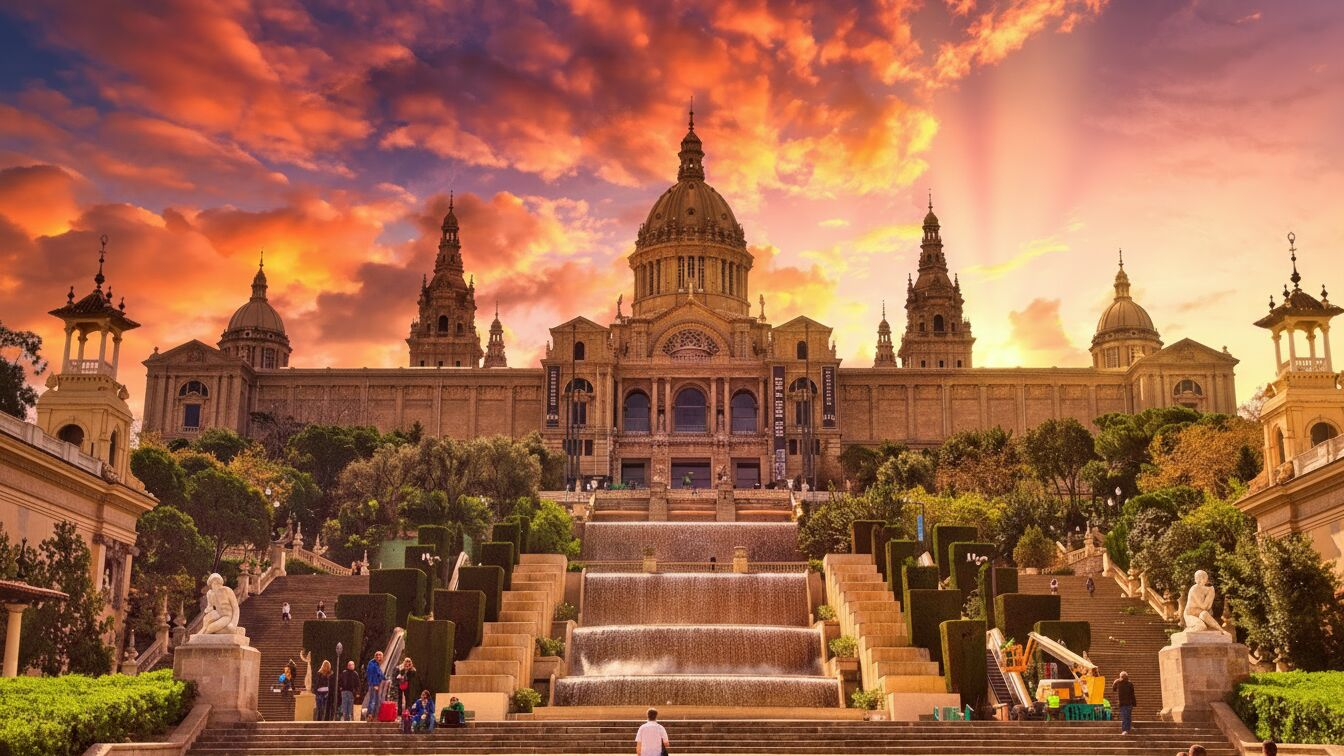
Montjuïc dominates Barcelona’s southwestern skyline with gardens, museums, Olympic facilities, and a historic fortress. This hill hosted the 1929 International Exposition and 1992 Olympics, leaving a legacy of impressive buildings and public spaces. Cable cars, funiculars, and walking paths connect various attractions.
Key sights include the Magic Fountain (Font Màgica) with nightly water and light shows, the National Art Museum of Catalunya (MNAC), Joan Miró Foundation, Olympic Stadium, Montjuïc Castle with 360-degree city views, and extensive botanical gardens. Each attraction could fill hours – plan based on interests.
Why visit: Montjuïc offers Barcelona’s best free views, world-class art museums, and a peaceful escape from urban crowds. The Magic Fountain show is Barcelona’s most spectacular free entertainment. The hill provides historical perspective from Iberian settlements through Civil War to Olympic glory.
Entrance: Most areas free; MNAC €12, Miró Foundation €13, Castle €5, Cable car €13 round-trip
Best time: Late afternoon into evening to catch Magic Fountain show; weekday mornings for museums
Hours: Varies by attraction; Magic Fountain shows Thursday-Sunday evenings (schedule varies by season)
Picasso Museum
Carrer Montcada, 15-23, 08003 Barcelona, Spain
Barcelona’s most visited museum houses over 4,000 works chronicling Picasso’s artistic journey from childhood sketches to mature masterpieces. The collection focuses on his formative years spent in Barcelona (1895-1904), showing the city’s profound influence on his development as an artist.
The museum occupies five connected medieval palaces in El Born neighborhood, themselves architectural treasures. Highlights include the Blue Period works, the comprehensive “Las Meninas” series (58 interpretations of Velázquez’s masterwork), and early realistic paintings demonstrating his technical mastery before embracing cubism. The chronological layout reveals his artistic evolution.
Why visit: This museum offers the world’s most comprehensive view of Picasso’s early development. Seeing his academic training and realistic work makes his revolutionary cubist innovations more impressive. The medieval palace setting adds historical atmosphere. It’s essential for understanding Picasso’s connection to Barcelona.
Entrance: €12 general collection, €7 temporary exhibitions, combined €14; free first Sunday of month and Thursday 5-8pm
Best time: Weekday morning at opening (9am) or Thursday evening free hours (expect crowds)
Hours: Tuesday-Sunday 9am-7pm, Thursday until 9pm, closed Mondays
Barceloneta Beach & Port Vell
Passeig Marítim de la Barceloneta, 08003 Barcelona, Spain
Barceloneta is Barcelona’s most famous beach, a 1.1km stretch of golden sand where city meets Mediterranean. Once a fishing village, this neighborhood transformed for the 1992 Olympics into Barcelona’s prime urban beach destination. Palm-lined promenades, beach bars (chiringuitos), and constant activity define the scene.
Port Vell (Old Port) anchors the southern end with luxury yachts, the Maremagnum shopping center, an aquarium, and the iconic Columbus Monument. The waterfront promenade connects beaches to the old port, perfect for walking, cycling, or rollerblading. Beach volleyball courts, playgrounds, and outdoor gyms dot the sand.
Why visit: Few European cities offer Mediterranean beaches within walking distance of major attractions. Barceloneta embodies Barcelona’s unique blend of urban energy and beach culture. It’s free, always lively, and quintessentially Barcelona – watching the sunset over the water with the city skyline behind you is magical.
Entrance: Free (chairs €7-8/day, umbrellas €5-6/day)
Best time: Morning for swimming, late afternoon/evening for atmosphere and sunset
Hours: Always open; lifeguards roughly 10am-6pm summer
Camp Nou (FC Barcelona Stadium)
C. d’Arístides Maillol, 12, 08028 Barcelona, Spain
Camp Nou is Europe’s largest football stadium and home to FC Barcelona, one of the world’s most successful clubs. The stadium holds 99,354 fans and represents Catalan identity and pride. More than a stadium, it’s a pilgrimage site for football fans worldwide, showcasing the history of Messi, Ronaldinho, Cruyff, and Maradona.
The museum displays the club’s 26 La Liga titles, 5 Champions League trophies, and countless individual awards. The Experience Tour takes visitors through players’ tunnel, onto the pitch, through the press room, and into the locker rooms. On match days, the atmosphere becomes electric with 100,000 fans chanting “Més que un club” (More than a club).
Why visit: Even non-football fans appreciate the scale and passion surrounding FC Barcelona. The stadium tour and museum provide fascinating insight into Catalan culture and identity. Attending a live match offers one of sport’s great experiences – the crowd energy is phenomenal. Football is religion in Barcelona.
Entrance: €26 museum and tour; match tickets €40-200+ depending on opponent and seat
Best time: Early morning for tours (fewer crowds); match days for authentic experience
Hours: Daily 10am-6:30pm (non-match days); Match schedule varies
Palau de la Música Catalana
Carrer del Palau de la Música, 4-6, 08003 Barcelona, Spain
This UNESCO World Heritage concert hall represents Modernisme at its most elaborate. Built 1905-1908 by architect Lluís Domènech i Montaner, the building explodes with decorative details – stained glass, mosaics, sculptures, and ironwork cover every surface. The centerpiece skylight depicts female figures surrounding the sun.
The concert hall remains an active venue hosting 300+ performances annually including classical, jazz, and traditional Catalan music. The interior combines Gothic structure with Modernist decoration in ways that complement rather than clash. Even the exterior facade tells stories through sculpture and mosaic work. Every architectural element serves both function and beauty.
Why visit: This is Barcelona’s Modernisme masterpiece beyond Gaudí, demonstrating that Art Nouveau brilliance extended across multiple architects. The building is as much artwork as concert venue. Attending a performance here ranks among Europe’s most beautiful concert hall experiences. Even the 50-minute guided tour justifies the visit.
Entrance: €20 guided tour; concert tickets €20-80+ depending on performance
Best time: Tours run every 30 minutes 10am-3:30pm; evening concerts for full experience
Hours: Tours daily 10am-3:30pm; concert schedule varies
Hospital de Sant Pau
Carrer de Sant Antoni Maria Claret, 167, 08025 Barcelona, Spain
This UNESCO site is one of Barcelona’s hidden gems, a stunning Modernist hospital complex designed by architect Lluís Domènech i Montaner. Built 1902-1930, it was the world’s most advanced hospital, featuring underground tunnels, natural ventilation, and gardens designed to aid healing through beauty and nature.
The complex consists of 12 pavilions, each a decorative masterpiece with mosaics, sculptures, and stained glass. Unlike typical sterile hospitals, Sant Pau feels like a palace with healing as its purpose. The site operated as a working hospital until 2009, now functioning as a cultural center and museum showcasing Modernisme and medical history.
Why visit: Sant Pau offers a peaceful alternative to crowded Gaudí sites while showcasing equally impressive Modernisme. The building demonstrates how architecture can support human wellbeing through beauty, light, and nature. It’s Barcelona’s most underrated architectural treasure, often nearly empty of tourists despite its magnificence.
Entrance: €15 adults, €11 students/seniors; audio guide included
Best time: Weekday mornings for near-empty pavilions and best photography light
Hours: Monday-Saturday 10am-5pm (winter), 10am-7pm (summer); Sunday 10am-3pm
4. Neighborhoods & Districts to Explore
Barcelona’s neighborhoods each have distinct personalities shaped by history, architecture, and local culture. Moving beyond the tourist-heavy Gothic Quarter and Eixample reveals authentic Barcelona where locals live, work, and socialize. Each district offers unique experiences worth exploring.
El Born (La Ribera)
Character: El Born perfectly balances medieval charm with modern cool. Narrow Gothic streets house trendy boutiques, craft shops, wine bars, and innovative restaurants. The neighborhood feels both historic and contemporary, attracting creative types and young professionals alongside culture-seeking tourists.
What makes it special: El Born offers the Gothic Quarter’s medieval atmosphere without the overwhelming crowds. You’ll find genuine local life here – neighborhood bakeries, produce markets, and longtime residents alongside new establishments. The Born Cultural Center’s archaeological site reveals medieval Barcelona. Santa María del Mar basilica represents Catalan Gothic at its finest.
Best for: Culture vultures, foodies seeking innovative cuisine, shoppers wanting unique boutiques, anyone tired of tourist traps but still wanting historic atmosphere.
Must-see in this area: Santa María del Mar church, Picasso Museum, Born Cultural Center, Passeig del Born for evening drinks, chocolate shops on Carrer Princesa, vintage stores on Carrer Rec.
How to get there: Metro Jaume I (L4) or Barceloneta (L4), 10-minute walk from Plaça Catalunya
Location: Passeig del Born, 08003 Barcelona, Spain
Gràcia
Character: Gràcia maintains its village-within-a-city feel despite being fully integrated into Barcelona. This bohemian neighborhood centers on interconnected plazas surrounded by cafes where locals of all ages gather. Street art, independent shops, and community activism define the area’s character. It’s Barcelona at its most authentically local.
What makes it special: Gràcia escaped Barcelona’s grid-plan redesign, retaining narrow,winding streets and small plazas that encourage neighborhood socializing. The August Festa Major is Barcelona’s best neighborhood festival. Fewer tourists mean real neighborhood life – locals shopping at corner stores, kids playing in plazas, elderly Catalans chatting on benches.
Best for: Travelers seeking authentic Barcelona, anyone interested in local culture beyond tourism, bohemian spirits, plaza-hopping and people-watching, evening vermouth culture.
Must-see in this area: Plaça del Sol for evening drinks, Plaça de la Vila de Gràcia, Casa Vicens (Gaudí’s first house), Plaça del Diamant, vintage cinema Cines Verdi, alternative shops on Carrer de Verdi.
How to get there: Metro Fontana (L3) or Lesseps (L3), Park Güell northern entrance
Location: Plaça del Sol, 08012 Barcelona, Spain
El Raval
Character: El Raval is Barcelona’s most multicultural neighborhood, a formerly rough area transformed into the city’s hipster central while retaining gritty edges. Pakistani restaurants sit beside trendy cocktail bars, vintage shops beside halal butchers. It’s raw, real, and increasingly gentrified while maintaining authenticity.
What makes it special: El Raval offers Barcelona’s most diverse food scene and best street art. MACBA (Contemporary Art Museum) anchors the neighborhood, its plaza a hub for skateboarders. Carrer del Carme and Riera Baixa host vintage clothing shops. The neighborhood feels edgy and alive, less polished than Eixample or Born.
Best for: Urban explorers, contemporary art fans, bargain hunters (vintage shopping), those seeking diverse cuisine, travelers wanting to see Barcelona’s multicultural reality, nightlife enthusiasts.
Must-see in this area: MACBA museum and plaza, Mercat de Sant Antoni, Filmoteca cinema, vintage shops on Riera Baixa, bars on Carrer Joaquín Costa, Palau Güell (Gaudí’s urban palace).
How to get there: Metro Sant Antoni (L2), Liceu (L3), or Catalunya (L1/L3)
Location: Plaça dels Àngels (MACBA), 08001 Barcelona, Spain
Eixample
Character: Eixample (“extension”) is Barcelona’s distinctive grid-plan district with chamfered corners, wide boulevards, and concentration of Modernist architecture. This is the Barcelona of postcards – elegant, urbane, and sophisticated. Passeig de Gràcia resembles a Modernist architecture museum. The district divides into Dreta (right/upscale) and Esquerra (left/more diverse).
What makes it special: Eixample showcases early 20th-century urban planning at its finest. Nearly every block contains architectural gems – not just Gaudí’s Casa Batlló and La Pedrera, but hundreds of Modernist buildings. The shopping on Passeig de Gràcia rivals Paris or Milan. Gaixample (gay Eixample) is Spain’s most vibrant LGBTQ+ neighborhood.
Best for: Architecture enthusiasts, luxury shoppers, LGBTQ+ travelers, those wanting elegant Barcelona, foodies (excellent restaurants), anyone appreciating urban beauty and design.
Must-see in this area: Casa Batlló, La Pedrera, Sagrada Família technically sits in Eixample, Passeig de Gràcia shopping, Casa Amatller, Recinte Modernista Sant Pau, Mercat de la Concepció.
How to get there: Metro Passeig de Gràcia (L2/L3/L4) or Diagonal (L3/L5), multiple metro stops serve different areas
Location: Passeig de Gràcia, 08007 Barcelona, Spain
Poblenou
Character: Poblenou (“New Village”) is Barcelona’s creative district, a former industrial zone transforming into tech startups, artist studios, and trendy restaurants. Former warehouses become galleries and coworking spaces. It’s Barcelona’s Brooklyn – raw spaces, creative energy, and rapidly gentrifying while maintaining working-class roots.
What makes it special: Poblenou offers an off-the-beaten-path Barcelona experience with excellent beaches (Nova Icària, Bogatell), wide streets, and a village feel despite modern development. The Rambla del Poblenou retains neighborhood charm with local shops and cafes. It’s where young Barcelona moves for affordable spaces and creative freedom.
Best for: Creative types, tech travelers visiting startups, beach lovers wanting less touristy sand, anyone interested in Barcelona’s transformation and future, families (spacious, relaxed).
Must-see in this area: Rambla del Poblenou, beaches (less crowded than Barceloneta), Palo Alto Market (first weekend of month), street art, Can Framis Museum, Els Encants flea market nearby.
How to get there: Metro Poblenou (L4), Llacuna (L4), or Bogatell (L4)
Location: Rambla del Poblenou, 08005 Barcelona, Spain
Barceloneta
Character: Barceloneta began as a fishing village and retains that character despite tourist influx. Narrow streets grid the triangular neighborhood between city and sea. Laundry hangs from balconies, elderly locals chat in Catalan, and seafood restaurants line every street. It’s touristy yet authentically working-class.
What makes it special: Barceloneta offers Barcelona’s best beach access and freshest seafood. The neighborhood maintains its fishing village identity – you can still buy fish directly from returning boats at the port. Small tapas bars hide on back streets, serving locals who’ve patronized them for decades. Architecture is unique – narrow 4-story buildings on a tight grid.
Best for: Beach lovers, seafood enthusiasts, those wanting sea views and sand access, families (playground beach amenities), anyone seeking the traditional fishing village experience.
Must-see in this area: Barceloneta beach, Church of Sant Miquel del Port, traditional tapas bars on Carrer Sant Carles, Port Vell, W Hotel viewing point, maritime restaurants.
How to get there: Metro Barceloneta (L4), 15-minute walk from Gothic Quarter
Location: Plaça de la Barceloneta, 08003 Barcelona, Spain
Sant Antoni
Character: Sant Antoni is Eixample’s cool younger sibling, a transitional neighborhood between El Raval’s grit and Eixample’s elegance. Recently gentrified, it maintains neighborhood authenticity while attracting creative types and foodies. The neighborhood centers on its namesake market (recently renovated) and surrounding streets filled with new opening restaurants and bars.
What makes it special: Sant Antoni represents Barcelona’s present and near future – where locals actually live alongside new arrivals, where traditional bars coexist with third-wave coffee shops. Sunday book and coin market around the Mercat de Sant Antoni is Barcelona’s best. Great restaurant scene without Eixample prices. LGBTQ+ friendly as an extension of Gaixample.
Best for: Foodies seeking hot new restaurants, locals-focused travelers, budget-conscious visitors wanting Eixample proximity with lower prices, Sunday market browsers, nightlife enthusiasts.
Must-see in this area: Mercat de Sant Antoni, Sunday book market, bars on Carrer del Parlament, Carrer de Blai (pintxos street), modernist buildings, evening vermouth culture.
How to get there: Metro Sant Antoni (L2), on border of Raval and Eixample
Location: Mercat de Sant Antoni, 08001 Barcelona, Spain
5. Food & Dining
Barcelona’s food scene blends traditional Catalan cuisine with avant-garde innovation, Mediterranean ingredients with global influences. The city takes eating seriously – meals are social events, ingredients are seasonal, and cooking honors both tradition and creativity. From neighborhood tapas bars to Michelin-starred restaurants, Barcelona satisfies every palate and budget.
Must-Try Local Dishes & Specialties
- Pa amb tomàquet (Pan con tomate) – Grilled bread rubbed with ripe tomato, drizzled with olive oil, and sprinkled with salt. This simple Catalan staple accompanies most meals and showcases quality ingredients. Often served with jamón or cheese.
- Paella – While originally Valencian, Barcelona serves excellent versions. Traditional paella has chicken, rabbit, and snails with saffron rice. Seafood paella is tourist-friendly. Real paella takes 20-25 minutes to cook fresh – beware pre-made versions.
- Fideuà – Paella’s lesser-known cousin uses short noodles instead of rice, cooked in seafood broth. Crispy noodles on top, tender inside. Often served with aioli. Originated in coastal towns near Barcelona.
- Escalivada – Smoky roasted vegetables (eggplant, red peppers, onions) dressed with olive oil. Served as a tapa or side dish, sometimes with anchovies. Humble but delicious, showcasing Catalan vegetable cooking.
- Botifarra amb mongetes – Catalan white beans with grilled pork sausage. Comfort food at its finest. The sausage is coarser and more flavorful than typical sausages. Often served with alioli.
- Esqueixada – Salt cod salad with tomatoes, peppers, olives, and onions. Refreshing summer dish showcasing Catalunya’s love of preserved cod. No cooking required – the salt cod is reconstituted, then torn (never cut) into pieces.
- Crema Catalana – Catalan version of crème brûlée with citrus and cinnamon flavors. The custard is lighter, the caramelized sugar top crackles perfectly. Traditional for Saint Joseph’s Day (March 19) but available year-round.
- Jamón Ibérico – While Spanish rather than specifically Catalan, Barcelona serves exceptional cured ham from acorn-fed Iberian pigs. The best (bellota) melts on your tongue. A plate of good jamón defines Spanish tapas culture.
- Xató – Winter salad from Sitges featuring endive, cod, tuna, anchovies, and olives in a romesco-style sauce made with almonds, hazelnuts, peppers, and bread. Rich, complex, uniquely Catalan.
- Calçots with romesco sauce – Grilled spring onions (like oversized scallions) served with nutty romesco sauce. A winter/spring tradition involving outdoor grilling (calçotadas). You peel the charred outside, dip in sauce, and tip your head back to eat.
Restaurant Recommendations by Budget
Budget-Friendly (Under €15 per meal)
- Bar Celta Pulpería – Carrer de la Mercè, 16, Gothic Quarter – Galician-style octopus (pulpo a feira) and cheap wine in a packed, authentic tapas bar. Stand at the bar for local experience. Expect crowds and shouting – that’s part of the fun.
- El Xampanyet – Carrer de Montcada, 22, El Born – Legendary since 1929, serving cava, vermouth, and simple tapas. Tiles and barrels create vintage atmosphere. Closed August. Stand-up only, busy but worth it.
- Flax & Kale – Multiple locations – Healthy, Instagram-worthy bowls and smoothies surprisingly affordable. Perfect for vegetarians tired of tapas. Modern, bright spaces popular with locals for lunch.
- La Pepita – Carrer de Corsega, 343, Gràcia – Creative tapas at fair prices in a cozy neighborhood spot. Reservation essential for dinner. The croquettes are legendary. Great wine list without markup.
- Cervecería Catalana – Carrer de Mallorca, 236, Eixample – Barcelona’s most popular tapas bar for good reason. Large tapas, quality ingredients, reasonable prices. Prepare to wait – no reservations. Worth it.
Mid-Range (€15-40 per meal)
- Cal Pep – Plaça de les Olles, 8, El Born – Seafood tapas at the counter or small tables. No reservations for bar (best seats). Fresh from market daily. Loud, chaotic, delicious. Expect to spend €30-35 per person.
- Can Culleretes – Carrer Quintana, 5, Gothic Quarter – Barcelona’s oldest restaurant (since 1786) serving traditional Catalan food in historic setting. Not touristy despite location. Reasonable prices for quality and history.
- Els Quatre Gats – Carrer de Montsió, 3 bis, Gothic Quarter – Modernist cafe where Picasso held his first exhibition. Beautiful interior, solid Catalan food, tourist-friendly but authentic. Worth visiting for the space alone.
- Gresca Bar Restaurante – Carrer de Provença, 230, Eixample – Creative seasonal menu using market-fresh ingredients. Michelin-recommended but affordable. Small plates designed for sharing. Reservation required.
- Pla – Carrer de Bellafila, 5, Gothic Quarter – Romantic candlelit restaurant in medieval building. International menu with Catalan touches. Intimate atmosphere perfect for couples. Excellent wine selection.
Fine Dining (€40+ per meal)
- Tickets – Avinguda del Paral·lel, 164, Poble Sec – Avant-garde tapas bar by El Bulli alumni (Adrià brothers). Creative, playful, delicious. Book months ahead through website. Expect €100+ per person. Worth every euro for the experience.
- Disfrutar – Carrer de Villarroel, 163, Eixample – Three-Michelin-star restaurant by former El Bulli chefs. Tasting menus only (€265-295). Molecular gastronomy meets Catalan tradition. Reserve 2-3 months ahead. One of Barcelona’s best fine dining experiences.
- Cinc Sentits – Carrer d’Aribau, 58, Eixample – Michelin-starred contemporary Catalan cuisine. Seasonal tasting menus showcasing local ingredients. Intimate atmosphere with just 30 seats. €125-160 per person. Reservation essential.
Food Markets & Street Food
Mercat de la Boqueria – La Rambla, 91, 08001 Barcelona – Barcelona’s most famous market, open Monday-Saturday 8am-8:30pm. Colorful displays of produce, seafood, jamón, cheese, and prepared foods. The front juice bars and tapas counters near entrance charge tourist prices – walk deeper inside for better quality and value. Local vendors toward the back offer the freshest ingredients.
Mercat de Sant Antoni – Carrer del Comte d’Urgell, 1, 08011 Barcelona – Recently renovated neighborhood market beloved by locals. Less touristy than La Boqueria with better prices. Excellent for fresh produce, meat, seafood. Sunday book and vintage market surrounds the building. Food stalls inside serve authentic lunch to working locals.
Mercat de Santa Caterina – Avinguda de Francesc Cambó, 16, 08003 Barcelona – El Born’s market with stunning wavy mosaic roof. Mix of traditional market stalls and modern tapas bars. Less crowded than La Boqueria. Great for lunch – try the restaurant in the back corner.
Dining Customs & Etiquette
Meal times: Barcelona eats late. Lunch runs 2-4pm (peak at 2:30pm), dinner starts 9-10pm (locals rarely eat before 9:30pm). Many restaurants close between lunch and dinner service. Breakfast is light – coffee and pastry. Consider afternoon snack (merienda) around 6pm to tide you over until late dinner.
Tipping: Not obligatory but appreciated. Locals round up or leave 5-10% for good service. Service charge often included. Credit card machines won’t prompt for tip – add cash if desired. Bar counter drinks don’t require tips (maybe leave loose change).
Reservations: Essential for popular restaurants, especially dinner. Book 1-2 weeks ahead for mid-range spots, 1-3 months for fine dining. Walk-ins possible at lunch or less popular times. Many places don’t take reservations – arrive early and wait.
Dress code: Generally casual. Fine dining restaurants may require smart casual (no shorts/flip-flops). Beachwear only appropriate at beach restaurants. Catalans dress stylishly but not formally.
[AFFILIATE LINK: Book food tours in Barcelona – GetYourGuide/Viator]
6. Nightlife & Entertainment
Barcelona’s nightlife is legendary – clubs don’t heat up until 2am and party until sunrise. The city offers everything from beach clubs to underground techno venues, rooftop bars to flamenco shows. Nightlife districts each have distinct vibes, and Catalans party hard Thursday through Sunday.
Best Areas for Nightlife
- Gothic Quarter & El Born: Plaça Reial and surrounding streets, 08002 Barcelona – Mix of touristy bars and local spots. Plaça Reial buzzes with outdoor bars. Side streets hide cocktail bars and jazz clubs. Gets rowdy with tourists but convenient and atmospheric. Pickpockets active after midnight.
- El Raval: Around MACBA and Carrer Joaquín Costa, 08001 Barcelona – Alternative, artsy nightlife. Dive bars, punk venues, cheap drinks. Younger, edgier crowd. LGBTQ+ friendly. Some streets sketchy late night – stay aware.
- Eixample (Gaixample): Carrer Casanova and Carrer Aribau, 08011 Barcelona – Barcelona’s LGBTQ+ epicenter. Welcoming clubs and bars for all. Stylish crowds, electronic music, drag shows. Thursday-Saturday busiest. Arena Madre and Metro are major clubs.
- Port Olímpic: Marina area, 08005 Barcelona – Beach clubs and mega-clubs. Touristy, expensive, but fun for big club experience. Opium and Pacha attract international DJs. Summer hotspot. €15-20 cover, expensive drinks.
- Gràcia: Plaça del Sol, 08012 Barcelona – Local neighborhood nightlife. Outdoor drinking in plazas, cozy bars. Bohemian crowd, affordable drinks. More relaxed than downtown. Perfect for conversation and people-watching.
Bars & Pubs
- Paradiso – Carrer de Rera Palau, 4, El Born – Speakeasy hidden behind pastrami bar’s refrigerator door. World’s best bars list. Creative cocktails, professional service. Reservations strongly recommended. €15-18 cocktails but worth it for the experience and quality.
- Bobby’s Free – Carrer de Pau Claris, 119, Eixample – 1920s prohibition-era speakeasy. Enter through unassuming door, discover glamorous cocktail bar. Jazz music, vintage decor, expert mixologists. Book ahead for tables. €12-16 cocktails.
- Boca Chica – Passeig Joan de Borbó, 92, Barceloneta – Beachfront cocktail bar with Havana vibes. Mojitos on the sand, live music some nights. Tourist-friendly but quality drinks. €10-12 cocktails. Arrive before 10pm for seats.
- Dry Martini – Carrer d’Aribau, 162, Eixample – Classic cocktail bar since 1978. Impeccably dressed bartenders, perfect martinis. Sophisticated crowd, jazz background. €15-18 drinks. No reservations – arrive early evening.
Clubs & Dancing
- Razzmatazz – Carrer dels Almogàvers, 122, Poblenou – Five-room mega-club with different music styles (techno, indie, pop). Live concerts and DJ sets. International acts frequently play here. €15-20 entry. Open until 6am Friday/Saturday. Dress code enforced.
- Sala Apolo – Carrer Nou de la Rambla, 113, El Raval – Converted theater hosting concerts and club nights. Monday’s “Nasty Mondays” is legendary. Mix of indie, electronic, and pop. €10-15 entry. More authentic than Port Olímpic mega-clubs.
- City Hall – Rambla Catalunya, 2-4, Eixample – Theater-turned-nightclub with ornate interior. Electronic music, house, techno. Thursdays are popular. €15-20 entry. Central location. Quality sound system.
- Moog – Carrer de l’Arc del Teatre, 3, El Raval – Small, sweaty underground techno club. Serious electronic music lovers. Two floors. €10 entry. No pretense, just good music and dancing. Open until 5am.
Live Music & Shows
- Palau de la Música Catalana – Carrer del Palau de la Música, 4-6, El Born – Classical concerts, chamber music, choral performances in stunning Modernist hall. Tickets €20-80. Book ahead online. Acoustics and ambiance world-class.
- Jamboree – Plaça Reial, 17, Gothic Quarter – Jazz club in medieval basement. Nightly jazz concerts at 8pm and 10pm. After midnight transforms into dance club. €15-20 for concerts. Intimate atmosphere with quality musicians.
- Tablao Flamenco Cordobes – La Rambla, 35, Gothic Quarter – Traditional flamenco shows with dinner or drinks. €45-75 depending on package. Shows at 7pm and 9:30pm. Touristy but authentic performances. Book online for better prices.
- Harlem Jazz Club – Carrer de la Comtessa de Sobradiel, 8, Gothic Quarter – Intimate basement jazz venue. Live music nightly. €10-12 cover includes drink. Gets packed – arrive early for seats. Mix of jazz, soul, funk.
Cultural Performances
Gran Teatre del Liceu on La Rambla hosts world-class opera and ballet. L’Auditori offers symphony performances. Teatre Nacional de Catalunya stages contemporary theater (mostly Catalan). Check schedules online – performances often sell out. Student/senior discounts available for many venues.
Family-Friendly Evening Entertainment
Magic Fountain of Montjuïc offers spectacular free shows Thursday-Sunday evenings (schedule varies by season). Beach promenades perfect for evening family walks with ice cream. Port Vell Maremagnum stays open late with restaurants and shops. Many plazas have evening street performers and musicians safe for families.
7. Shopping
Best Shopping Districts
- Passeig de Gràcia: 08007 Barcelona – Barcelona’s luxury shopping boulevard. Chanel, Hermès, Gucci, Louis Vuitton alongside Spanish brands like Loewe and Massimo Dutti. Beautiful Modernist buildings. Window shopping itself is entertainment. Metro: Passeig de Gràcia.
- Portal de l’Àngel & Avinguda del Portal de l’Àngel: 08002 Barcelona – Pedestrian shopping street connecting Plaça Catalunya to Gothic Quarter. Chain stores (Zara, H&M, Mango), department stores. Mid-range prices. Always crowded with shoppers. Metro: Catalunya.
- El Born: Around Passeig del Born, 08003 Barcelona – Boutique shopping district. Independent designers, vintage stores, artisan workshops. Unique finds you won’t see elsewhere. Trendy, creative, expensive. Perfect for one-of-a-kind souvenirs.
- Carrer de Verdi (Gràcia): 08012 Barcelona – Local neighborhood shopping street. Independent bookshops, vintage clothing, record stores. Less touristy, better prices. Eclectic mix. Great for exploring while shopping. Metro: Fontana.
- Diagonal: From Plaça Francesc Macià to Glòries, 08028 Barcelona – Major shopping avenue with El Corte Inglés department stores and L’Illa Diagonal mall. Everything from luxury to affordable. Modern shopping centers. Metro: Diagonal or Maria Cristina.
When you arrive at the airport you must present you tax refund cheques at customs BEFORE you check your bags in. Customs may request to check the items before they stamp your cheques. Once customs have stamped your cheques, you can cash your cheques at any Bureau de Change in your chosen currency.
Markets
Els Encants Vells – Carrer dels Castillejos, 158, 08013 Barcelona – Barcelona’s largest flea market. Antiques, vintage clothing, furniture, electronics, oddities. Monday, Wednesday, Friday, Saturday 9am-8pm. Prices negotiable. Metro: Glòries. Great for unique souvenirs and people-watching.
Mercat Gòtic (weekend craft market) – Plaça de la Catedral, Gothic Quarter – Artisan crafts, jewelry, paintings every Thursday. Small but charming. Saturdays host vintage market at Plaça del Pi. Sunday mornings feature art market at same location. Free to browse.
Palo Alto Market – Carrer dels Pellaires, 30, Poblenou – Hip food truck and crafts market first weekend of each month. Local designers, vintage items, street food, live music. Young, creative crowd. Free entry. Check website for dates.
What to Buy – Local Products & Souvenirs
- Ceramics & Tiles – Traditional Catalan ceramics and azulejo tiles. Art Escudellers (Carrer Escudellers, 23) offers high-quality pieces. Prices €10-100+ depending on size. Authentic Barcelona design.
- Espadrilles – Traditional rope-soled shoes. La Manual Alpargatera (Carrer d’Avinyó, 7) handmakes them since 1941. €40-70. Comfortable, stylish, authentic. Available in countless colors.
- Jamón Ibérico – Vacuum-packed Spanish ham travels well. Buy from La Boqueria or specialty shops. Quality ranges €20-100+ per kilo. Bellota (acorn-fed) is best. Bring home flavors of Spain.
- FC Barcelona Merchandise – Official club shop at Camp Nou or stores throughout city. Jerseys €90-120, scarves €20, various memorabilia. Beware fakes from street vendors. Official stores guarantee authenticity.
- Cava (Spanish Sparkling Wine) – Catalunya produces excellent cava. Bottles start €8 in supermarkets, premium bottles €25-50. Buy from wine shops in El Born for expert selection. Lighter suitcase than you’d think.
- Saffron & Spanish Spices – Quality saffron, smoked paprika (pimentón), sea salt. Available at markets or specialty shops. Much cheaper than home countries. Small, light, perfect gifts.
- Olive Oil – Catalunya produces exceptional olive oil. Buy from markets or specialty shops. Expect €10-30 for quality bottles. Check airline liquid restrictions for packing.
- Turrón – Traditional Spanish nougat candy, especially popular at Christmas. Soft (Jijona) or hard (Alicante) varieties. €8-20 per slab. Available year-round at specialty shops and markets. Sweet, nutty, addictive.
Shopping Hours & Customs
Most shops open 10am-2pm, then 5pm-8:30pm Monday-Saturday. Large stores and chains stay open through siesta. Sundays only large malls and tourist-area shops open. August many small shops close for vacation. Sales periods: January-February (winter) and July-August (summer) offer 30-70% discounts.
VAT (IVA) refund available for non-EU residents on purchases over €90.16 at participating stores. Ask for tax-free form, get stamped at airport customs before check-in, claim refund. Worth it for expensive purchases.
8. Seasonal Events & Festivals
Barcelona celebrates numerous festivals year-round, from neighborhood fiestas to citywide celebrations. These events showcase Catalan culture, traditions, and Barcelona’s love of community celebration. Book accommodation early if visiting during major festivals.
Annual Events Calendar
| Month/Season | Event Name | Description |
|---|---|---|
| January 5-6 | Three Kings Parade (Cavalcada de Reis) | Spectacular parade through city streets with floats, music, candy throwing. Spanish children receive gifts on Three Kings Day (Jan 6), not Christmas. Free to watch. Arrive early for good spots. |
| February/March | Carnival (Carnestoltes) | Pre-Lent celebration with costume parades, street parties, traditional foods. Sitges (30 min south) hosts Spain’s wildest carnival. Barcelona’s Sitges parade famous worldwide. Late February or early March depending on Easter dates. |
| April 23 | Sant Jordi (Saint George’s Day) | Catalunya’s most romantic day. Men give women roses, women give men books. Las Ramblas fills with book and flower stalls. Streets overflow with roses. Barcelona’s Valentine’s Day equivalent. Magical atmosphere. |
| May/June | Primavera Sound | Major international music festival featuring rock, indie, electronic artists. Held at Parc del Fòrum. Multi-day event. Tickets €200-300+. Book accommodation months ahead. Artists like Radiohead, Arctic Monkeys, Tame Impala. |
| June 23-24 | Sant Joan (Midsummer) | Shortest night celebration with bonfires, fireworks, beach parties. Beaches pack with revelers until sunrise. Fireworks at midnight. Traditional foods include coca (flatbread), cava. City goes wild. Extremely loud and crowded. |
| August | Festa Major de Gràcia | Neighborhood festival mid-August. Streets decorated elaborately in themed designs. Concerts, parades, traditional Catalan culture (castellers – human towers, correfocs – fire runs). Free. Gràcia neighborhood. Week-long celebration. |
| September 11 | La Diada (Catalan National Day) | Catalonia’s national holiday commemorating 1714 defeat. Political demonstrations, Catalan flags everywhere. Cultural events. Banks and many shops closed. Can feel intense due to independence movement. |
| September 24 | La Mercè | Barcelona’s biggest festival honoring patron saint. Free concerts, street performances, human towers (castells), fire runs (correfocs), gegants (giants parade). Four days of citywide celebration. Incredible energy. Hotels book far ahead. |
| October | Festival Internacional de Jazz de Barcelona | Month-long jazz festival with international and local artists. Concerts at various venues citywide. Tickets €20-60 per show. Mix of legendary acts and emerging talent. |
| November 1 | All Saints’ Day (Tots Sants) | Families visit cemeteries with flowers. Castanyada festival with roasted chestnuts, sweet potatoes, panellets (almond cookies), muscatel wine. Traditional autumn celebration. Markets sell seasonal treats. |
| December | Christmas Markets & Fira de Santa Llúcia | Traditional Christmas market outside Cathedral (since 1786). Caganers (controversial Catalan Christmas figurines), nativity scenes, decorations. Lights throughout city. Christmas runs November late through January 6. |
| December 31 | New Year’s Eve (Cap d’Any) | Eat 12 grapes at midnight (one for each bell chime) for good luck. Major celebrations at Plaça Espanya with Magic Fountain, Poble Espanyol parties. Clubs charge premium prices (€50-100+). Book restaurants months ahead. |
Booking Considerations During Festival Periods
Major festivals (Sant Joan, La Mercè, Primavera Sound) cause hotel prices to double or triple. Book 3-6 months ahead for these dates. Some festivals make neighborhoods extremely loud – consider this when choosing accommodation. September’s La Mercè offers best value – incredible festival atmosphere without extreme price hikes like summer.
9. Accommodation Recommendations
Barcelona offers accommodation for every budget and travel style, from hostels in Gothic Quarter to luxury hotels in Eixample. Location matters significantly – staying centrally costs more but saves transport time and money. Each neighborhood offers different experiences and price points.
Best Neighborhoods to Stay
| Neighborhood | Vibe | Price Range (per night) | Best For |
|---|---|---|---|
| Gothic Quarter | Medieval, atmospheric, central | €80-250 | First-time visitors, sightseers, history lovers |
| El Born | Trendy, charming, artistic | €90-280 | Foodies, culture seekers, couples |
| Eixample (Dreta) | Elegant, upscale, Modernist | €120-400 | Architecture fans, luxury travelers, shoppers |
| Gràcia | Bohemian, local, relaxed | €70-200 | Those seeking authentic Barcelona, budget-conscious |
| Barceloneta | Beachy, casual, lively | €80-220 | Beach lovers, families, summer visitors |
| Poble Sec | Up-and-coming, foodie, authentic | €65-180 | Budget travelers, foodies, off-beaten-path seekers |
| Sant Antoni | Trendy, residential, central-ish | €75-190 | Value seekers, design lovers, LGBTQ+ travelers |
Pros & Cons of Each Area
Gothic Quarter:
Pros: Walking distance to everything, atmospheric medieval streets, countless restaurants and bars, metro connections, central location perfect for first-timers.
Cons: Noise (especially weekends), pickpockets, touristy restaurants, narrow streets can feel claustrophobic, expensive for what you get, party noise until 3am.
El Born:
Pros: Charming with medieval feel but less touristy than Gothic, excellent restaurants and bars, Picasso Museum nearby, boutique shopping, safer than Gothic Quarter, beach walking distance.
Cons: Trendy means pricey, nighttime noise from bars, narrow streets limit hotel choices, still gets pickpockets (though fewer than Gothic).
Eixample:
Pros: Wide streets, Modernist architecture everywhere, best shopping, excellent restaurants, upscale and safe, good metro connections, spacious hotels, quieter than Gothic/Born.
Cons: Expensive, less “old Barcelona” charm, some areas feel business-district sterile, farther from beach, can require more walking/metro to reach Old Town.
Gràcia:
Pros: Authentic local neighborhood, excellent value, great restaurants and bars, plaza culture, safe and residential, August festival, bohemian vibe.
Cons: Less convenient for major sights (15-20 minute metro), fewer accommodation options, limited nightlife compared to downtown, can feel far from action.
Barceloneta:
Pros: Beach access, seafood restaurants, fresh sea air, relaxed vibe, great for families, waterfront promenade, less urban density.
Cons: Touristy and loud in summer, limited architectural interest, fewer evening dining options inland, can feel disconnected from city center, beach gets very crowded.
Booking Tips
Book 2-3 months ahead for spring/fall, 3-6 months for summer and festival periods. Last-minute deals rare in Barcelona. Consider apartment rentals for groups or longer stays – often better value than hotels. Check exact location on map – some “Eixample” hotels are far from action. Read recent reviews about noise levels – thin walls and street noise common in old buildings. Many hotels lack elevators in old buildings – consider this with luggage or mobility issues.
[AFFILIATE LINK: Search hotels in Barcelona – Booking.com/Hotels.com]
[AFFILIATE LINK: Book vacation rentals in Barcelona – Airbnb/Vrbo]
[DISPLAY AD PLACEHOLDER #3]
10. Practical Information
Essential Travel Details
- Currency: Euro (€), approximately $1.08 USD = €1 (rates fluctuate). Exchange at banks for best rates, not airport or tourist areas. ATMs widely available.
- Credit Cards: Visa and Mastercard widely accepted. American Express less common. Chip-and-PIN standard. Small shops/markets may require cash. Always carry €20-50 cash.
- ATMs: Everywhere, reliable. Your bank likely charges 1-3% foreign transaction fee plus €3-5 ATM fee. Avoid Euronet ATMs (terrible rates). Use bank-branded ATMs. Daily limit usually €300-600.
- Language: Catalan (primary) and Spanish/Castilian. English widely spoken in tourist areas, less in residential neighborhoods. Basic Spanish helps. Catalan appreciated but Spanish understood by all.
- Tipping: Round up bills or leave 5-10% for good service. Not obligatory. Coffee/drinks: leave change. Taxis: round up. Hotels: €1-2 per bag for porters, €2-5 per night for housekeeping.
- Electrical Plugs: Type C and F (two round pins), 230V, 50Hz. North Americans need adapter and voltage converter for some devices. Buy adapter at airport or electronics shops.
- Emergency Number: 112 (general emergencies – police, ambulance, fire)
- Police: 112 or 091 (National Police), 092 (Local Police), report thefts at any station
- Medical Emergency: 061 (medical emergencies and ambulance)
- Tourist Police: La Rambla, 43 (near Liceu metro) – English-speaking officers for tourist issues
- SIM Cards: Available at airport (Vodafone, Orange, Movistar) or city mobile shops. Tourist plans: €15-30 for 2-4 weeks with 10-20GB data. Passport required. EU roaming included if you buy Spanish SIM.
- WiFi: Free in most hotels, many cafes, some metro stations and public squares. Quality varies. Barcelona-Free-WiFi available in some areas. Coffee shops expect purchase for WiFi use.
- Tap Water: Safe to drink despite chlorine taste. Locals drink it. Free refills at bars/restaurants (ask for “agua del grifo”). Bring reusable bottle to save money and plastic.
Daily Budget Guide (2026 Prices)
| Budget Type | Daily Cost | What’s Included |
|---|---|---|
| Budget Traveler | €50-80 | Hostel dorm (€20-35), street food/supermarket meals (€15-25), menú del día lunch (€12-15), free attractions, public transport pass (€10), one beer (€3-4) |
| Mid-Range Traveler | €150-250 | 3-star hotel or good Airbnb (€80-120), sit-down meals at decent restaurants (€40-60), paid attractions (€30-40), taxis occasionally, wine with dinner, coffee/snacks, shopping budget |
| Luxury Traveler | €350+ | 4-5 star hotel (€200-400), fine dining (€80-150+), skip-the-line tickets, private tours, taxis/private transport, premium wines, cocktails, shopping, spa treatments |
Language Basics – Essential Phrases
- Hello: Hola (OH-lah) [same in Catalan and Spanish]
- Thank you: Gracias (GRAH-see-ahs) [Spanish] / Gràcies (GRAH-see-es) [Catalan]
- Please: Por favor (pohr fah-VOHR) [Spanish] / Si us plau (see oos plow) [Catalan]
- Excuse me: Perdón (pehr-DOHN) [Spanish] / Perdoni (pehr-DOH-nee) [Catalan]
- How much?: ¿Cuánto cuesta? (KWAHN-toh KWEHS-tah) [Spanish]
- Where is…?: ¿Dónde está…? (DOHN-deh ehs-TAH) [Spanish]
- I don’t understand: No entiendo (noh ehn-tee-EHN-doh) [Spanish]
- Help!: ¡Ayuda! (ah-YOO-dah) [Spanish] / Ajuda! (ah-ZHOO-dah) [Catalan]
- Bathroom: Baño (BAH-nyoh) / Servicios [Spanish] / Lavabo (lah-VAH-boh) [Catalan]
- Check, please: La cuenta, por favor (lah KWEHN-tah, pohr fah-VOHR) [Spanish]
Safety Tips
Barcelona is generally safe but has significant petty crime. Violent crime against tourists is rare. The biggest risk is pickpocketing and bag snatching, particularly in Gothic Quarter, La Rambla, metro (especially Line 3), Sagrada Família area, and beaches.
Areas to avoid: Lower El Raval (near port) after dark can feel sketchy. Parts around Plaça Reial get rowdy late at night. Don’t wander El Raval’s southern streets alone at 3am. Otherwise, Barcelona feels safe even late night with normal precautions.
Common scams:
- Someone “accidentally” spills drink on you – accomplice steals bag while you’re distracted
- Asking for directions while accomplice picks pocket from behind
- Clipboard petition scam – while signing, pickpockets work underneath
- Three-card monte on La Rambla – all participants are in on it, you will lose
- Fake taxis (unlicensed) charge 3-4x normal rates – use only official yellow/black taxis
- Restaurant “mistakes” on bills – always check bill before paying
- Club promoters offering “free” entry but charge mandatory €20 coat check or first drink
Pickpocketing prevention: Front pockets only. Keep bags in front, zipped. Don’t put phones on restaurant tables. Be hyper-aware in crowded metros and tourist areas. Consider money belt or hidden wallet. Don’t leave belongings on beach while swimming – someone should always watch.
Solo traveler safety: Barcelona is excellent for solo travel. Women report feeling safe walking alone during daytime and early evening. Usual cautions apply at night – stick to well-lit areas, avoid empty streets, don’t accept drinks from strangers. Unwanted male attention exists but usually verbal, not physical. Hostels offer easy socializing for solo travelers.
LGBTQ+ friendliness: Barcelona is one of Europe’s most LGBTQ+ friendly cities. Gay marriage legal, discrimination rare. Gaixample (Eixample neighborhood) is the hub. Pride celebration in June draws hundreds of thousands. Open displays of affection generally accepted citywide.
Cultural Customs & Etiquette
- Greetings: Cheek kiss (one, on right cheek) for women and between men/women who know each other. Handshake for business/formal. Hugs for close friends. “Hola” and “Adéu” (goodbye) always appropriate.
- Dress code: Catalans dress stylishly but casually. Avoid wearing Barcelona jerseys away from stadium unless match day. Shorts acceptable but locals wear pants even in summer. Beachwear only at beach. Cover shoulders/knees for churches.
- Photography: Ask permission before photographing individuals, especially street performers (tip if you do). Photography allowed in most attractions unless specifically prohibited. Don’t use flash in churches or museums where forbidden.
- Public behavior: Catalans speak loudly and passionately – it’s normal, not angry. PDA generally accepted. Queuing less formal than Northern Europe but don’t be rude. Eating while walking uncommon among locals but acceptable.
- Dining: Wait to be seated at restaurants. Don’t rush meals – dining is social. Leaving food on plate acceptable. Finishing everything signals you’re still hungry. Don’t expect food immediately – patience valued.
- Gestures to avoid: Middle finger offensive (obviously). Flashing five fingers at someone (showing palm) can be rude. Thumb and forefinger circle (OK sign) can be offensive in Spain.
Visa Requirements
EU/EEA/Swiss citizens need only ID card (no passport required) for unlimited stay. US, Canadian, Australian, UK, and many other passport holders get 90 days visa-free within 180-day period in Schengen Area. Check if your country participates in visa-free program. ETIAS (European Travel Information and Authorization System) will be required starting 2025 – €7 valid 3 years, apply online before travel.
For stays longer than 90 days, work, or study: contact Spanish consulate in your country for appropriate visa. Visa process must be completed before entering Spain.
Health & Medical Information
Vaccinations: No required vaccinations for Spain. Routine vaccines (MMR, tetanus, etc.) should be up-to-date. EU citizens should bring European Health Insurance Card (EHIC). Travel insurance highly recommended for non-EU visitors.
Pharmacies: Farmàcies (green cross sign) everywhere. Pharmacists can recommend over-counter medications for minor issues. Many medications available without prescription that require one in US/Canada. Rotating schedule ensures 24-hour pharmacy always available – check window for “Farmacia de guardia” location.
Hospitals: Public healthcare excellent but crowded. Private hospitals (like Hospital Quirónsalud Barcelona) offer faster service, English-speaking doctors. EU citizens with EHIC get free emergency care. Non-EU visitors pay but rates reasonable compared to US. Travel insurance essential for major issues.
Common health issues: Tap water safe. Food hygiene excellent. Sunburn and dehydration common in summer – drink water, use sunscreen. Air quality generally good. No altitude concerns. Pollen allergies in spring. STD rates higher than European average – practice safe sex.
[AFFILIATE LINK: Get travel insurance for your Barcelona trip – World Nomads/SafetyWing]
Accessibility Information
Barcelona improving but still challenging for wheelchair users. Many streets have curb cuts but cobblestones difficult to navigate. Most major attractions accessible (Sagrada Família, Casa Batlló, MNAC, Picasso Museum) with elevators/ramps. Gothic Quarter’s narrow, uneven streets prove difficult. Metro stations increasingly have elevators but many still stairs-only – check TMB website for accessible stations. Buses are wheelchair accessible. Adapted taxis available (request when booking: 932 222 222). Many hotels lack elevators in old buildings – verify accessibility when booking.
Family-Friendly Considerations
Barcelona welcomes families. Restaurants accommodate children (though high chairs less common than US/UK). Parks and playgrounds abundant. Beaches have gentle slopes, playgrounds nearby. Many attractions offer family tickets and kid-friendly audio guides. Sagrada Família, Park Güell, beaches, and Magic Fountain top family activities. Metro/bus stroller-friendly (fold during crowded times). Baby supplies available at supermarkets and pharmacies. Breastfeeding accepted in public. Catalans love children – expect lots of attention toward babies/kids.
11. Day Trips & Nearby Destinations
Barcelona’s location offers easy access to mountain monasteries, coastal towns, wine regions, and medieval villages. Day trips provide contrast to urban Barcelona and showcase Catalunya’s diversity. Most destinations reachable within 1-2 hours by train or car.
Montserrat
Distance: 60km northwest, 1 hour by train + cable car/rack railway
What to see: Stunning mountain monastery perched on jagged peaks rising from Catalonian plains. The Benedictine abbey houses the Black Madonna (La Moreneta), Catalunya’s patron saint. Spectacular hiking trails offer breathtaking views. The boys’ choir (Escolania) performs daily. Mountain peaks, monastery, museum, and spiritual atmosphere create an unforgettable experience.
How to get there: Train from Plaça Espanya (R5 line) to Monistrol, then rack railway or cable car to monastery (€22 round-trip including train and mountain transport). Trains run hourly. Tours are available but independent travel easy and cheaper.
Time needed: Half day minimum (4-5 hours), full day if hiking trails interest you
Best for: Nature lovers, hikers, those seeking spiritual/peaceful experience, photographers (stunning landscapes), anyone wanting a mountain escape from city
Location: Montserrat, 08199 Barcelona, Spain
Girona
Distance: 100km northeast, 40 minutes by high-speed train (AVE)
What to see: Medieval walled city with exceptionally preserved old town. Colorful houses along Onyar River create iconic photo. Cathedral with widest Gothic nave in world, Arab Baths, Jewish Quarter (Call) showcase centuries of history. Game of Thrones filmed scenes here. Charming, walkable, less touristy than Barcelona. Excellent restaurants and tapas bars.
How to get there: AVE high-speed train from Barcelona Sants or Passeig de Gràcia (€15-20, 40 minutes). Trains run frequently throughout day. AVANT trains slower but cheaper (€10, 75 minutes).
Time needed: Full day recommended (leave morning, return evening)
Best for: History buffs, Game of Thrones fans, foodies (Michelin-starred El Celler de Can Roca nearby), photographers, medieval town lovers
Location: Plaça de la Catedral, 17004 Girona, Spain
Sitges
Distance: 35km southwest along coast, 40 minutes by train
What to see: Charming seaside resort town with beautiful beaches, white-washed old town, artists’ quarter, and vibrant LGBTQ+ scene. Palm-lined promenade, excellent seafood restaurants, modernist buildings, and relaxed atmosphere. Festivals include famous Carnival (February) and Film Festival (October). Perfect beach town escape from Barcelona.
How to get there: Rodalies train (R2 Sud line) from Barcelona Sants, Passeig de Gràcia, or any Rodalies station (€4.60, 35-45 minutes). Trains every 15-20 minutes. Beach is 5-minute walk from station.
Time needed: Full day (arrive mid-morning, leave early evening)
Best for: Beach lovers, LGBTQ+ travelers, those seeking quieter coastal town vibe, day drinking and seafood, artists and bohemians
Location: Passeig de la Ribera, 08870 Sitges, Barcelona, Spain
Penedès Wine Region (Vilafranca del Penedès)
Distance: 50km west, 45 minutes by train
What to see: Catalunya’s premier wine region produces most Spanish cava (sparkling wine). Visit wineries (bodegas) for tours and tastings. Codorníu and Freixenet offer impressive historic cellars. Smaller family wineries provide intimate experiences. Rolling vineyards, wine museums, and relaxed countryside atmosphere. Learn cava production, taste numerous varieties.
How to get there: Train from Barcelona Sants to Vilafranca del Penedès (€6, 45 minutes). Then taxi/bus to wineries (many offer pickup service). Or book organized wine tour from Barcelona (easier, includes transport and multiple wineries, €60-100).
Time needed: Full day (wineries require appointments, tastings take time)
Best for: Wine enthusiasts, couples seeking romantic experience, anyone interested in cava production, food and wine lovers
Location: Vilafranca del Penedès, 08720 Barcelona, Spain
Tarragona
Distance: 100km southwest along coast, 1 hour by train
What to see: Ancient Roman city with best-preserved Roman ruins in Spain. UNESCO World Heritage amphitheater overlooking Mediterranean, Roman circus, forum, aqueduct. Medieval old town, stunning cathedral, beaches, seafood restaurants. Less touristy than Barcelona, authentic Spanish coastal city experience. Rich history spanning Romans to present day.
How to get there: High-speed train from Barcelona Sants (€9-15, 35-60 minutes depending on train type). Frequent departures. Regional trains slower but cheaper.
Time needed: Full day (ruins, old town, and beach require time)
Best for: History lovers (especially Roman history), archaeology enthusiasts, those seeking coastal city without massive tourist crowds
Location: Plaça del Rei, 43003 Tarragona, Spain
Montserrat + Wine Region Combination
Distance: Montserrat 60km, wineries 50-70km (combined route)
What to see: Ambitious but doable combination visiting mountain monastery morning, then nearby Penedès wineries afternoon. Morning spiritual mountain experience transitions to afternoon wine tasting. Showcases diversity of Catalunya – mountains, spirituality, gastronomy, wine culture in one day.
How to get there: Requires rental car or organized tour (most practical). Tours combining both run €100-140 per person including transport, entry fees, wine tastings, sometimes lunch. Worth it for convenience and ability to drink wine without driving.
Time needed: Full day (8am-7pm, long but rewarding)
Best for: Those wanting to maximize day trip, couples, organized tour fans, wine lovers who also appreciate nature/culture
[AFFILIATE LINK: Book guided day tours from Barcelona – GetYourGuide/Viator]
12. Insider Tips & Hidden Gems
Beyond the famous sights, Barcelona hides countless secrets known mainly to locals. These lesser-known spots offer authentic experiences away from tourist crowds, revealing the Barcelona residents know and love.
Hidden Gems & Local Favorites
- Bunkers del Carmel (Turó de la Rovira): Carretera de la Rovira, 08032 Barcelona – Former anti-aircraft bunkers offering Barcelona’s best free panoramic views. Watch sunset over the entire city, Mediterranean, and surrounding mountains. Bring drinks (supermarket nearby), arrive hour before sunset. Local hangout spot. Steep 20-minute uphill walk from metro Alfons X (L4) or bus 24. Worth every step.
- Sant Pau Recinte Modernista rooftop: Carrer de Sant Antoni Maria Claret, 167 – Most visitors miss the rooftop of Sant Pau’s Administration building. Climb to top for stunning view toward Sagrada Família with zero crowds. Included in entry ticket but few know about access. Perfect photo opportunity without tourist hordes.
- Parc del Laberint d’Horta: Passeig dels Castanyers, 1, 08035 Barcelona – Barcelona’s oldest garden (1791) featuring romantic neoclassical park with hedge maze, waterfalls, pavilions. Peaceful escape in residential neighborhood. €2.50 entry (€3.50 Sundays/holidays), free Wednesdays and Sundays after 3pm. Metro Mundet (L3). Locals picnic here, tourists rarely visit.
- Palau Dalmases: Carrer de Montcada, 20, El Born – Hidden baroque palace in El Born hosting evening opera performances. Intimate concerts in ornate 17th-century chapel (€30 including drink). Thursday-Sunday evenings. Magical, romantic, unique. Few tourists know it exists despite being on museum street.
- El Xampanyet Bar: Carrer de Montcada, 22, El Born – Already mentioned in dining but worth repeating as hidden gem. Legendary tiny cava bar since 1929. Standing room only, locals pack in, cava flows. Walls covered with tiles and bottles. Zero English spoken, zero tourists mindset – perfect authentic Barcelona. Closed August.
- Mercat de la Llibertat (Gràcia): Plaça de la Llibertat, 27, 08012 Barcelona – Gràcia’s neighborhood market offering zero tourists, all locals. Modernist building, excellent produce/meat/fish, small tapas bars inside. Morning coffee with workers, lunch at counter bars. Real neighborhood life. Metro Fontana (L3).
- Jardins de Laribal (Montjuïc): Access from Avinguda de Miramar, Montjuïc – Terraced gardens with fountains, staircases, hidden corners on Montjuïc hill. Free, beautiful, empty of tourists. Perfect for peaceful walks with city views. Access from near Miró Foundation or walk up from Poble Sec.
Best Photo Spots
- Bunkers del Carmel at sunset: Carretera de la Rovira – 360-degree panorama of entire Barcelona, Mediterranean, Tibidabo. Golden hour light perfect for photography. Arrive 90 minutes before sunset for best light and position. Instagram-famous but still spectacular.
- Palau Nacional steps at dawn: Montjuïc – Stand at MNAC (National Art Museum) steps looking down toward Magic Fountain and Plaça Espanya. Sunrise light hits the Venetian towers perfectly. Zero tourists at 7am. Symmetrical composition heaven for photographers.
- Carrer del Bisbe bridge (Gothic Quarter): Carrer del Bisbe, 5 – Neo-Gothic covered bridge between buildings in Gothic Quarter. Iconic Barcelona image. Best shot from below looking up. Morning light 10-11am ideal. Always crowded – arrive early or patient waiting required.
- Santa Maria del Mar interior: Plaça de Santa Maria, 1, El Born – Stunning Catalan Gothic church interior with beautiful natural light. Free entry (€10 for rooftop tour). Photography allowed. Best light 11am-1pm when sun streams through rose window. Peaceful, fewer tourists than Cathedral.
- Barceloneta beach from W Hotel direction: Passeig del Mare Nostrum – Walk to W Hotel area for looking back at beach with city skyline. Early morning or late afternoon. Capture city meeting sea, Barcelona’s dual character. Fewer people than main beach sections.
Local Secrets
13. Money-Saving Tips
Comprehensive Money-Saving Strategies
- Visit first Sunday of month – many museums free (Picasso Museum, MNAC, MACBA, more). Expect crowds but free is free. Check specific museum websites for free days/hours.
- Buy €12.15 T-Casual transport card (10 rides) instead of singles. Share it with travel companions. Saves 50% compared to individual tickets. Works on metro, buses, trams, and rodalies trains in Zone 1.
- Supermarket meals save huge money. Mercadona, Carrefour, Caprabo sell fresh bread, jamón, cheese, wine, produce for picnics. €10-15 feeds two people vs €30-50 restaurant. Plus you try local products.
- Free walking tours (tip-based) excellent introduction to neighborhoods. Usually €10-15 tip per person expected. Real guides, learn a lot, meet other travelers. Multiple companies offer Gothic Quarter, Gaudí, tapas tours.
- Avoid eating/drinking on Las Ramblas, near Sagrada Família, or Barceloneta beachfront. Tourist traps charge double. Walk 3 blocks inland for authentic spots at half price.
- Buy alcohol at supermarkets for pre-gaming (botellón). Wine €3-8/bottle, beer €1/can, spirits €12-20. Drink in plazas before going out. Everyone does it. Saves €30-50 per night out.
- Tap water safe and free at restaurants – ask for “agua del grifo.” Don’t pay €3-5 for bottled water. Bring reusable bottle, refill everywhere.
- Visit Bunkers del Carmel for best sunset views – completely free. Better views than any paid observation deck. Bring supermarket wine and snacks for €5 total.
- Book attractions online in advance – usually €2-5 cheaper than gate prices plus skip lines. Print tickets or save to phone.
- Stay in Gràcia, Sant Antoni, or Poble Sec instead of Gothic/Eixample. Hotels 30-50% cheaper, just as good location, metro connects quickly. More authentic neighborhood feel bonus.
- Sunday book market at Sant Antoni and weekend markets sell great souvenirs for €2-10 vs €20-30 in tourist shops. Negotiate at flea markets.
- Many churches are free and architecturally stunning (Santa Maria del Mar, Santa Maria del Pi, Basílica de la Mercè). Don’t pay for cathedral if budget tight.
- Beaches are free! No entrance fee, no mandatory chair rental. Bring towel, enjoy. Showers and bathrooms available free. Perfect summer day for €0.
- Walk everywhere possible. Barcelona’s compact, flat (except hills), pleasant. Save transport money while seeing more. Google Maps walking directions work perfectly.
- Share tapas family-style instead of individual entrees. Spanish way to eat, plus you try more dishes for less money. 3-4 tapas feeds one person for €15-20.
- Student discounts widely available (bring ISIC card or university ID). Usually 30-50% off museum entry. Ask always – even if not posted, they may offer.
- Barcelona Card only worth it if visiting many museums quickly. Calculate if free entry + transport justifies €55-75 cost. Often individual tickets cheaper for selective visitors.
- Coffee at bar counter €1-1.50 vs €3-4 sitting at tables. Stand like locals, save money, authentic experience. Same coffee, quarter of the price.
Free Activities & Attractions
- Walking the Gothic Quarter and El Born: Medieval streets, hidden plazas, architecture – all free. Get lost deliberately. Best free activity in Barcelona.
- Magic Fountain of Montjuïc shows: Spectacular water/light/music shows Thursday-Sunday evenings (schedule varies by season). Completely free. Arrive 30 minutes early for good viewing spot.
- Beaches: Barceloneta, Bogatell, Mar Bella, Nova Icària all free. Swimming, sunbathing, people-watching costs nothing.
- Bunkers del Carmel: Best panoramic city views, free, anytime. Sunset especially spectacular.
- Park Güell free zones: Only Monumental Zone costs money. Surrounding park areas (majority of park) are free with equally beautiful views.
- Sunday outdoor markets: Book market at Sant Antoni, art market at Plaça del Pi (Gothic Quarter), vintage at Plaça del Born. Free to browse, soak up atmosphere.
- Las Ramblas walk: See it once (avoid eating/shopping there). Street performers, flower stands, atmosphere. Free to walk and observe.
- Montjuïc gardens and castle views: Walking Montjuïc hill offers city views, gardens, Olympic stadium exterior – all free. Castle costs €5 but surrounding areas free.
- La Barceloneta neighborhood walk: Wander narrow streets, see laundry hanging, locals chatting, authentic fishing village atmosphere. Free and fascinating.
- Modernist architecture spotting: Eixample streets lined with stunning buildings. Walk Passeig de Gràcia and surrounding blocks gawking at facades. Free outdoor architecture museum.
Discount Cards & Passes Worth Buying
T-Casual 10-ride transport card: €12.15 for 10 journeys – best value if staying 3+ days. No-brainer purchase.
Hola Barcelona travel card: Unlimited transport 2-5 days (€16-38). Worth it if taking 6+ trips daily. Calculate based on your plans.
Barcelona Card: €55-75 for 3-5 days including transport and museum entry. Only worth it if hitting multiple museums daily. Calculate carefully – often individual tickets cheaper for selective visitors.
Budget-Friendly Alternatives
Instead of €36 Casa Batlló, visit €15 Sant Pau Recinte Modernista – equally impressive Modernist architecture, way fewer crowds. Instead of €110 water taxi from airport, take €6 Aerobus – 15 minutes longer but huge savings. Instead of €30-40 dinner, enjoy €12-15 menú del día lunch at same restaurant. Instead of €100 guided food tour, create your own with market visits and local tapas bars for €25-30. The experience often better when self-directed.
14. Common Tourist Mistakes to Avoid
Mistakes to Avoid
- Mistake: Not booking Sagrada Família tickets weeks in advance → Instead: Book online 2-4 weeks ahead minimum (summer/weekends need 6 weeks). They sell out daily. Choose your time slot carefully – entry times strict.
- Mistake: Eating dinner before 8:30pm and wondering why restaurants are empty → Instead: Embrace Spanish schedule. Lunch 2-4pm, dinner 9-11pm. Early dinners mean tourist restaurants. Wait until 9pm minimum for authentic experience and local atmosphere.
- Mistake: Spending entire visit in Gothic Quarter and Las Ramblas → Instead: Explore Gràcia, Born, Sant Antoni – where real Barcelona lives. Gothic Quarter in the morning, then discover other neighborhoods. Locals avoid Las Ramblas except crossing it.
- Mistake: Arriving at clubs before 1am and finding them empty → Instead: Start evening with vermouth or wine 10pm, dinner midnight, clubs 1-2am. Sounds crazy but that’s Barcelona nightlife. Clubs peak 2-4am. Earlier = you and DJ only.
- Mistake: Buying Barcelona Card without calculating if it saves money → Instead: Do math based on your actual plans. Costs €55-75. Often individual tickets plus T-Casual transport card cheaper. Card benefits those hitting 5+ museums in 3 days.
- Mistake: Taking taxis everywhere instead of excellent metro system → Instead: Metro is fast, cheap (€12.15 for 10 rides), connects everything. Save taxis for late night or airport. You’ll spend €100+ on taxis vs €20 on metro doing same trips.
- Mistake: Thinking you can see “all of Barcelona” in 2 days → Instead: Be selective. Barcelona rewards slow exploration. Better to thoroughly experience 3-4 neighborhoods than rush through everything. Quality over quantity. Plan 4-5 days minimum.
- Mistake: Paying €5 for bottled water at restaurants → Instead: Ask for “agua del grifo” (tap water) – free and safe. Restaurants charge outrageous bottled water prices. Locals drink tap water. Bring refillable bottle everywhere.
- Mistake: Visiting Park Güell midday in July/August → Instead: Go at opening (8-9am) or late afternoon. Midday sun brutal, crowds insane, photos terrible (harsh light). Morning offers cool temps, empty park, golden light. Book earliest time slot online.
- Mistake: Ignoring siesta and finding shops/restaurants closed 2-5pm → Instead: Plan around siesta. Museums/attractions stay open. Use afternoon for sightseeing, beach, or your own siesta. Shops reopen 5-8pm. Restaurants close between lunch/dinner (except tourist traps).
- Mistake: Walking down Las Ramblas with phone in hand taking photos → Instead: Secure phone, stay aware, hold bags in front. Pickpockets watch for distracted tourists. Take quick photos, then pocket phone immediately. Better yet, walk parallel streets (Carrer dels Tallers or Carrer Hospital).
- Mistake: Assuming everyone speaks English and not learning basic Spanish → Instead: Learn “hola,” “gracias,” “por favor,” “perdón.” English works in tourist areas, but effort appreciated. Small neighborhood places may not speak English. Google Translate saves lives.
- Mistake: Booking beachfront hotel thinking it’s near everything → Instead: Barceloneta feels far from attractions. Eixample/Born/Gothic better for sightseeing. Beach accessible via 15-minute metro from these areas. Don’t sacrifice convenience for “beach view” if here for sightseeing.
- Mistake: Thinking La Boqueria is authentic local market → Instead: Front sections pure tourist trap. Walk to back for better prices, quality, local vendors. Or visit Sant Antoni or Santa Caterina markets for real neighborhood markets locals use.
- Mistake: Trying to visit Sagrada Família, Park Güell, Casa Batlló, and beach in one day → Instead: Impossible without exhaustion and rushing. Pick 2 maximum per day. Each attraction deserves 1.5-2 hours. Plus transport time. Slow down, enjoy, don’t sprint through Barcelona.
15. Sample Itineraries
1 Day in Barcelona – Highlights Tour
Morning (9:00 AM – 12:00 PM): Start at Sagrada Família (pre-booked 9am ticket). Spend 1.5 hours exploring Gaudí’s masterpiece. Walk to nearby Sant Pau Modernista complex (10 minutes) for contrast – stunning and empty. Quick coffee at local cafe in Eixample neighborhood. Metro to Passeig de Gràcia to see Casa Batlló and La Pedrera exteriors (no time for interior visits if only one day).
Afternoon (12:00 PM – 5:00 PM): Walk down Passeig de Gràcia toward Plaça Catalunya. Lunch at Cervecería Catalana (Carrer de Mallorca, 236) – arrive 1:30pm for tapas, expect crowds but worth it. After lunch, walk Las Ramblas once (yes, touristy, but you should see it). Turn into Gothic Quarter, wander medieval streets 1-2 hours. Visit Cathedral exterior, find hidden plazes, get lost deliberately. End at Barceloneta beach – 20-minute walk through El Born.
Evening (5:00 PM – 10:00 PM): Relax at beach until sunset (around 7-8pm depending on season). Walk waterfront promenade to Port Vell. Dinner in El Born neighborhood – Cal Pep if you have reservation, or explore Carrer Montcada area. Finish with drinks in El Born or walk back to Gothic Quarter for evening atmosphere. If energy remains, drinks at rooftop bar or Gothic Quarter nightspot.
3 Days in Barcelona – Perfect First Visit
Day 1: Gaudí & Modernisme
Morning: Sagrada Família (pre-booked first entry 9am) for 1.5-2 hours. Walk to Sant Pau Recinte Modernista (15 minutes), spend hour exploring. Lunch: Menú del día in Eixample neighborhood (anywhere near Sagrada Família). Afternoon: Visit Park Güell (pre-booked 3pm ticket) for 1.5-2 hours. Walk down through Gràcia neighborhood, explore charming plazas and streets. Evening: Dinner in Gràcia at La Pepita or local spot. Drinks at Plaça del Sol to experience neighborhood nightlife.
Day 2: Gothic Quarter, El Born & Beach
Morning: Start Plaça Catalunya, walk Las Ramblas to La Boqueria market (9am before crowds). Breakfast/juice at market back section. Walk into Gothic Quarter, visit Cathedral, wander medieval streets 1.5-2 hours. Get lost deliberately – that’s the fun. Lunch: El Xampanyet or Bar Celta Pulpería for authentic tapas and cava/wine. Afternoon: Picasso Museum (pre-booked) for 1.5 hours. Walk through El Born neighborhood, browse boutiques on Carrer Rec. Head to Barceloneta beach mid-afternoon. Swimming, sunbathing, or beach walk. Evening: Seafood dinner inland from beach (avoid beachfront tourist traps) or return to El Born. Magic Fountain show at Montjuïc if Thursday-Sunday (check schedule). Take metro to Plaça Espanya, walk up to fountain for 9pm show.
Day 3: Montjuïc, Modernisme & Farewell
Morning: Casa Batlló or La Pedrera (pick one based on preference, pre-booked 9-10am entry). Spend 1-1.5 hours. Walk Passeig de Gràcia shopping and architecture spotting. Lunch: Tapas at Cervecería Catalana or nearby. Afternoon: Metro to Plaça Espanya, walk up Montjuïc hill. Visit MNAC (art museum) or just enjoy views from steps. Walk gardens, visit Montjuïc Castle if time/energy. Alternative: visit one more Gaudí site (Casa Vicens in Gràcia) or Palau de la Música Catalana tour. Evening: Farewell dinner in Sant Antoni (Carrer del Parlament) or splurge somewhere special. Final drinks at rooftop bar or neighborhood favorite. Buy last-minute souvenirs, stroll final Barcelona streets, soak up atmosphere.
5-7 Days in Barcelona – In-Depth Exploration
Follow the 3-day itinerary above for Days 1-3, then add:
Day 4: Day Trip – Montserrat or Girona
Full day excursion to mountain monastery (Montserrat) or medieval city (Girona). Early train departure (8-9am), return evening (6-8pm). Montserrat offers nature and spirituality. Girona provides history and charming town exploration. Or combine: morning Montserrat, afternoon Penedès wine tasting (requires car/tour). Rest evening – dinner near hotel, early night.
Day 5: Hidden Gems & Off-the-Beaten-Path
Morning: Visit Bunkers del Carmel for morning views (less crowded than sunset). Explore Poblenou neighborhood, Rambla del Poblenou, quieter beaches (Bogatell). Lunch: Local spot in Poblenou. Afternoon: Visit Parc del Laberint d’Horta (hedge maze garden), Sant Pau rooftop, or explore Gràcia neighborhood more thoroughly. Alternative: Take cooking class, wine tasting workshop, or flamenco lesson. Evening: Authentic local experience – vermouth in Sant Antoni followed by tapas crawl on Carrer Blai (pintxos street). Or attend concert at Palau de la Música Catalana if available.
Day 6: Second Day Trip – Sitges, Tarragona, or Wine Region
Another full day excursion. Sitges offers beach town charm and LGBTQ+ scene. Tarragona provides Roman history and coastal city. Penedès wine region perfect for cava enthusiasts. Choose based on interests. Could also split day: morning Sitges beach, afternoon back in Barcelona for missed attractions or shopping.
Day 7: Relaxation & Favorites
Leisurely morning – sleep in, long breakfast at neighborhood cafe. Revisit favorite neighborhood or attraction. Shopping on Passeig de Gràcia or El Born boutiques. Lunch: Final amazing meal somewhere special. Afternoon: Beach, spa treatment, or simply wander favorite streets with no agenda. Evening: Farewell dinner at best restaurant you found all week. Final late-night walk through Gothic Quarter or drinks at rooftop bar watching Barcelona lights. Reflect on incredible week.
[DISPLAY AD PLACEHOLDER #4]
16. Frequently Asked Questions
Is Barcelona safe for tourists?
Barcelona is generally safe with low violent crime against tourists. The main issue is petty theft – pickpocketing and bag snatching occur frequently in tourist areas. Keep bags in front, valuables in front pockets, stay aware in crowded places (especially metro Line 3, La Rambla, Gothic Quarter). Violent crime is rare. Women traveling solo generally feel safe during day and early evening. Normal big-city precautions apply at night – stick to well-lit areas, avoid empty streets late night, watch drinks in clubs. Overall, millions visit safely each year – just stay aware of belongings.
Do I need a visa to visit Barcelona/Spain?
Depends on nationality. EU/EEA/Swiss citizens need only ID card, no passport, unlimited stay. US, Canadian, Australian, UK, and many other countries get 90 days visa-free within Schengen Area. Starting 2025, ETIAS authorization required (€7, valid 3 years, apply online before travel). For longer stays, work, or study, contact Spanish embassy/consulate for appropriate visa before traveling. Check your specific country’s requirements on Spanish embassy website.
What’s the best way to get around Barcelona?
Metro is fastest, cheapest, most convenient for covering distances. Buy T-Casual 10-ride card (€12.15) on arrival – works on metro, buses, trams. Walking is excellent for exploring neighborhoods – Barcelona is compact and flat. Buses useful for routes metro doesn’t cover. Taxis/Uber for late night or airport. Skip tourist buses unless mobility issues – public transport cheaper and faster. Combination of metro + walking handles 95% of Barcelona travel needs perfectly.
How much should I budget per day in Barcelona?
Budget traveler: €50-80 daily (hostel, street food, free attractions, public transport). Mid-range: €150-250 (nice hotel, sit-down meals, paid attractions, occasional taxi). Luxury: €350+ (4-5 star hotel, fine dining, private tours, shopping). Barcelona is less expensive than Paris/London but pricier than Prague/Lisbon. Menú del día lunches, supermarket picnics, and T-Casual transport card maximize budget. Summer and September costs rise 20-30% due to demand.
Is Barcelona expensive?
Moderately expensive compared to other European cities. Cheaper than Paris, London, Amsterdam, Zurich. Similar to Rome, Madrid. More expensive than Prague, Budapest, Lisbon. Accommodation costs most. Food ranges cheap (menú del día €12-15, supermarkets) to expensive (fine dining €100+). Attractions reasonably priced (€10-30 each). Transport very affordable. Overall, smart travelers eat well and explore on reasonable budget. Tourist traps (Las Ramblas, beachfront) charge 2-3x normal prices – avoid those.
Do people speak English in Barcelona?
In tourist areas (Gothic Quarter, Eixample, Born), most people speak functional English. Hotels, major restaurants, attractions – English widely spoken. Younger people generally speak good English. Residential neighborhoods and small local places may have limited English. Basic Spanish helps a lot. Learning few Catalan phrases appreciated but Spanish understood by everyone. Download Google Translate app for menus and communications. Overall, English speakers navigate Barcelona easily with occasional translation needed.
What should I pack for Barcelona?
Spring/Fall: Layers (15-25°C). Light jacket, jeans, comfortable walking shoes, sunglasses. Summer: Light clothing (25-35°C), shorts, sundresses, sunscreen, hat, swimsuit, sandals but also sneakers for walking. Winter: Jacket/coat (5-15°C), long pants, sweater, rain jacket, comfortable walking shoes. Year-round: Very comfortable walking shoes (you’ll walk 10+ km daily), day backpack, reusable water bottle, phone charger, European adapter, basic first aid. Dress code: Smart casual for nice restaurants/clubs – no flip-flops or beach attire except at beach. Barcelona is stylish but casual.
Is Barcelona good for solo travelers?
Excellent for solo travel. Easy to meet people in hostels, free walking tours, pub crawls. City is safe enough for solo exploration (normal awareness required). Excellent public transport removes need for car. Many attractions and neighborhoods perfect for solo wandering. Solo dining welcomed at tapas bars (sit at counter). Language barrier minimal in tourist areas. Women solo travelers report feeling generally safe with normal precautions. Downsides: Some attractions/tours cost more solo (designed for couples/groups). Single supplement for hotels adds cost. Otherwise,
Barcelona ranks among Europe’s best solo travel destinations.
Can I drink tap water in Barcelona?
Yes, tap water is completely safe to drink. Barcelona’s tap water meets all EU standards. Locals drink it daily. Tastes slightly chlorinated (common in Mediterranean) but harmless. Some prefer bottled water for taste, not safety. Free at restaurants – ask for “agua del grifo.” Bring reusable bottle, refill from taps, bathrooms, fountains. Saves money and plastic waste. No health concerns whatsoever from Barcelona tap water.
What’s the best time of year to visit Barcelona?
Best times: Late April-May and September-early October. Perfect weather (20-25°C), manageable crowds, reasonable prices, long daylight hours. Summer (June-August) offers beach weather and events but extreme crowds, heat, and peak prices. Winter (November-March) has lowest prices and crowds but cooler weather (8-15°C) and shorter days – still pleasant compared to northern Europe. Avoid August if possible – many locals leave, some restaurants close, maximum tourists arrive. La Mercè festival (late September) offers incredible cultural experience with perfect weather.
Ready to Explore Barcelona?
Barcelona is a city that captures hearts and creates lifelong memories. From Gaudí’s whimsical architecture to Gothic medieval streets, from beach sunsets to neighborhood tapas bars, from mountain monasteries to late-night dancing – Barcelona offers experiences found nowhere else on Earth. The Mediterranean lifestyle, Catalan culture, world-class art, incredible food, and vibrant energy combine into something magical.
Whether you spend three days or three weeks, Barcelona will surprise, delight, and inspire you. Walk its medieval alleys, admire its Modernist masterpieces, taste its culinary innovations, and embrace its late-night culture. Get lost in the Gothic Quarter, watch the sunset from Bunkers del Carmel, and discover your own favorite hidden corner of this remarkable city.
Pack comfortable shoes, an adventurous spirit, and prepare for an unforgettable journey. Barcelona is waiting to welcome you with open arms. Benvinguts a Barcelona – welcome to Barcelona! 🇪🇸✨